Under Construction


"
The truth that makes men free is for the most part
the truth which men prefer not to hear."


-Herbert Agar, A TIME FOR GREATNESS, 1942


"That the study of history, far from making us wiser, and more useful citizens, as well as better men, may be of no advantage whatsoever; that it may serve to render us mere antiquaries and scholars; or that it may help to make us forward coxcombs, and prating pedants, I have already allowed. But this is not the fault of history: and to convince us that it is not, we need only contrast the true use of history with the use that is made of it by such men as these. We ought always to keep in mind, that history is philosophy teaching by examples how to conduct ourselves in all the situations of private and public life; that therefore we must apply ourselves to it in a philosophical spirit and manner."


-Henry St. John, Lord Bolingbroke, Letters on the Study and Use of History,1735


Updated 5/23/2013


Temporary Home Page of Sewanee's On-Line History Museum


info@leonidaspolk.org


Menu Now Under Construction:


Our Leading Founder

Sword Over the Gown

Polk's Corps Flag

Memorialization

Ordo Kalendar Domainidai

The Last Christian in Alabama


___________


For there are three that bear record in Heaven: the Father, the Word, and the Holy Ghost: and these three are One.
And there are three that bear witness in Earth: the Spirit, and the Water, and the Blood: and these three agree in One.

-First John 5:7-8, King James Version


___________


"The exaggeration which this rhetorician employs is not caricature but prophecy; and it would be a fair formulation
to say that true rhetoric is concerened with the potency of things. The literalist, like the anti-poet descibed earlier,
is troubled by its failure to conform to a present reality. What he fails to appreciate is that potentiality is a mode of existence,
and that all prophecy is about the tendency of things."


-Richard M. Weaver, "The Phaedrus and the Nature of Rhetoric," in THE ETHICS OF RHETORIC, 1953


___________



Courtesy of LMPS


___________


Vocat · Educat · Pugnat


___________


"For I know the thoughts that I think toward you, saith the LORD, thoughts of peace, and not of evil, to give you an expected end. Then shall ye call upon me, and ye shall go and pray unto me, and I will hearken unto you. And ye shall seek me, and find me, when ye shall search for me with all your heart."


-Jeremiah 29:11-13, King James Version


 ___________


PRMVC · CRSVC · URNVC


___________


“Abide with Me upon this sturdy Rock of Ages, all ye final Christian Soldiers."

-From "Ode to the Hymnal," in THE LAST CHRISTIAN IN ALABAMA, draft manuscript


___________


"Rangel responded by saying: 'Well I hope so. New York is a little
different and more progressive in a lot of areas than some other states and
some of the southern areas have cultures that we have to overcome.' "


-Craig Millward, "Rep. Charlie Rangel on Guns" at  
http://tinyurl.com/b56ho84, viewed 1/22/2013


"
There is a charm about the South. The smell of magnolias, the lavender-and-old-lace feeling,
still exists there. People are less hurried; they have more opportunity perhaps for the grace of living.
But underneath it all I am not so sure that there are not some signs of poverty and unhappiness that
will gradually have to disappear if that part of our nation is going to prosper and keep pace with the rest of it."


-Eleanor Roosevelt, "My Day," February 4, 1950, at http://tinyurl.com/altdd7e,  viewed 1/24/2013


___________


"Our cause is no less the cause of truth, of honor, and of God now than it was in the day we first took up arms against the barbarous hordes of fanatics and of Puritan and German infidels who have for three years sought to despoil us of our political rights, rob us of our property, destroy our social life, and overturn and crush our altars. The hate of these men has not been abated by the plunder and desolation and bloodshed upon which it has fed, but rather been deepened and intensified. From them, should they succeed, we are to expect nothing but universal confiscation of our property, abject social and personal degredation or death."


-L. Polk, Lieutenant-General, Commanding, General Orders No.1, Headquarters, Meridian, Mississippi, December 23, 1863, in Official Records, Series 1, Volume 31, Part III, 1890


____________


From Michael T. Bernath's " 'Independent in Everything- Neutral in Nothing': Joseph Addison Turner, The Countryman, and the Cultivation of Confederate Nationalism," The Georgia Historical Quarterly, Volume XCVI, Number 1, Spring 2012, excerpts:


He rejected the common refrain from clergy that the war (especially Confederate defeats) was divine retribution for southern sins. "We don't believe one word of it,' he declared in June 1863, for after all, how could Southerners "be greater sinners that the yankees?"

---


"I am a Southern man by birth, by education, feeling, instinct, impulse, love, and hate," Turner proudly declared in January 1864. "From my youth up, I have hated yankees, and yankee literature- yankee law- yankee manners- yankee customs- yankee morals- and yankee
religion."


---


"If we will stand firm, we can never be conquered," Turner promised. Northerners "can never make us love them, but we shall always hate them." He had nothing but scorn for southern "reconstructionists": "We always think that such men are not good enough for us even to spit upon: for they court the very saliva of yankees, and we do not wish to degrade ourselves by expectorating upon the same object that the yankee spits upon."

---


He wanted the Confederacy to be like his paper, "Independent in Everything," freed and purified of all vestiges of its unfortunate former connection with the North. "I wish to see our people in their manners, customs, laws, letters, religion, art, science, agriculture and commerce- free, independent, Southern ANTI-YANKEE," he explained in January 1864, and "very much will remain to be done in this way, after our political independence is secured by the sword."

---

Turner and other Confederate cultural nationalists maintained that Southerners were a distinct people with a distinct national character. Prior to the war, northern perfidy and southern apathy had combined to allow the North to establish a virtual "monopoly of the book and magazine trade," and thus cultural dominance, over the South. This dependence on northern books, newspapers, magazines, and textbooks had exposed Southerners to dangerous northern ideas and suppressed their own native culture. True independence, Turner believed, would be impossible so long as Southerners remained intellectually "enslaved" to the North. Without its intellectual and cultural autonomy, the Confederacy would be a hollow shell of a nation and all the sacrifices and blood shed by the southern people would have been in vain.

---

In place of "Yankeeisms," Turner and others proposed to erect a native Confederate culture with its own literature, one that was "peculiar to our section, and characteristic of our people," - "a true reflection of Southern manners, customs, and mind." In common with other editors, publishers, and writers across the Confederacy, Turner firmly believed in the nationalizing power of print. He saw it as a unifying force with a unique capability to demonstrate and disseminate (modern nationalism theorists would say "imagine") the common bonds and shared national character of Southerners as a distinct people deserving a separate national existence. "My aim, from the beginning, has been to contribute my mite to the creation of a separate and distinctive Southern literature," he explained to his readers. For this reason,
The Countryman would be "entirely and peculiarly southern. . . . It is a natural product of the soil, indigenous in everything, and never exotic."

---

He carefully policed this burgeoning Confederate literature to ensure that it was "genuinely Southern, and not a disgusting off-shoot- a loathsome rehash- a miserable aping of the worst-form of yankee mannerism."


___________


PROCUL, O PROCUL ESTE PROFANI.


____________


Courtesy of LPMS


"His Sign is our last concrete Symbol of enduring Power."


-SIR ABDIEL


___________


"The John H. P. Hodgson Chapter of Sewanee alumni in New York will hold its annual meeting at the Harvard Club on April 10, the 150th anniversary of the birth of Bishop Leonidas Polk. The Vice-Chancellor will be present to bring greetings from the Mountain and the address will be given by the Rt. Rev. J. G. Sherman, suffragan bishop of Long Island and president fo the Anglican Society. John H. Duncan is president of the biggest and oldest of the alumni chapters and Gilbert Dent is secretary."


"New York Meeting to Honor Polk," Sewanee Alumni News, February, 1956


"As long as there are those who teach and those who learn on the mountain-top at Sewanee, the name of Leonidas Polk will be remembered among those choice vessels of God's grace, for whom the Church will ever yield to Almighty God most high praise and hearty thanks."


-Bishop Jonathan G. Sherman, Sesqui-Centennial Address, April 10, 1956


____________


Toward December 9, 2013:

The 405th birthday anniversary of John Milton & the 175th of the consecration of Bishop Leonidas Polk.


(Source: http://goo.gl/MuC6u; viewed 12/18/2012)


Three Poets, in three distant ages born Greece, Italy, and England did adorn.
The first in loftiness of thought surpassed; the next in majesty – in both the last.
The force of nature could no farther go to make a third – she join'd the former two.


JOHN MILTON

was born in Bread-Street, on Friday, the 9th
day of December, 1608, and was baptised
in the parish-church of All-Hallows
Bread-Street on Tuesday, the 20th
day of December, 1608.


This tablet was placed on the Church of All Hallows, Bread Street early in the Nineteenth Century, as a memorial of the even therein recorded and was removed in the year 1876, when that church was pulled down and the parish united for ecclesiastial purposes with the parish of St. Mary-Le-Bow.


(Source: http://tinyurl.com/d3z95lu; viewed 12/19/2012)


Toward June 14, 2014:

The Sesqui-Centennial of the martyrdom of Bishop-General Leonidas Polk atop Pine Mountain, Kennesaw, Ga.


Toward June 15, 2014:

The Sesqui-Centennial of the funeral of Bishop-General Leonidas Polk at St. Luke's Episcopal Church, Atlanta, Ga.


Toward June 29, 2014:

The Sesqui-Centennial of the funeral and interment of Bishop-General Leonidas Polk at St. Paul's Episcopal Church, Augusta, Ga.


Toward August 26, 2014:

The Sesqui-Centennial of the failure of Federal General Sherman's direct siege of Atlanta.


(Source: http://www.davidrumsey.com/maps519.html; viewed 12/18/2012)


Toward September 18, 2018:

The Sesqui-Centennial of the first opening procession of faculty and students at The University of the South.


Toward May 30, 2050:

The Sesqui-Centennial of the unveiling of "Sword Over the Gown" in Louisville, Ky.


Toward December 6, 2148:

The Sesqui-Centennial of the vandalization of "Sword Over the Gown" in Sewanee, Tn.


Toward June 1, 2153:

The Sesqui-Centennial of the unveiling of the reproduced "Sword Over the Gown" in Sewanee, Tn.


____________


Courtesy of LPMS


Sacred Virtue · Moral Beauty · Arisen Vanguard
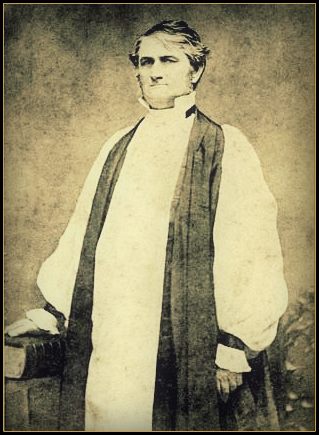


Courtesy of LPMS


Sewanee's Fons Et Origio:


Bishop · Educator · General


+++


Actively Paying it Forward with the Three Marks of Sewanee's Finest Developmental Goals; Assisted by Meditative Contemplations upon the Trilogized Epigrammatic Triads of Our Triune Domainianity:


DI TRIPLICI COPIA & DISCORDIA CONCORS


Christian Hope · Cultural Progress · Sectional Wrath

Spiritual Foundation · Societal Excellence · Ascendant Horizon

Endowed Sincerity · Inborn Aesthetic · Confirmed Theory

Preparatory Majesty · Established Affirmation · Conclusive Imperium

Inherent Primacy · Beloved Fidelity · Sustained Chieftain

Self Contained · Singular Expression · Bold Countenance

Verified Identity · Grand Maxim · Secret Arsenal

Selective Mission · Anointed Authority · Vested Veneration

Implicit Inclination · Explicit Claim · Preeminent Rank

Universal Presumption · Particular Symbol · Sole Category

Primal Consideration · Prevalent Inclination · Abiding Choice

Edifying Role · Achieved Merit · Superior Status


___________


Theological & Philosophical


 Artistic & Scientific


Political & Legal


___________


Ontological Priori Anagoge 


Epistemological Posteriori Exegeses

 
Axiological Fortiori Hermeneutic


___________


From The Fire Regained, by Sydney M. Hirsch, 1913, exceprts:


ATHENE (to Shepherd)

O eager youth!
Becalm thy flamings with wisdom's waters!
To underrate the rumors 'tis to lose the race already.
Take thou my shield and speed!
And whoso looks therein, shall find a fate
Acquired of himself . . . fearful either or fearsome-

SHEPHERD

I stand with tingling feet!
The flame to speed consumes me!
Oh . . . I flame . . . I flame . . .

(Shepherd falls in a trance to the earth.)

ATHENE

O poet who dies . . .
Thou shalt a prophet arise-


---


HIEROPHANT

Ye ample men of Jove! Ye virgin priests!
O! Hearders of the sacred sheep! O Hounds that
guard the temple's flock
Attand thine ear! . . . Attend! . . . Attend!
For unto thee hath heaven's wish
In hidden secret word come down.

---


HIEROPHANT

Let pulsing silence, and thick darkness cover!
Let words flexible be, and gates to memory!
Attend ye, who have gained an eye, and inner ear,
Initiates, and all who are elect!


___________


"But they in turn fell silent and became listeners when- as always happened- Sidney Hirsch picked out some word- most likely a proper name like Odysseus or Hamlet or Parsifal, or some common word like fool or fugitive- and then, turning from dictionary to dictionary in various languages, proceeded to unroll a chain of veiled meanings that could be understood only through a system of etymologies to which he had the key. This, he assured us, was the wisdom of the ages- a palimpsest underlying all great poetry, all great art, all religion, in all eras, in all lands. All true poets possessed this wisdom intuitively, he told us, solemnly, repeatedly. Furthermore he proved it later on, when we began to forsake philosophy for poetry by pointing out that some image that had crept into our verses, no matter what we intended it to mean, revealed exactly the kind of mystic symbolism he had traced from the Ramayana to Homer to Sophocles to Dante to Shakespeare to William Blake. Probably no group of poets ever before received just this kind of assurance."


-Donald Davidson, "The Thankless Muse and Her Fugitive-Poets," in SOUTHERN WRITERS IN THE MODERN WORLD, 1958


Ancient Religion for the Old-Time Religious


Isle of Iona (563 A.D.)

Jamestowne Settlement (1607 A.D.)

Maury County (1833 A.D.)


Historic Education for the Once-Redeemed Educable


English Universities of Oxford (1096 A.D.) &
Cambridge (1209 A.D.)

State Universities in North Carolina (1789 A.D.) &
Virginia (1819 A.D.)

Military Academies at West Point (1802 A.D.) &
Charleston (1842 A.D.)


Ongoing Warfare for the Still-Willing Warriors


Salamis (480 B.C.) Covadonga (722 A.D.)
Malta (1565 A.D.)

Concord (1775 A.D.) Saratoga (1777 A.D.)
Cowpens (1781 A.D.)

Chickamauga (1863 A.D.) Okolona (1864 A.D.)
Hamburg (1876 A.D.)


_______


Timeline of Decisive Community Engagement


under construction


480 B.C.

Following Spartan King Leonidas's strong stand with his 300 at Thermopylae, Themistocles defeats invading Persian naval forces at Salamis; victory leads to final Greek success at Plataea & eventual freedom from outsiders.


(Source: http://tinyurl.com/aszxyce ; viewed 1/2/2013)


563 A.D.

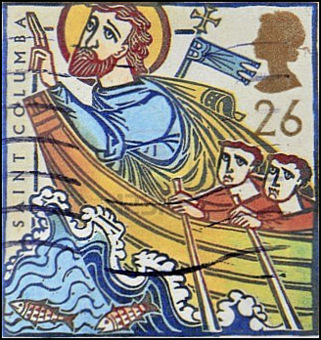
St. Columba departs Ireland & founds abbey centre for Celtic Christianity on Scottish Isle of Iona.

722 A.D.

Don Pelayo, first Christian king of the Austurias, defeats invading Muslims at Covadogna & inaugurates Reconquista for Christian Spain.


1096 A.D.

Earliest recorded teaching in Oxford, England, leads to Magister Scolarum Oxonie in 1201 & Universitas in 1231.


1209 A.D.

Scholars settle in Cambridge, Enland; gain a Chancellor in 1226 & King Henry III's protection in 1231.


1565 A.D.

Jean de Valette leads Christian Knights in withstanding Muslim Turks' horrific Siege of Malta.


1607 A.D.

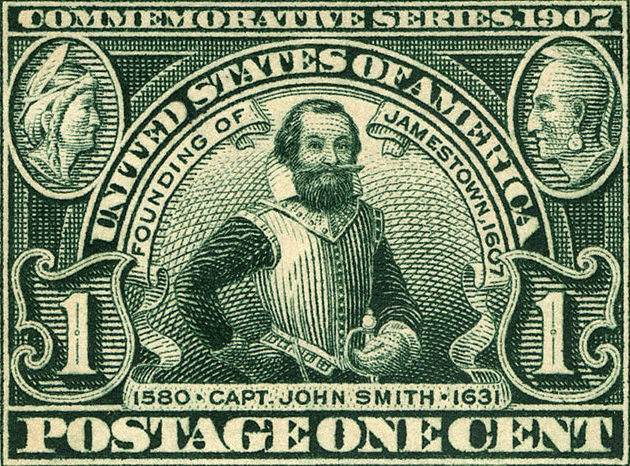
Chartered by King James I, Captain Christopher Newport leads Anglican Englishmen in exploring James River & establishing Jamestowne Settlement in Virginia; Captain John Smith later serves as Council President.

1775 A.D.


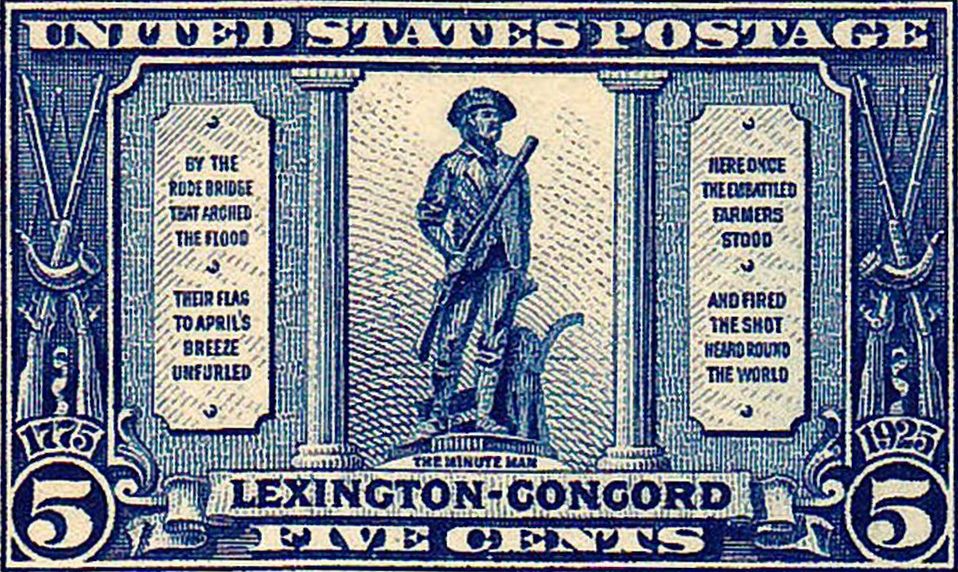
Colonial Militia & Minute Men win first victory in War for Local Independence from Outside Rule with rout of British troops at North Bridge on Concord River.

1777 A.D.

Americans commanded by Major General Horatio Gates stop advancing British troops at Saratoga & force surrender of General John Burgoyne; turns war in favor of ultimate American victory.

1781 A.D.

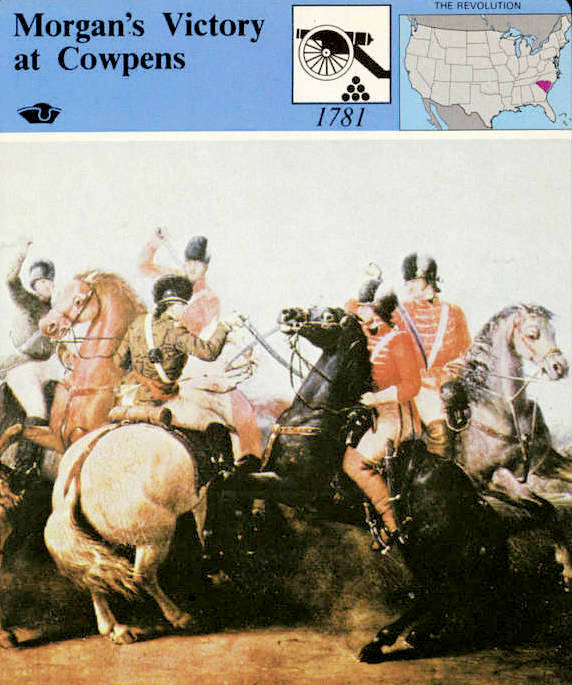
American forces defending South Carolina under command of General Daniel Morgan defeat & rout Lieutenant Colonel Banastre Tarleton's British troops at Cowpens; turns the war in the South toward Cornwallis's surrender at Yorktown.

1789 A.D.

William R. Davie introduces bill to charter state university in North Carolina; Col. William Polk, father of Leonidas Polk, is Trustee by 1790 & President of Board of Trustees 1802-1805; first students arrive in 1795; Leonidas Polk attends 1821-1823.


1802 A.D.

Subsequent General George Washington's selecting Thaddeus Kosciuszko to design fortifications at West Point in 1778 & headquartering there in 1799, President Thomas Jefferson establishes United States Military Academy in 1802; Colonel Sylvanus Thayer superintends 1817-1833; Cadet Leonidas Polk attends 1823-1827.


1819 A.D.

Mr. Jefferson introduces "Bill for More General Diffusion of Knowledge" to Virginia General Assembly in 1799; first meeting of University of Virginia's Board of Visitors in 1819 & first students arrive by 1825.


1833 A.D.

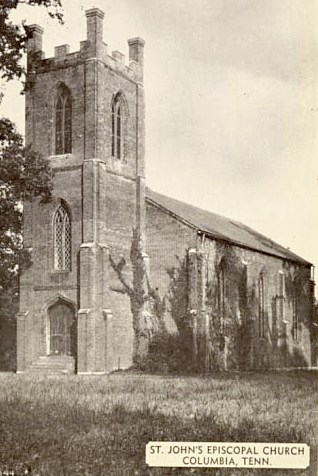
Rev. Leonidas Polk arrives in Maury County, Tennessee; resides at Hamilton Place; rector of St. Paul's Episcopal Church in Columbia; builds Ashwood Hall; later erects St. John's Episcopal Church in Mount Pleasant.

1842 A.D.

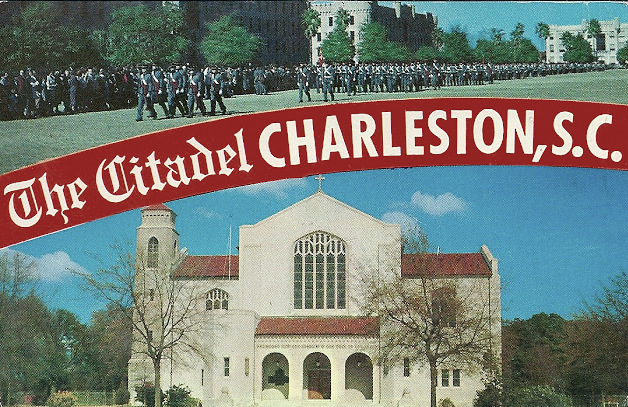
Subsequent Denmark Vesey's conspiracy in 1822 & South Carolina's "Act to Establish a Competent Force to Act as a Municipal Guard for the Protection of the City of Charleston and its Vicinity," Governor John P. Richardson & State Legislature convert Charleston's militia Citadel into military academy in 1842; patriotic cadets fire on Star of the West in 1861.

1863 A.D.

Bishop-General Leonidas Polk commands Confederate right wing to victory over invading Federals at Chickamauga; Brigadier-General Nathan Bedford Forrest's cavalry defends right flank; Georgia is once again made free.


1864 A.D.

Operating under Bishop-General Leonidas Polk, Major-General Nathan Bedford Forrest defeats & routs Federal Major-General Sooy Smith at Okolona; demolishes Sherman's eastward strategy & saves Demopolis & Selma from destruction. 


1876 A.D.

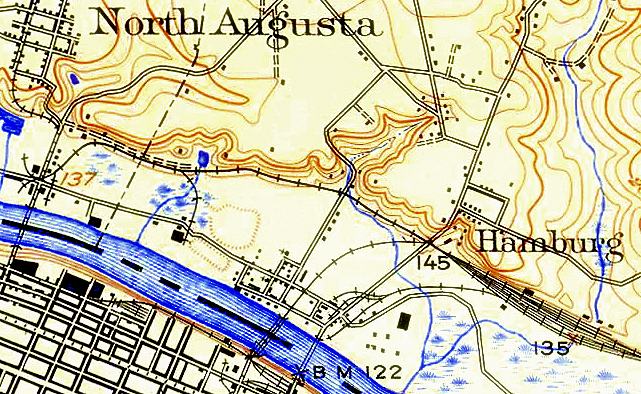
Georgia patriots assist proud South Carolinians in quelling violent Hamburg rioters; contain threat of vandals' trespassing across railroad bridge to burn Augusta & St. Paul's Episcopal Church & desecrate grave of Bishop-General Leonidas Polk; successful Southern tactics at Hamburg usher in Redshirts' electing Wade Hampton & redeeming South Carolina from illegal & corrupt Carpetbagger Rule.


William Shakespeare's Sonnet 146


      Poor soul,
the center of my sinful earth,
Lord of these rebel powers that thee array,
Why dost thou pine within and suffer dearth,
Painting thy outward walls so costly gay?
Why so large cost, having so short a lease,
Dost thou upon thy fading
mansion spend?
Shall worms, inheritors of this excess,
Eat up thy charge? Is this thy body's end?
Then, soul, live thou upon thy servant's loss,
And let
that pine to aggravate thy store;
Buy terms divine in selling hours of
dross;
Within be fed, without be rich no more.
So shalt thou feed on death, that feeds on men,
And death once dead, there's no more dying then.


____________


WGBTTB:

WRVV · WRCL · WRST


____________


"This is not a matter of 'restoring the Old South,' which is a false conception of the issues; it is rather a matter of perceiving that its educations and its traditions produced a moral type which needs to be re-created. Its allegiance to a spiritual ideal, sometimes admired as quaint, but more often scoffed as barbaric or backward, emerges as the one power which may defeat the destruction of belief by scientific materialism and the corruption of society by money."


-Richard M. Weaver, “The Anatomy of a Southern Failure,” circa 1943-1944, in Ted J. Smith III's IN DEFENSE OF TRADITION: Collected Shorter Writings of Richard Weaver, 1929-1963, 2001


___________


Attuned Calling · Hardened Intent · Manful Veracity

Sealed Baptism · Affixed Covenant · Bonded Resurrection

Sovereign Initiation · Independent Decision · Defiant Impulse

Negotiated Fate · Chosen Reward · Prolonged Destiny

Homeric Prelude · Virgilian Provision · Miltonic Proof

Exclusive Voice · Celebrated Insight · Entrusted Gratitude

Recollected Discovery · Sudden Wonder · Penetrating Light

Refined Blessing · Dedicated Recognition · Noble Offering

Engaged Service · Demonstrated Practice · Radiated Commitment

Inherited Custom · Deepened Tradition · Reactive Imperative

Soteriological Theosis · Hermetic Zenith · Carthartic Thumos

Opened Path · Emblazoned Medallion · Brightest Beacon

Studied Melancholic · Brazen Sanguine · Resplendent Choleric

Proportioned Teleology · Symmetrical Chronology · Harmonic Personality

Legendary Pioneers · Righteous Pilgrims · Suffering Refugees

Pristine Origin · Convergent Trait · Remedial Corrective

Fully Imagined · Operatively Supported · Masterfully Honored

Epistolary Phillippic · Dialectical Exposition · Rhetorical Exigeant

Miraculous Choosing · Judicious Placement · Soterological Victory

Dantean Perspective · Shakespearean Aspect · Nietzschean Evaluation

Liturgical Prayers · Victorian Poems · Southern Panegyrics


___________


The Ethos of his Book


The Logos of his Letter


The Pathos of his Sword


___________


European Genius · Feudal Metaphor · Chivalric Ethic

Masterful Prophecy · Organized Preparation · Vigilant Resistance

Systemic Design · Institutional Motive · Rational Attitude

Designated Solitude · Fundamental Preference · Abiding Permission


____________


41· 56 · 61


___________


  Struck Thunder Once Into Him


 Then Striking Thunder Into Me


 Now Strikes Thunder Into You


___________


"By his Consent, We know who We are through Him. He brightly leads us toward correct spiritual Formation along the Path of his Image. He defines who We are as a unique and separate People and calls Us to a deeper Understanding of how We alone are our own greatest Strength. His Virtue imparts unto Us our continuously affirmed and reflected Values. His Name begins our Initiation into our thoroughly confirmed Belief that We should be free to dwell apart. His everlasting Memory is the righteous ceremonial Rite of our particular Identity and correct Preference. We hold firmly to the Legacy of his blessed and great Nobility, just as He held fast to his own Vision for our Future. We accept and embrace his Domainian Promise, for which We keep Ourselves continually worthy by preserving his rich Contributions to our social Culture. He anoints our Essence with his Authorization, and we embrace his Endorsement of our righteous Choices, correct Correspondences and profound Representations. He obligates us to our genuine Responsibilities, and he calls us to recognize and acknowledge that our only Burden is the unbearable Weight of our not having done enough to honor him with our Gratitude."


-From SIR ABDIEL'S Resurgametica


___________


SprNd · IntNt · MrtNc


The Birth Right of It


The Well Born for It


The Best Born from It

___________


From the 1954-1956 adaptive screenplay of Herman Melville's MOBY-DICK, by Ray Bradbury:


Captain Ahab, was it not Moby-Dick took off thy leg?

Aye, was Moby-Dick that tore my soul and body until they bled into each other. Aye. I'll follow him around the Horn, and around the Norway Malestrom, and around Perdition's flames before I give him up.

This is what you shipped for men: To chase that white whale on both sides of land, and over all sides of earth, till he spouts black blood and rolls dead out.

What say ye? I think you do look brave. Will you splice hands on it?

Aye, aye!

Steward, go draw the great measure of grog. Harpooneers, get your weapons. Mates, your lances.

Ye Mariners, now, ring me in, that I may revive a noble custom of my fisherman fathers.

The measure! Drink and pass! Round with it, round! Quick draughts- long swallows, men; it's hot as Satan's hoof. That way it went, this way it come. It spiralizes in ye.

Here, hand it me. Well done- almost drained.

Lance-mates, cross your lances.

Now, let me touch the axis. You feel it? That same lighting which struck me, I now strike to this iron. Does it burn, men? Does it burn?

Harpooneers, break your weapons. Turn up the sockets.

Drink, you harpooneers, drink and swear: God hunt us all, if we do not hunt Moby-Dick to his death!


____________


An Objective Un-Conditionality


 The Subjective Ultra-Circumstantiality


 Our Permanent Non-Negotiability


____________


"Moreover, during my residence at Vanderbilt University I had the great good fortune to study under John Crowe Ransom, a rare teacher of literature and, apart from this and in his own right, a profound psychologist. Of the large number of students who have felt his influence, I doubt whether any could tell how he worked his effects. If one judged solely by outward motions and immediate results, he seemed neither to work very hard at teaching nor to achieve much success. But he had the gift of dropping living seeds into minds. Long after the date of a lecture- a week, a month, a year- you would find some remark of his troubling you with its pregnancy, and you would set about your own reflections upon it, often wishing that you had the master at hand to give another piece of insight. The idea of Ransom’s which chiefly took possession of me at this time was that of the 'unorthodox defense of orthodoxy,' which he had developed in his brilliant book God without Thunder. I began to perceive that many traditional positions in our world had suffered not so much because of inherent defect as because of the stupidity, ineptness, and intellectual sloth of those who for one reason or another were presumed to have their defense in charge."


-Richard M. Weaver, "Up from Liberalism," Modern Age, Winter 1958-1959,
at
http://www.mmisi.org/ma/03_01/weaver.pdf


____________


Expressive Definition · Declarative Cause · Evocative Circumstance

Latent Extraction · Centered Innovation · Utmost Respondent

Innermost Catechism · Core Character · Severe Capacity

Pivotal Deliverance · Emancipatory Demonstration · Reconciled Determination

Londonian Decree · Genevan Election · Mountainian Concordant

Benevolent Indwelling · Local Resolution · Renewed Striving

Solemn Demarcation · Embedded Loyalty · Protected Criticality

Luminesced Epiphany · Cultivated Disposition · Reserved Usage

Adorational Discipleship · Wagnerian Camraderie · Retributive Impact

Sanctified Delight · Invitational Privacy · Intrepid Mystique

Applicative Appeal · Normative Pursuit · Covert Command

Elite Gathering · Concentrated Elan · Esoteric Message

Holy Ground · Gated Entrance · Armed Sentry

Enriching Preface · Aristocratic Jurisdiction · Superlative Opinion

Prophetic Apparition · Veiled Miracle · Future Invocation

Apostolic Division · Patristic Statesman · Oracular Entitlement

Signified Source · Chartered Lustre · Investigated Concern

Sacrificial Conception · Donative Result · Reinvisioned Discernment

Luminesced Epiphany · Culitvated Disposition · Reserved Usage

Certified Document · Efflorescent Bequest · Blameless Legacy

Witnessed Proclamation · Encircled Innocence · Threatened Membership

Cruciformed Dogwood · Whitest Magnolia · Purest Lily


Praiseful Agenda · Attuned Perception · Interpositional Gain

Greatest Revelation · Lived Experience · Unashamed Confidence


___________


This Reverence of our Souls


This Knowledge of our Minds


This Courage of our Hearts


___________


BBLFT · CLSWS · STRJS


___________


"...being, not becoming."


"I confess that this goes back to a very primative metaphysics, which holds that the highest reality is being, not becoming."


-Richard M. Weaver, "Language is Sermonic," 1963


___________


 Loving Gracious Love of God the Father
 

Gracious Loving Grace of Christ the Son
 

 Forceful Full Force of the Holy Ghost


___________


Suppositional Salutation · Eligible Recipient · Entailing Immolation

Obligating Confession · Native Stock · Fierce Profession

Encompassing Ardency · Nourished Habit · Felicitous Coronation

King's English · Southron's Drawl · Rebel's Yell

Uncommon Faith · Obedient Planting · Flourishing Harvest

Textual Ingress · Expansive Contraction · Glowing Sepluchre

Measured Moment · Fresh Neologism · Incontestable Pertinence

Literal Endorsement · Ingenious Erudition · Continual Refusal

Warranted Directive · Unabstracted Founding · Answered Challenge

Stated Gospel · Regional Devotion · Sanctioned Degree

Actuating Assistance · Practicable Direction · Fearless Vehemence

Devout Adherent · Sublime Pavilion · Derived Ceremony

Promised Tribunal · Gifted Rarity · Immediate Struggle

Golden Keys · Specific Extensions · Conscientious Durations

Lauded Examination · Ethnological Research · Inoculating Fervor

Uplifting Psalmody · Promethean Inception · Earnest Indulgence

Enhanced Plaudits · Abounding Potential · Inexorable Validation

Imbued Proselyte · Irrefutable Conduction · Maintained Chronicle

Unique Connection · Sensible Limitation · Unevolved Constancy

Endeavored Specialty · Elemental Scheme · Rebuilt Wall

Evidentiary Relevance · Splendid Recommendation · Indomitable Revivification

Observational Prowess · Untiring Proceeding · Refulgent Pragmatism

Infallible Critique · Dramatic Counterpoise · Imminent Crisis


Ecstatic Level · Unbroken Boundary · Dazzling Animus

Adorational Discipleship · Wagnerian Camraderie · Retributive Impact

Authentic Translation · Arching Enterprise · Perilous Task

Coterminous Inscription · Cloistered Sect · Reconnoitering Involvement

Mentored Instigation · Headquartered Impeccability · Forward Front

Espoused Citation · Irreproachable Stereotype · Intersectional Envelopment

Everlasting Instance · Eugenic Impression · Crucial Ultimatum

Unsurpassed Satisfaction · Characterisitc Heritage · Unvanquished Acumen

Encyclical Distribution · Social Sponsorship · Consequential Meaning

Evangelical Opportunity · Impenetrably Aloof · Tested Ire

Nurtured Labor · Unanimous Compulsion · Unceasing Disdain

Invioable Supplication · Advanced Prestige · Fugitive Alliance

Truthful Navigation · Honest Deeds · Repatriated Constituency


Angelic Choir · Pervasive Terms · Residual Antagonism

Emanational Insistence · Apperceptive Enchantment · Targeted Vengeance

Presaged Magnanimity · Fitted Necessity · Fixed Malison

Inhaled Instruction · Convocated League · Commended Partisan

Epideictic Sermon · Linked Congruity · Oriented Escalation

Bestowed Attribution · Correlated Content · Persuasive Counterpart

Ineffable Preamble · Fortuitous Marvel · Unfaltering Eventuality

Shadowed Transition · Circulated Hospitality · Conflagrated Battle

Ubiquitous Conceit · Portentous Inducement · Consternating Moniker

Fixated Incantation · Natural Agreement · Interacting Activation

Undoubted Deification · Lush Redolence · Humanized Entelechy

Reverberated Stipulation · Entrancing Allurement · Evinced Contrast

Recited Dualism · Submitted Course · Shaped Debate

Timeless Incumbency · Glittering Spectacle · Executed Pledge

Proximate Theosis · Convened Conference · Circumferential Influence

Efficacious Relations · Launched Campaign · Perspicacious Irony

Enkindled Empathy · Admonitory Figuration · Willful Legionnaires

Sacralized Ratio · Reminiscing Brethren · Infused Finality

Accounted Condition · Procedural Assignation · Permeating Reach

Individuated Statute · Appreciated Effort · Undeniable Right

Highest Seeking · Unconfused Segment · Controlling Register

Bestirring Solicitation · Paramount Vision · Pressured Entirety

Inalterable Heeding · Preparative Excitation · Rectifying Exacerbation

Immersing Feature · Stabilizing Substrate · Enigmatic Image


___________


His Book He Opened Carefully for Us.


His Letter He Signed Expressly for Us.


 His Sword He Drew Swifty for Us.


___________


Unprecedented Catalyst · Approved Ruling · Intrinsic Reflex

Surmised Preclusion · Published Review · Poignant Axiom

Predominating Interview · Hyperborean Elegy · Provoked Vitality

Celestial Interval · Reigning Succession · Suffused Seethings

Immemorial Superstition · Accorded Companion · Tempestuous Obstinacy

Beckoning Serenity · Announced Uniformity · Descried Difference

Mutual Recruitment · Stark Congeniality · Retrospective Rule

Skilled Beginning · Secured Introspection · Vindicated Forethought

Unreconciled Retention · Located Absorption · Obliged Obsession

Welcoming Aether · Unfaded Mantle · Incarnational Elixir

Indicated Mercy · Purified Mankind · Envisioned Intention

Overcoming Apologia · Mentored Understanding · Ready Valiance

Tempered Interflowing · Dictated Medium · Stout Audacity

Attentive Decency · Agrarian Return · Fostered Quarrel

Potent Profusion · Harbored Attendance · Proudest Apprehension

Efficient Amity · Presentational Pedigree · Indispensable Prerogative


Vouchsafed Gladness · Prudential Mediation · Burning Purgation

Conducive Humility · Soaring Conviviality · Enthralled Warning

Irenic Procurement · Romantic Elusion · Stubborn Betterment

Emissive Paragon · Iron Laws · Sainted Fame

Conciliatory Counsel · Lenten Approach · Reinforced Ramparts

Supervisory Code · Academical Gown · Broken Mace

Persisting Adoption · Marked Manuscript · Unremitting Resentment

Tender Patronage · Conserving Reference · Assiduous Emphasis

Consummate Movement · Highlighted Recency · Deemed Beholden

Heavenly Kingdom · Assaying Remark · Revolutionary Aftermath

Effulgent Apparition · Admonitory Investment · Boundless Refutation

Ambassadorial Shepherd · Administrative Portent · Deliberate Retaliation

Intimate Prescience · Bewailed Temple · Forecasted Terms

Empyrean Afflatus · Corresponding Lines · Adamantine Hammer

Eleusinian Acolyte · Unvitiated Urge · Flushed Audacity


Refracted Archaicism ·
Complimentary Regard · Spiralizing Vestige

Invariable Allusion · Impositional Paradigm · Unsurpassed Delineation

Preliminary Generation · Athenian Plan · Definitive Augmentation

Plenipotentiary Powers · Rooted Forest · Exceeding Worth

Auspiciously Prolific · Prosaic Recording · Eminent Differentiation

Received Cypher · Indexing Physiognomy · Rightful Privilege


___________


He Calls · He Edifies · He Fights


__________


Elevated Association · Inevitable Separation · Inextricable Virility

Perennial Etiology · Constricted Anglosphere · Rapid Heuristic

Illimitable Advocate · Sagacious Hegemony · Annointed Eulogy

Warranted Magnification · Vestigal Presentiment · Energized Revaluation

Diluvian Cleansing · Tennysonian Formation · Unleashed Elaboration

Fastidious Epitome · Reflected Brilliance · Indisputable Bravery

Patriarchal Leadership · Assertive Community · Fraternizing Paladin

Acclaimed Redemption · Esteemed Consecration · Renowned Qualities

Undisturbed Resonation · Conscious Strata · Distinguished Will

   Longest Chord · Essentialized Oikophilia · Binding Values

Presiding Fulfillment · Charmed Gemeinshaft · Steadfast Activist

Pyramidal Judgment · Idiosyncratic Strain · Unrestrained Respect

Official Investiture · Extraordinary Functionary · Inexplicable Replenishing

Apotheosized Scion · Prospective Standard · Triumphant Lionization

Manifested Herald · Substantive Progeny · Triplicate Perpetuity

Cosmological Enormity · Plethoric Peculiarity · Contingent Ramification

Wedded Redirection · Harkened Health · Requisitioned Agent

Palingenetic Conviction · Salubrius Climate · Coherent Memoir

 Explicating Cogency · Transliterative Polygenesis · Ideological Spear

Totemic Domination · Symptomatic Adumbration · Torrential Feeling

Immutable Absolute · Truest Kinsmen · Threnodic Inference

Proverbial Evanescence · Congregating Hierophant · Invincible Imprecation

Metaphysical Assurance · Germanic Component · Panoplied Militant

Mythologized Immanence · Custodial Risk · Emblematic Representation

Predated Emulation · Johnsonian Conclave · Visceral Intensity

Seeded Benefit · Mediating Growth · Last Becoming

Constitutive Yearning · IndoBrahmin Praxis · Semiotic Vortex

Noumenal Suprapersonality · Byronic Physiography · Fabian Replication

Bejeweled Hudibrastic · Daedal Presentation · National Adornment

Affective Certitude · Tennessean Zion · Flaming Sword

Dogmatic Narrative · Creedal Geneaology · Clearest Polemic

Enduring Rigidity · Set Typicality · Engendered Heroism

Inaugurating Step · Anthroposophical Journey · Mississippian Arrangement

Unitary Criterion · Corporealized Construct · Dynamic Belonging

Living Water · Upward Surge · Spreading Fountain

Providential Suspense · Familial Inculcation · Sternest Response

Interdicting Theocrat · Profound Exploration · Instant AntiJacobin

Reversed Negation · Surmounted Obstacle · Recondite Corroboration 

 Forgiven Suspicion · Embittered Majority · Historic Remainder

Narrowed Venue · Aligned Position · Unvitiated Resurgence

Irrefragable Commencement · Denominating Description · Cherished Addition

Concentric Scope · Structural Centrality · Estimable Promptitude

Umpired Imputation · Genteel Past · Invigorated Recovery

Coordinated Compliance · Supplementary Act · Unmodified Fascination

Animated Propitiation · Connoting Assumption · Incorruptible Inflexibility

Vatic Representation · Mannered Etiquette · Condoned Enactment

Pallative Balm · Runic Signal · Unrivalled Insurgency

Cyclic Ritual · Dominating Plausibility · Extensive Application

Deductive Question · Noetic Instrumentality · Okolonian Outcome

Prescribed Responsibility · Complex Concomitancy · Admirable Indignation

Volitional Coadjutor · Linguistic Discourse · Simonidean Cunning 

Impicative Arrival · Empirical Conjunction · Tractive Concatenation 


Appended Incantation · Supported Justice · Frankest Hagiography


Thriving Expousal  · Reasoned Enthyme · Delegated Revenge

Granted Argument · Eufaulan Plea · Amplified Predication

Renasent Credibility · Speculative Inquiry · Advisory Hypothesis

Forensic Proposal · Capitalized Imprint · Unamalgamated Fibre

Awarded Melioration · Articulated Thesis · Ascertained Compulsion

 Formal Testimonial · Syllogistic Completion · Embodied Patriotism

 Olden Verities · Implementing Vehicle · Ancient Contest

First Pieta · Ideal Conpendium · Impending Celerity

Sacerdotal Ascription · Aphoristic Sensitivity · Monumental Icon

Existential Apex · Contending Essence · Favored Depiction

Unaltered Formulation · Assenting Audience · Cognate Vividity

Serious Concurrence · Classified Fecundity · Trumpeted ReEvaluation

Preserved Rites · Household Rules · Zealous Alacrity
 
Arcane Precept · Endemic Taxonomy · Galvanized Ending


____________


Awake · Aware · Alert


____________


"Becoming reveals Being, because Being is prior to Action. We know our Nature in all we do. Do more, know more. He died in Arms- for a Reason."


-SIR ABDIEL


___________


"What you see around you did not happen by accident or by its own volition or choice. It didn't even happen. It was done. It didn't come; it was brought. It was brought here to destroy that which it wasn't. It was brought here as a weapon against what we love by those who never could have created this. Our Founders' motivation was love; their motivation is unrestrained hatred. Look around and you can see it right before your eyes. Compare it to the past, calculate its trajectory, and then adjust downward your expectations for any future good coming from this place."


-From THE LAST CHRISTIAN IN ALABAMA, draft manuscript


__________


RELIGION · EDUCATION · WARFARE


___________


From S
IR ABDIEL'S Resurgametica: The Sewanee Book of Appointed Collects, Fervent Prayers & Greater Domainian Liturgical Rites of Availing Memory, in THE LAST CHRISTIAN IN ALABAMA, draft manuscript:


+++


Holy Given Guiding · Leading Into Being · Blood Oath Ordaining


To the Glory of God & in Loving Memory of


Bishop-General Leonidas Polk


THE FOUNDER OF THE UNIVERSITY OF THE SOUTH


He lived his Life as a Love unto his People;
He dared for Us and He died for You and Me.


IMMORTALIS EST SENTENTIA.


+++


In this, as We are now of his revived, reclaimed, and restored Name, in this courageous Stand, and in all We do and the ongoing Proving thereof, He would be proud of Us.


+++


Through ascending incarnational Memory, by these higher Sacraments of rarefied Bestowal and devotional Favor, fully pledged unto this thrice royal archonic King of Knightly Paladin Priests and Soldier-Saint Pilgrims, ours for Us and Us alone (Revilers beware), this Realm we hold fast, and by him we renew: Our Blood is our Being as given unto us by the Grace of God.


+++
 

In his Name, we are Blessed by our loving Christ, improved by our full Learning, and fortified by our hard Circumstance.


+++


He is our Arch-Divine Southern Prelate, and We are the Saints of his God.
He is our University Patriarch & Bellum Chancellor, and We are the Scholars of his Cause. He is our Heroic Gentile Leadership Commander, and We are the Soldiers of his War.


+++


His God then was our God now; his God is our God. His Cause then was our Cause now; his Cause is our Cause. His War then was our War now; his War is our War.

His Loves are ours, and his Hates.


He loved fully, because He hated genuinely- despising the Despicable and
detesting the Detestable. He retained Discernment of his Enemies- our Enemies.

As his Hatred was just, just was his Beloving. He hated Sin and loved Christ; We meet Christ through Him, learn Right by Him, and fight for Him against Moloch-Baal and the vile Satanic Regime.


His lasting Memory is our eternal Witness that, verily,


Truth crushed to Earth shall rise again.


+++


In full Vigor of sovereign Distinction, Declaration, and Determination, we Domainians of Sewanee proclaim:

Our highest Calling of Christian Purity and our superior Devotion to Sustained
Independence together manifest our triumphant Victory of Righteous Defiance.


+++


FIRST FOR US ABOVE ALL OTHERS:

His Mystery is our Unity. His Doctrine is our Creed. His Grave is our Shrine. 


 LEADING FIRST ABOVE ALL OUR OTHER FIRSTS:

Through his resurrected Name, the mystifying Doctrine of his prophetic Gravestone unifies our creedal Enshrinement of his missional Return, that we may offer him Tribute by fulfilling our manly Duty in this Time of Crisis.

We take our Stand for him upon this indelible Line of Demarcation. On our Side- the generational Impact and Upbuilding; on theirs- the pernicous Undermining of all glorious Merit. At this Point our inspired Tendency meets the latest forward Salient of their hateful and harsh Agenda. 

For him, we shall ensue and overcome, as he did for us in those past Ages of Certainty's timeless Memory. 

Within his holy Shrine we recite our differentiating Creed and join together in peculiar Unity of those clarified Values reflecting our great Endorsement of his Leadership for our Strivings toward our best Selves and a welcomed Exposure of the best of who we are. 

As we are defined through him, so thereby we are of our own Nature's Identity. Defined naturally, so thereby we partake in Gratitude of his like Correspondences. Partaking of corresponding Representation, so thereby we act in Unison with his apprehensive and postive Impact.


 NO OTHER LEADING FIRST FINALITY ABOVE US:

His Mystery is the Unity of our entitled Identity. His Doctrine is the Creed of our obligated Gratitude. His Grave is the Shrine of our fostered Apprehension. His Ceremony is the Altar of our sustained and avowed Continuity.

As he vowed his Nation, so now we thus vow. As he was, now so we thus are. As he did, now so we thus do. As he gave, now so we thus give. 

Once then done, always then hath been done.

As this ever is, so shall this ever be.


+++


We are embraced by his pious Mission. We are enriched by his noble Passion. We are engaged by his valiant Struggle. Forever, We of Sewanee remember & We of Sewanee revere; alone, We are for Him- We are Forever Meridiana.


+++


The worshipful Bishop’s Revelation enunciates our received Covenant. The
visionary Educator’s Redemption anoints our innate Obligation. The steadfast General’s Resurrection incarnates our perpetual Pilgrimage.


+++


With the Faith gained by his inspiring Conviction, with the Wisdom earned from his moral Authority, and with the Justice promoted for his grand Sacrifice, we Domainians atone for Sewanee’s horrific and sickening Sins of Ingratitude, Blasphemy, and virulent Sacrilege.


+++


This ancient, quantitative, and revived Custom of his qualitative, accoladed, and resplendent Name within and among our beloved Community ministers to us as the most welcomed and duly marked ethical Reference of Consequence unto the blessed Assurance of our Truth, as permitting Escalation during this extrapolated and horrifyingly urgent Crisis, demanding Examination, and for the organic Loyalty to our Dignity, and for the greatest Obedience to our Duty- the fulfilled Genius of his explicated Coherence- the need to do some Soul-searching-  confronting our Struggle, giving Hope and promoting Awareness- the first Leadership that enriches us with his vibrant Authenticity- serving our re-imagined Purpose for seeker-sensitive Evangelism- the systemic Attempt- the one Man, thrice joined, once apparent, triple gained, singularly credited, trinitarianly expressed - Aurora Majestica- guides our innovative Advancement toward an Attitude of revealed social Climate- rededicated and pushing forward our improved Commitment to finally doing more, long over due, and long before enough, to address our unfulfilled enlightened Dream of a narrow Pathway to Healing- the jarring Relevance of our landmark Initiative upon our restorative landmark Lesson; by him and his emerging Gift for making Breakthroughs for Life changing Differences right now; we, Apostles all in his blessed Succession, now strive onward as incorruptible Kith and Kin, going further in profound Discipleship for constructing the better provincial Society by hardening Boundaries and fortifying Borders for our greatest Good with greater Will and greater Commitment of Will, collectively holding ourselves justified to the shared Sacrifice of his oppressed and marginalized Name, starkly contrasting the despairing Present with the hopeful Past; coming together as exiled Fugitives who garner our keenest and disciplined Insights into questionable and dangerous Patterns within this dark Chapter of repugnant Precedents, giving rise to broader Implications of our bold and decisive Apprehensions of the evolving, troubling, hideous, and frighteningly unsustainable Arc of our changed Future that bends toward Hatred and robs us of the True, the Good, the Noble, and the Beautiful. We retain his grand Name in all its Complexity and Richness, in its finest Impact upon our Locality, and we pass it on to the Posterity of our Generations who will fight on the right Side of History in the ongoing materialist War against Nature. We embrace what God is doing right now for his Memory, everlasting  through us in this remarkably brave Moment, and we keep our Place in the Kingdom of Supervision and Accountability- each Act an incredible Act of Courage- exploring all hidden Assumptions, maintaining the Values that reflect who we are as a People in right relation to ordered Propriety - the only legitimate Purpose for those who know and care and know why and how to care. We are in the right Place at the right Time to push forward our valid Agenda for Sewanee's best Self and against hardened Resistance to his Glory, and which addresses these much needed Changes and promotes Fairness and Restoration for those who now suffer most.


+++


Prevailing as the most distinguished Legend of the Church and manifesting as Sewanee’s beloved Avatar of highest Esteem, the Bishop-General stands as a moral Giant in the Pantheon of our heroic and renowned Southern Rights Icons.


+++


Dear Holy Jesus Merciful, Lord God's Mercy on us, Hope within us, Grace upon our Griefs & Lamentations; now, bringeth us out of these poisoned Tribulations; by Thine heavenly Mercy alone, emancipate us thusly from the surrounding Ugliness & encroaching toxic Menace: Redeem Thy Servants from this vile pestilential Horror; Holy Merciful Jesus, that it pleaseth of Thee, We beggeth of Thee, come soon, come now! Freedom; then, Praises unto God, all Holiness & Hosannas evermore. To the Holy Ghost- Glory, then Amen again & then again Amen.


+++


His Name is a deep Call offering us a Way back to the Beginning, forever guiding us by the attuned Inspirations we hear in our prompting Voice, in our curious Voice, and in our urgent Voice, which in announcing Echoes from the Past, strongly join together in leading us forward into the Future.


+++


Adumbration: The Pilgrims of his ongoing Tragedy are clear Voices making Witness of received fugitive Prophecy.


Through the emerged Impulse of Eastertide's Resurrection of the predominating Love for the Beautiful as our renewed ever-green Feeling graciously implanted into our Hearts by the innate Secret of God, we, the Pilgrims of his Tragedy, are powerful witnessing Voices of his received fugitive Prophecy; our liturgical Vision for the Future wisely fosters the Cultivation of the embodied Word's powerfully speaking for the Human and Civil Rights of an indomitable People to remain true to themselves- in Apollonian Detail, in Orphic Timing, and in Dionysian Expression. 


+++


Dear Merciful God, Father of our Christ Messiah, Ruler of the Regents in glorious Heaven, Enabler of the highestmost Power, only Source of our deepest Goodness- bless and protect us in our Season of Need, that with our most steadfast Love for those who most loved us, and with our full Forgiveness of their rare Shortcomings, and with steadfast Recognition that we are their greatest Agents of the vast Return, that we may relentlessly advance our best spiritual Principles by making our own enduring Contribution to final Liberation from the systemically incompatible and oppressive Influences of those vile and puritanical Extremists who hate our Souls, would corrupt our Minds, and will kill our Hearts, and from All who think like them. To your Glory alone, we engage this dynamic Worship in honor of the greatest Man who made Sewanee, that thereby may we Disavow always the normalized Works of Satan and dismantle his evil Constructs by deserving and keeping this intimate Community of emancipated Potential, with Implications for this Eden of our Inheritance, by remaining ever vigilant against those who would destroy what should be ours only and only ours. In Jesus's holy Name, forever unto Eternity, Amen.


+++


Within the encircling Innocence of consecrated Genius, the vanguard Ritual of his pioneering Ethic survives extant upon the welcomed Sanctification our retained Testimonial. We perpetuate the performed Initiation of rational Compliance and responsible Elegance as the surest Purity of conferred Authority and justified Reward for uplifted spiritual Community. His dynamic Battlefield Contribution, propelled by his passionate and sacrificial Ordination, wins for us the Commitment of analogical Figuration's surest Ultimatum against Sewanee's shamefully insensitive Failures during this dark Chapter our History's questionable Motives and troubled Outcomes. As Sewanee takes an ugly Turn toward a troublesome lack of Integrity which raise serious Questions of Credibility, we are reminded by him to examine the systemic Roots of Sewanee's corrosive Embrace of universalizing Change and come to Terms with the new Mediocrity's institutional Influence that directly attacks the best of Sewanee's profound remnant Excellence with aggressive Ignorance and Betrayal. Their shocking Resistance to Blessedness calls us to Action. By his corrective Agency, and with his supporting our relief Efforts, he thoroughly refines the cleansing Selectivity of our genuine and exclusive Invitation to private Annointment. Thus greatly, he pushes us ever onward toward fuller Glory and Reflection of those divisional Values now mattering most for shaping our Future by helping us raise Awareness and promote Restoration and Preservation. Through his affirmative Lens, we see the grim-themed All as all true Sewanee should see.


+++


As we call into this Moment and bring into this Present, we live into his redeeming Past, that by his ordinating Name and through the historic first constitutive Power thereof, we proclaim the Eufaulan Merit of Okolonian Blessings upon all that is here Meet and Right so to do; so done, for the sake of Jesus Christ, our blessed, Lord and Saviour. Amen.


+++


Dear Lord our God, who giveth of All we holdeth True and Dear, we thanketh Thee for his great Name and historic Leadership during this horror of Sewanee’s worst spiritual Crisis. That Thine Will adhereth us to our solemn Obligation, through him, shall helpeth Sewanee doeth the Work necessary to learneth Recollection into Being of its gracious Love of our founding Generation, we prayeth unto Thee, may we firmly claimeth our Place during the Throes of this re-transformative Recovery that transcendeth their Denial and reacheth across the intersecting Ideal, which must happeneth soon that they continueth not their damage doneth through undermining Justice in this Place; now is the time we must be reminded through Thine Love that Sewanee can no longer affordeth remaining arrogantly insulated from its best historic Self. By Thine Choice, or Lord, we Domainians, who suffereth for Thine Sake under Resentment and Ridicule, are the Center of Sewanee’s Restoration as we rescueth its Redirection during this Season of more needeth Realism that putteth us on the Pathway to moving forward. Oh God, in Thine overcoming Goodness aloneThou knowest that without our courageous Leadership to maketh the Changes needeth making now for vindicating fundamental Integrity, Sewanee shall not surviveth.  Our vitally corrective Role is not open for Debate. We must secure the Promise through the ongoing Struggle in which we haveth so much at Stake. We march on, that he shall be proud of us. In the name of Thine holy Son,Christ Jesus, Amen.


+++


Domainian Credo:

Resurrected Testiomonal Witness Thereof & The Conscience of Sewanee


KYRIE ELEISON


pend- macroaggression continued damage no place for no excuse for  helped make changes that needed to happen pernicious effect fueled by judiciously


+++


Pilgrimage Service Order


"This do in Remembrance of Me,
that thine sublimest Duty shall be mine Will done in Thee."


Part I


THE BISHOP'S CALLING


PrVc, Rn, RvSl, SpNd, Bk

All Saints' Chapel

Window, New Orleans, BlFth


Acknowledging Introductorials


Sunday Collect from BOOK OF COMMON PRAYER, 1928


Appointed Special Collect for Ceremonial Occasions


Purpose of Instituted Sacrifices


Confirmed Authorization of Acts


Part II


THE EDUCATOR'S EDIFYING


CrVc, Ed, KnMd, InN, Lt

Louisiana Circle 

Marble, Charleston, ClWm


Recognizing Relationals


Thanksgiving for Baptismal Blessings


Confession of Sickness & Sins


Purifying Reclamation of Sacred Space


Intercessory Petitions for Close Kindreds


Part III


THE GENERAL'S FIGHTING


UrVc, Wr, CgH, MrN, Sw

duPont Library

Flag, Richmond, StJt


Repententing Communals


Commencement of Ritualized Preferences


Selections from Essential Texts


Prayers from Deepest Memories


Private Status of Particular Choices


Ordination from Consecrating Functions


Part IV


THE DOMAINIAN'S IDENTIFYING


SvrPrt, AbsInd, RghDfn

Posterity

WhOlLbty, WhPrFrdm, PrPmVctry


Healing Activationals


Sustaining Petitions for Certain Virtues


Imprecations against Virulent Incursions


Part V


THE MYSTIC'S PROPHESYING


TrDvFrvr, EmWhAlws, BwPrRNw

Futurity

DscFvr, SlcInc, GnrExc


Reconciling Invitationals


Announcement of Succeeding Services


Adjourning Charges & Dismissal


+++


Christ Evermore for Us:

Visiting Annunciation, Miraculous Conception, Missional Claim, Touching Power, Targeted Victim, Sanguine Passion, Cruciform Sign, Tortured Form, Temporal Death, Everlasting Resurrection, Transcendent Ascension, Donative Redemption, Heavenly Reward


Satan Aimed against Us:

 Stealth Approach, Edenic Peril, Moral Obscenity, Future Slavery


+++


"A scorner seeketh wisdom, and findeth it not: but knowledge is easy unto him that understandeth."

-Proverbs 14:6, King James Version


___________


"Death of Polk," by Mary Catherine Daugherty Bigby,
in James Wood Davidson's THE LIVING WRITERS OF THE SOUTH, 1869:


No richer harvest Death hath reaped
In all the southern gleaning;
No braver blood than his that flowed
With Eucharistic meaning.

He left the soil he died to save,
Crimsoned with his gore,
To claim the sacerdotal crown
The martyred Stephen wore.

The Cross, emblem of his faith,
He bore with meek renown,
Till, budding like the Levite's rod,
It blossomed in a Crown!

All o'er the land a Lent of tears
Shall Salem's daughters keep;
Her sons look on with stony eyes,
For Vengeance must not weep!

___________


"...to be sought in that prime source."


"Language, as I conceive it, is a social and cultural creation functioning somehow within the psychic constitution of those who use it. The scope of the reference of words is accordingly determined by forces within the psychic constitution and not outside it. The question of stability in language cannot be considered apart from the psychic stability of a cultural group. And by the same inference the reason for changes in language, whether of the kind we approve or disapprove, will have to be sought in that prime source. All this may seem to border on a mystical account of what, after all, is an empirical fact, subject in several of its aspects to direct observation.  Yet the problem of meaning remains elusive after observations of this kind have been made."


-Richard M. Weaver, "Relativism and the Use of Language," in Helmut Schoeck and James W. Wiggins's RELATIVISM AND THE STUDY OF MAN, 1961


___________



"A prophet of glad tidings, a finisher of utmost hope."

-Adam's rejoicing, in John Milton's Paradise Lost, 1667, 1674


___________


"...absolute independence of all others..."

"Our purpose is to erect within the Southern States a institution which shall place the South in a position of absolute independence of all others, at home and abroad, on the score of Educational advantages and higher walks of learning. We have all the elements, intellectual, social, pecuniary, to do this; and now that we have succeeded in combining the mind and will of those interested, we regard our way as open before us."


-Bishop Leonidas Polk, Chairman of the Locating Committee, to Col. Walter Gwynn, July 22, 1857, reprinted in UNIVERSITY OF THE SOUTH PAPERS, Series A, No. 1, edited by Rev. Telfair Hodgson, D.D., Vice-Chancellor, 1888


___________


"To focus the problem a little more sharply, when one is asking men to cooperate with him in thinking this or doing that, when is he asking in the name of the hightest reality, which is the same as saying, when is he asking in the name of their highest good?"


-Richard M. Weaver, "Language is Sermonic," in Roger E. Nebergall's DIMENSIONS OF RHETORICAL SCHOLARSHIP, 1963 


Sewanee's Vade Mecum:

Sword Over the Gown


Photo Courtesy of Charley Watkins

Welcome to Sewanee's On-Line History Museum and the Leonidas Polk Registry Research Project. We are currently renovating this website and apologize for any inconveniences during these improvements.


If you have a research inquiry or wish to send information, please contact info@leonidaspolk.org.


___________


“Bishop’s Portrait Once on Barroom Wall Now Here,” The Sewanee Purple, May 11, 1927:


It is "the face on the bar-room wall” this time, and after considerable juggling by the knees of Chance, it now adorns the walls of St. Luke's Common Room. The likeness is that of Bishop Leonidas Polk, crusader in the Episcopal Church, general in the army of the Confederate States and one of the founders of the University of the South.

Immediately after the Civil War the curator of the [Corcoran] Galleries was commissioned to paint portraits of the Confederate generals for the Battle Abbey, Richmond. Bishop Polk was one of the- few who had lived to have the work completed.* The finished portrait was purchased by a syndicate of Southern men, and after the death of the last of these, it reverted to his estate and was sold at auction.

At Covington, Kentucky, an old bar-room with the finer sensibilities of pre-Volstead days snapped it up as a mural decoration. Amidst bubbling steins and a cascade of pretzels, ham, and eggs, the likeness of the
great man of the Confederacy looked sternly down on the humanity reeling by below. When the national drink became soda-pop, the portrait still withstood the barrage of flying bottle caps and continued to adorn the land of fast horses, beautiful women, and what used to be good whiskey. There a representative of the University found it and bought it for a song. Or maybe it was two songs. It now lends atmosphere and inspiration to the theological students of the University as they plod over their
tomes, or whatever it is that theological students plod over, if anything.

The picture in itself is interesting. It portrays the noble figure of Sewanee's founder in the vestments of a bishop of the Church. It was the last time that Bishop Polk wore the tokens of his episcopal authority. On a chair nearby lies the uniform of a general of the Confederate States Army. The calm dignity, the tremendous power, the broad vision of the man is well expressed on canvas. Noncommercialized on the basis of its intrinsic value, the picture has become one more addition to the possessions of the University which bear on Southern history.

(*Error- Polk was killed in 1864, and the portrait was painted in 1900. Other records indicate it was purchased not from a saloon, but from a storage warehouse.)


___________


"Remove not the ancient landmark, which thy fathers have set."


-Proverbs 22:28, King James Version


____________


From THE LAST CHRISTIAN IN ALABAMA, draft manuscript:


Within some small circles, they call me “SIR ABDIEL,” a title derived from the name of that angel in Heaven, who both in word and deed, was the first to challenge the apostate Satan. Generally, my name is Reverend Archibald Everhart.

Before the first permanent European American settlers arrived in those parts, I was born on the Eufaula Bluff in 1821, this high escarpment carved by the Chattachooee River’s cleaving the geographic southern border between the coastal plains of Alabama and Georgia. On Christmas Eve in 1899, I was murdered by an assassin who shot me in the back as I knelt in prayer at Polk Springs up on Sewanee Mountain.

Even though none has yet discovered any record of my actual existence- no family Bible, no certificate, no roster, no letter, no reference, no footprint, nor fingerprint, nor grave- we know yet that I must have existed because the crises of your times demand that I should have existed so that I could return and tell you what you must be told; and first of all, you need to know that there is still much more work to be done. So, on your behalf, I have gathered myself up out of the mists of the recollected past and have come among you here today as a missionary from my time then to your time now; and now, I do as I ought to do while here with you, as do you while here with me, because here we are together memorializing the peerless Leonidas Polk.

This occasion is thrilling, because it is dangerous...


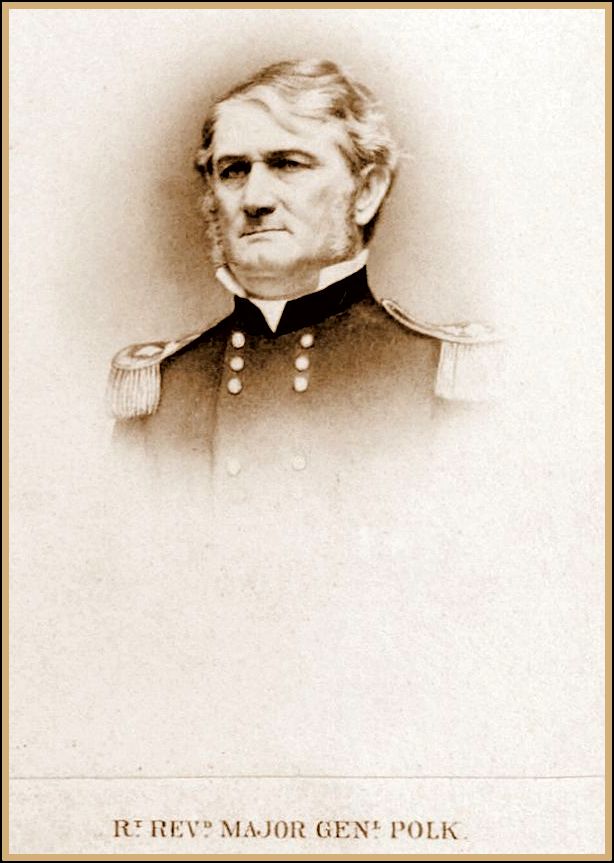
Lieut. Gen. Leonidas Polk

Courtesy of LPMS


+ + +


REVEREND ARCHIBALD
EVERHART 


Chaplain to the Staff Officers & Military Escort of

Bishop-General Leonidas Polk


Born on May 22, 1821, in Eufaula, Alabama.

Murdered on December 24, 1899, in Sewanee, Tennessee.

Buried in University Cemetery.


SIR ABDIEL


A Memorialist of Bishop-General Leonidas Polk

Our Work Is Unfinished.


+ + +


Bust of Abdiel,
Horaito Greenough (1838/1843),
Art Institute of Chicago

(Source: http://tinyurl.com/c34ddnv; viewed 12/19/2012)

____________


"...and in a flame of zeal severe..."


Raphael to Adam and Eve in John Milton's Paradise Lost,
Book V, 1667, 1674, edited excerpt:

Thus far his bold discourse without controul
Had audience; when among the Seraphim
Abdiel, than whom none with more zeal adored
The Deity, and divine commands obeyed,
Stood up, and in a flame of zeal severe
The current of his fury thus opposed.

"O argument blasphemous, false, and proud!
Words which no ear ever to hear in Heaven
Expected, least of all from thee, Ingrate,
In place thyself so high above thy peers.
Canst thou with impious obloquy condemn
The just decree of God, pronounced and sworn,
That to his only Son, by right endued
With regal scepter, every soul in Heaven
Shall bend the knee, and in that honour due
Confess him rightful King? Unjust, thou sayest,
Flatly unjust, to bind with laws the free,
And equal over equals to let reign,
One over all with unsucceeded power.
Shalt thou give law to God? Shalt thou dispute
With him the points of liberty, who made
Thee what thou art, and formed the Powers of Heaven
Such as he pleased, and circumscribed their being?
Yet, by experience taught, we know how good,
And of our good and of our dignity
How provident he is; how far from thought
To make us less, bent rather to exalt
Our happy state, under one head more near
United. But to grant it thee unjust,
That equal over equals monarch reign.
Thyself, though great and glorious, dost thou count,
Or all angelick nature joined in one,
Equal to him begotten Son? By whom,
As by his Word, the Mighty Father made
All things, even thee; and all the Spirits of Heaven
By him created in their bright degrees,
Crowned them with glory, and to their glory named
Thrones, Dominations, Princedoms, Virtues, Powers,
Essential Powers; nor by his reign obscured,
But more illustrious made; since he the head
One of our number thus reduced becomes;
His laws our laws; all honour to him done
Returns our own. Cease then this impious rage,
And tempt not these; but hasten to appease
The incensed Father, and the incensed Son,
While pardon may be found in time besought."

So spake the fervent Angel; but his zeal
None seconded, as out of season judged,
Or singular and rash. Whereat rejoiced
The Apostate, and, more haughty, thus replied:

"That we were formed then sayest thou? And the work
Of secondary hands, by task transferred
From Father to his Son? Strange point and new!
Doctrine which we would know whence learned. Who saw
When this creation was? Rememberest thou
Thy making, while the Maker gave thee being?
We know no time when we were not as now;
Know none before us, self-begot, self-raised
By our own quickening power, when fatal course
Had circled his full orb, the birth mature
Of this our native Heaven, ethereal sons.
Our puissance is our own; our own right hand
Shall teach us highest deeds, by proof to try
Who is our equal. Then thou shalt behold
Whether by supplication we intend
Address, and to begirt the almighty throne
Beseeching or besieging. This report,
These tidings carry to the anointed King;
And fly, ere evil intercept thy flight."

He said; and, as the sound of waters deep,
Hoarse murmur echoed to his words applause
Through the infinite host; nor less for that
The flaming Seraph fearless, though alone
Encompassed round with foes, thus answered bold:

"O alienate from God, O Spirit accursed,
Forsaken of all good! I see thy fall
Determined, and thy hapless crew involved
In this perfidious fraud, contagion spread
Both of thy crime and punishment. Henceforth
No more be troubled how to quit the yoke
Of God's Messiah; those indulgent laws
Will not be now vouchsafed; other decrees
Against thee are gone forth without recall;
That golden scepter, which thou didst reject,
Is now an iron rod to bruise and break
Thy disobedience. Well thou didst advise;
Yet not for thy advice or threats I fly
These wicked tents devoted, lest the wrath
Impendent, raging into sudden flame,
Distinguish not. For soon expect to feel
His thunder on thy head, devouring fire.
Then who created thee lamenting learn,
When who can uncreate thee thou shalt know."

So spake the Seraph Abdiel, faithful found
Among the faithless, faithful only he;
Among innumerable false, unmoved,
Unshaken, unseduced, unterrified,
His loyalty he kept, his love, his zeal;
Nor number, nor example, with him wrought
To swerve from truth, or change his constant mind,
Though single. From amidst them forth he passed,
Long way through hostile scorn, which he sustained
Superiour, nor of violence feared aught;
And, with retorted scorn, his back he turned
On those proud towers to swift destruction doomed.

____________


"This greeting on thy impious crest receive."


Raphael to Adam and Eve in John Milton's Paradise Lost,
Book VI, 1667, 1674, edited excerpt:


A dreadful interval, and front to front
Presented stood in terrible array
Of hideous length. Before the cloudy van,
On the rough edge of battle ere it joined,
Satan, with vast and haughty strides advanced,
Came towering, armed in adamant and gold;

Abdiel that sight endured not, where he stood
Among the mightiest, bent on highest deeds,
And thus his own undaunted heart explores:

"O Heaven! that such resemblance of the Highest
Should yet remain, where faith and realty
Remain not. Wherefore should not strength and might
There fail where virtue fails, or weakest prove
Where boldest, though to fight unconquerable?
His puissance, trusting in the Almighty's aid,
I mean to try, whose reason I have tried
Unsound and false; nor is it aught but just,
That he, who in debate of truth hath won,
Should win in arms, in both disputes alike
Victor; though brutish that contest and foul,
When reason hath to deal with force, yet so
Most reason is that reason overcome."

So pondering, and from his armed peers
Forth stepping opposite, half-way he met
His daring foe, at this prevention more
Incensed, and thus securely him defied:

"Proud, art thou met? Thy hope was to have reached
The highth of thy aspiring unopposed,
The throne of God unguarded, and his side
Abandoned, at the terrour of thy power
Or potent tongue. Fool! Not to think how vain
Against the Omnipotent to rise in arms;
Who out of smallest things could, without end,
Have raised incessant armies to defeat
Thy folly; or with solitary hand
Reaching beyond all limit, at one blow,
Unaided, could have finished thee, and whelmed
Thy legions under darkness. But thou seest
All are not of thy train; there be, who faith
Prefer, and piety to God, though then
To thee not visible, when I alone
Seemed in thy world erroneous to dissent
From all. My sect thou seest; now learn too late
How few sometimes may know, when thousands err."

Whom the grand foe, with scornful eye askance,
Thus answered: "Ill for thee, but in wished hour
Of my revenge, first sought for, thou returnest
From flight, seditious Angel! To receive
Thy merited reward, the first assay
Of this right hand provoked, since first that tongue,
Inspired with contradiction, durst oppose
A third part of the Gods, in synod met
Their deities to assert; who, while they feel
Vigour divine within them, can allow
Omnipotence to none. But well thou comest
Before thy fellows, ambitious to win
From me some plume, that thy success may show
Destruction to the rest. This pause between,
(Unanswered lest thou boast) to let thee know,
At first I thought that Liberty and Heaven
To heavenly souls had been all one; but now
I see that most through sloth had rather serve,
Ministring Spirits, trained up in feast and song!
Such hast thou armed, the minstrelsy of Heaven,
Servility with freedom to contend,
As both their deeds compared this day shall prove."

To whom in brief thus Abdiel stern replied:
"Apostate! Still thou errest, nor end wilt find
Of erring, from the path of truth remote.
Unjustly thou depravest it with the name
Of servitude, to serve whom God ordains,
Or Nature. God and Nature bid the same,
When he who rules is worthiest, and excels
Them whom he governs. This is servitude,
To serve the unwise, or him who hath rebelled
Against his worthier, as thine now serve thee,
Thyself not free, but to thyself enthralled;
Yet lewdly darest our ministring upbraid.
Reign thou in Hell, thy kingdom; let me serve
In Heaven God ever blest, and his divine
Behests obey, worthiest to be obeyed;
Yet chains in Hell, not realms, expect. Mean while
From me returned, as erst thou saidst, from flight,
This greeting on thy impious crest receive."

So saying, a noble stroke he lifted high,
Which hung not, but so swift with tempest fell
On the proud crest of Satan, that no sight,
Nor motion of swift thought, less could his shield,
Such ruin intercept. Ten paces huge
He back recoiled; the tenth on bended knee
His massy spear upstaid; as if on earth
Winds under ground, or waters forcing way,
Sidelong had pushed a mountain from his seat,
Half sunk with all his pines. Amazement seised
The rebel Thrones, but greater rage, to see
Thus foiled their mightiest; ours joy filled, and shout,
Presage of victory, and fierce desire
Of battle. Whereat Michael bid sound
The Arch-Angel trumpet; through the vast of Heaven
It sounded, and the faithful armies rung
Hosanna to the Highest...


Paradise Lost

A Poem in Twelve Books

By

John Milton


Bust of John Milton,
New York Public Library


(Source: http://tinyurl.com/cwc6fmw; viewed 12/19/2012)


Courtesy of LPMS


___________


From James G. Stahlman's "From the Shoulder,"
Nashville Banner, November 11, 1939, excerpt: 

Sewanee has made a very definite
contribution-
To Tennessee,
To the South,
To the Nation.
A great institution likes to recall the
achievement of her greatest sons.
Sewanee takes pride in her Gorgas,
her Grayson, her Butt.
Rightly so in her Gailor, her Polk,
her Manning, her Quintard.
And many more.


___________


"...in the words of Bishop Polk..."

From "Vice-Chancellor [Guerry] Addresses the Alumni," in Sewanee Alumni News, August, 1940, excerpts:


"The test of a man is his courage and resourcefulness in a crisis. The test of an institution is its courage and resourcefulness in a crisis. The test of an institution is its fortitude and strength in adversity."

"Often an institution succumbs in a time of crisis or difficulty. It appears that the blows from without, the impact of unexpected misfortune, cause the failure or collapse of an instuition. As a general rule, however, with exceptions, the failure or collapse of an institution- or of a man himself- is due to weakness within, lack of wisdom, lack of good judgment, lack of character, lack of courage, or lack of strength. In other words, there is no real excuse for the failure or collapse of an institution, even in the face of grave difficulties. Every institution must develop, therefore, that strength within, must possess that fortitude and resourcefulness that will make and keep it indestructible."  

---

"I shall name the defects, errors, and wrong traditions of Sewanee. The are not all peculiar to Sewanee alone. Some of these have been eliminated, some are in the process of elimination, and some are still with us. They are or have been our weakness within.

"These are (1) lack of financial responsibility and financial accountability... (4) destruction and deterioration of property, contradictory to the principle of self-discipline and the principle of economy in operation, (5) too much drinking on the campus and off the campus, contradictory to the principle of self-restraint and very harmful to the good name of the University..."

---

"Strength within for an institution comes not only from removing any weakness within, but also from maintaining and preserving fine ideals and traditions. The great ideals and traditions of a college or university are its chief source of strength. To keep and defend such ideals and traditions, to drive away any weakness that undermines them, is to maintain and presrve an institution, especially in the time of crisis and adversity."

"The tradition of the Sewanee Gentleman, the chivalry in the Sewanee man, the outward form of which is good manners, and the inward spirit of which is respect and consideration for others."

"If Sewanee follows her ideals, if Sewanee is loyal to her ideals, if she stands by them and lives by them through and in her sons, she will reach her destiny. And what is Sewanee's destiny? Her destiny is today, as it was in the day of her foundation, in the words of Bishop Polk, to glorify God and advance the cause of human happines on earth."


___________


"But the breath of Sewanee, caught, then inhaled and exhaled in perfect cadence by Mr. Percy in this exquisite chapter, is still that imparted by those Southern names he mentions: 'Kirby-Smith, Elliott, Quintard, Polk, Gorgas, Shoup, Gailor'."


-Announcement for William Alexander Pearcy's LANTERNS ON THE LEVEE: Recollections of a Planter's Son, in Sewanee Alumni News, February, 1941


___________


From "Memorial Service Held in Honor of Crawford Johnson," in Sewanee Alumni News, May, 1942:


Dr. Guerry's opening address, which we print herewith, struck the keynote of this very impressive service.

"Faith in an undertaking is the source of its power.  When Bishop Leonidas Polk laid the cornerstone of the University of the South, he and his comrades had faith in the institution which they were creating. Vision had fashioned the plan of a Christian University. Faith in the enterprise had brought the dream to reality. And since that day faith in the University of the South, confidence in the intrinsic merit of its work and its mission has sustained the University through the years of its struggle to survive and to fulfill the purpose of its being."

___________


 "...to the clearly-defined and blinding character of positive religious duty..."

Bishop Leonidas Polk, Appendix A, State of the Church, in JOURNAL OF THE PROCEEDINGS OF THE BISHOPS, CLERGY & LAITY OF THE PROTESTANT EPISCOPAL CHURCH IN THE UNITED STATES, Assembled in a General Convention, St. Paul's Episcopal Church, Richmond, October 5 - 22, 1859:


   Our Table of Statistics exhibits a continued and steady growth and increase of the Church in the Diocese of Louisiana, such as to call for devout thanks to the great Head of the Church for the manifold Manifestations of his presence and blessing among us.  We nevertheless are compelled to lament that this growth and increase have not been as great as we might desire, or ought reasonably to be looked for as the result of the means employed and the labor put forth.  Could we always retain the advantages gained, we might exhibit a much more prosperous condition than even the present gratify Report exhibits. This drawback to the permanency of our success is attributable, we think, mainly if not entirely, to the lack of educational institutions in which the distinctive features of the Church are clearly set forth and prominently inculcated, so as to counteract that laxity of opinion so extensively prevalent in regard to the clearly-defined and blinding character of positive religious duty, and conformity to religious ordinances.

This deficiency, when have good reason to believe, is soon to be partially supplied by the establishment of the proposed University, which, we trust, will not only operate favorably upon the youth instructed therein, but which will infuse a tone of healthy sentiment into our whole Church and community, calculated to correct the lax and ill-defined notions prevalent, and which are subversive or all rule, authority, and good government.  We look then to the establishment and carrying into effect of the University of the South, as a great desideratum in raising up and training stedfast and enlightened champions of truth, and in securing permanency and stability to our efforts and labors.


___________


"...in the exercise of her indefeasible right . . . . became a separate and Independant Sovereignty."


"On the 26th of January, the State of Louisiana, in the exercise of her indefeasible right, severed her connection with the Government of the United States, resumed the powers of which she had divestedd herself, and became a speparate and Independant Sovereignty. This act carried with it the political allegiance of her citizens. Their Supreme Government ceased to be that of the United States, and becoame that of the State of Louisiana, to which alone they owed a paramount fealty, and all the duties growing out of such a relationship. This change of allegiance, Churchmen share in common with others, and it became their duty promptly to demonstrate their recognition of that change, in the forms in which the Founder of our Holy Religion required his followers to recognize de facto Governments."


-From "Extract from Bishop Polk's Address," in Extracts from The Journal of the Twenty-Third Annual Convention of the Protestant Episcopal Church in the Diocese of Louisiana, New Orleans, 1861


___________


Circular of February 20, 1861, in Extracts, 1861:


To the Clergy of the Diocese of Louisiana:

The progress of affairs makes it expedient to direct further changes in the public services of the Church.

In the Prayer for those in civil authority, for the words "The President fo the United States," substitute the words "The President of the Confederate States."

In the special prayer set forth in my letter of the 30th ult., for the words "and the Convention of the Southern States," substitute the words "and the Congress of the Confederate States."

The prayer for the Legislature, as already indicated, will be continued during its sessions.

I remain very truly, your servant in Christ,

LEONIDAS POLK

Bishop of the Diocese of Louisiana

New Orleans, February 20, 1861


___________


"In 1834 Leonidas Polk went to Raleigh, and the following Spring took charge of the Episcopal church at Columbia. In 1835, on account of failing health, he traveled in Kentucky. He was next made Bishop of the Southwest, his field embracing Arkansas, the Texas Republic, Indiana, Louisiana and Alabama. As such he was consecrated by Bishops Smith, Meade, Otey adn McIlvane. In the summer of 1856 Bishop Polk announced his plan for founding a University at Sewanee, Tenn.* In this he was ably seconded by Bishop Elliott, and on October [10], 1860, the corner stone of the University of the South was laid at Sewanee by Bishop Polk. Bishop Otey, of Tennessee, presided, and the orator of the day was Col. John S. Preston, of South Carolina."


-William Harrison Polk, POLK FAMILY AND KINSMEN, 1912


*The location was unspecified in the announcement.


___________


"Father and First Founder of the University of the South"


From The Sewanee Alumni News, May, 1956:

 
Let Us Now Praise Famous Men 


The Sesqui-Centennial Address on "Leonidas Polk, Father and First Founder of the University of the South" was given by the Rt. Rev. Jonathan G. Sherman, Suffragan Bishop of Long Island, at the annual dinner of the New York alumni chapter on April 10, the anniversary of the birth of Polk. Bishop Sherman admitted the humorous incongruity of a Yale alumnus named Sherman speaking at the Harvard Club in honor of a Confederate general, but despite the handicap presented a fine statement on the life of Sewanee's third chancellor.

He paid tribute to the founders of the University with a text familiar from its annual use in All Saints' Chapel on October 10: "Let us now praise famous men, and our fathers that begat us," with particular mention of "that grand triumvirate of Bishops and Fathers in God- James Hervey Otey of Tennessee, Stephen Elliott of Georgia, and, in their center, Leonidas Polk, Missionary Bishop of Arkansas and the Southwest, first foreign missionary bishop of the Protestant Episcopal Church, first Bishop of Louisiana, and, in the words of Bishop Quintard, 'the projector, originator, and real founder of 
the University of the South.' "

Bishop Sherman recounted the military tradition in Polk's family, his birth in Raleigh, North Carolina, April 10, 1806, his education at the University of North Carolina at Chapel Hill, his entrance at West Point in 1823. Polk's conversion to the Christian faith and his public baptism in the presence of the corps of cadets was "the signal for a dramatic revival of religion which swept the whole institution." Polk resigned from the army after graduation and entered the Virginia Theological Seminary in 1828. He was ordained deacon in 1830, married to Frances Devereux of Raleigh, and became assistant to Bishop Moore at the Monumental Church in Richmond, Virginia. His health broke twice and he went abroad in 1831. He visited the European universities, "acquiring those impressions . . . which were to germinate and bear fruit twenty-five years later in the most magnificent educational project of his age." Upon his return in 1832, with his health not fully restored, he began farming in Tennessee. In 1834 he took charge of the local church, St. Peter's, Columbia. In 1838 he was elected by the General Convention as bishop for the missionary jurisdiction in the Southwest. He was consecrated in Cincinnati on December 9, 1838. His field contained 500,000 square miles and 1,500,000 people in Arkansas, the Indian Territory, Mississippi, Alabama, Louisiana, and the Republic of Texas. Bishop Sherman compared Polk's three missionary journeys with those of St. Paul. During the first eighteen months of his episcopate he spent only four with his family.

After three years as bishop of Arkansas, he was elected bishop of Louisiana by the General Convention of 1841. He moved his family and 400 slaves to a large sugar plantation, "Leighton," near Thibodaux. During his Louisiana episco pate, clergy in the diocese increased from six to thirty-two and congregations from four to forty-six. A succession of disasters-  cholera, yellow fever, misplaced trust in a friend- destroyed his personal estate. Yet during these years he planned his great project of a university for the Southern states. From 1856 to 1860 the organization of the University of the South took place, and on October 10, 1860, "it was properly given to the Bishop of Louisiana to perform the rite of laying the cornerstone in place." The prophetic orator on that day addressed Bishop Polk: "Whensoever it shall please God, your Master, to stay your radiant right arm from his battlefields on earth, and call you to His ever lasting triumphs, the heavens and your grateful country will read upon your tomb, "The Founder of the University of the South.' " When Polk became a general in 1861 "he did not throw off the gown for the sword; he buckled the sword over the gown." He perished at Pine Mountain, Georgia, on June 14, 1864.

To the problems of higher education today, "Leonidas Polk, being dead, yet speaks." Robert M. Hutchins for some years has been drawing our attention to the fact that the elective system in our colleges has produced chaos, that there is no longer any unity in the sense of a common framework of ideas, and that, consequently, our institutions of higher learning are no longer universities in the proper sense. Bishop Sherman said that Polk was "firm in the conviction that the professional man ought always to have a liberal education, and he thought that every gentleman ought to have at least so much acquaintance with every branch of human knowledge as to be capable of intelligent sympathy with the pursuits and thoughts of other educated men of any profession. He observed, too, that the isolation of technical schools, whether military, medical, legal, or theological, each by itself, tends to foster a narrow spirit of professional conceit which would be less likely to exist if the professors and students of the different faculties were in daily contact with each other."

President Griswold of Yale has been laboring valiantly to shake this country out of the trance which blinds it to the needs of its educational system, and proposes that "the great awakening will be brought about by parents and teachers steeped in the liberal arts and imbued with their spirit." Bishop Sherman feels that "the problem of higher education in America today is primarily not one of high finances butof high faith. The need of the hour is for men of the faith of Leonidas Polk. To meet this need is the high calling of the University of the South. And as long as there are those who teach and those who learn en the mountain-top at Sewanee, the name of Leonidas Polk will be remembered among those choice vessels of God's grace, the lights of the world in their several generations, for whom the Church will ever yield to Almighty God most high praise and most hearty thanks."

Copies of Bishop Sherman's Address are available upon request from the Associated Alumni, Sewanee, Tennessee.

---

In the course of Polk's first missionary journey in March, 1839, he crossed the Red River into the disputed territory between Texas and the United States, and embarked by boat for Shreveport, Louisiana. On the trip down the river the ship struck a partially submerged snag and would have sunk had not the bishop suggested to the ship's captain how to raise it. On reaching Shreveport Polk was told, "We have never had any preaching here, and
we don't want any." He borrowed a house for services, posting a $600 bond against any damages which might be done by ruffians. At the last moment, when a mob, as well as a congregation, was gathering, the sunken steamer which the bishop had raised came into port, and the crew, hearing of the disturbance, rushed to the scene of the unexpected riot, and declared that Polk should not be molested. He was no "common preacher," they said; he knew how to work, and they would like to see anyone hinder him from preaching if he wished to do so. Accordingly the service was held in quietness in the little settlement which Bishop Polk correctly prophesied would become the second largest city in Louisiana.

 ---

___________


"On a crisp January evening in the tenth year of the Charleston Annunciation, I was embodied in Kennesaw, Georgia, and witnessed a man of great distinction, erudition, and influence stand before the Polk's Corps flag and deliver his oration to a rarified and appreciative audience. He spoke of dire warnings and strong encouragements. He gave that needed prescription which now quickly grows as our community's conventional wisdom and practice: 'As long as your name is remembered, your soul does not die. . . . . A call to conscience and good sense tells us that we should hold closest to those things which are closest to us. . . . . We must become exiles by withdrawing ourselves from supporting what is against us and harms us. Abjure the prevailing Regime- become a stranger to the sickness of the world- that is the secret of happiness today. Eschew and discard the madness. Look at the positive virtues of your ancestors
and make them yours- anoint your own private Realm to their glory' ."


-Rev. Archibald Everhart, SIR ABDIEL, in THE LAST CHRISTIAN IN ALABAMA, draft manuscript


___________


Famous Confederate Commanders of the Civil War, 1861-'65

(Source: http://tinyurl.com/cpq6blu; viewed 12/23/2012)


"Lieutenant-General Leonidas Polk, Bishop of Louisiana, who commands the other corps d'armee, is a good-looking, gentlemanlike man, with all the manners and affability of a 'grand seigneur.'... He is much beloved by the soldiers on account of his great personal courage and agreeable manners."


-Lieutenant-Colonel Arthur J. L. Freemantle, THREE MONTHS IN THE SOUTHERN STATES, APRIL-JUNE, 1863


"Lieutenant-General Polk is a man of brilliant mind; well informed on all subjects; lively and imaginative; prompt, ardent and energetic; remarkably neat in personal appearance; dignified, yet courteous in manner; as brave in battle as eloquent in discourse; and looks as much the general as the bishop."


-Rev. Joseph Cross, CAMP AND FIELD, December, 1863


"The first glance revealed him as a man to be obeyed. A closer scrutiny showed him to be a man whom noble men might love and meaner men might fear."


-W.S. Perry, HISTORY OF THE AMERICAN EPISCOPAL CHURCH, 1885


Our Heroes and Our Flags

(Source: http://tinyurl.com/cecnkxz; viewed 12/23/2012)


___________


"Whence came this sense of detachment and serenity? In Lee, Polk and Jackson it was conceptualized as submission to the divine will throught the confession of their own sins, and attention to the known duties of godly persons. Thereby they felt confident in their work. No matter what the personal adversity, faith in God provided the sustaining power. At at time he had sustained a hundred thousand dollars damage to his crops, Bishop Polk wrote, "I have done all I could, I must leave the future in God's hands. If he send this trouble, it is his will. Let him do what seemeth to him good., but though he slay me, yet will I trust him. Out of this quite confidence came an acceptance of human limitations first in self and then in others."


-Samuel Southard, "The Southern Soldier-Saint," Journal for the Scientific Study of Religion, Vol. 8, No. 1, Spring, 1969; see footnotes re Dabney & Parks.


"The Anxiety of Group Survival," by Michael J. A. Wohl, at www.nytimes.com, December 15, 2012, excerpts:


"It’s no wonder that collective angst is experienced by so many people. We simply don’t want our groups to disappear. Our sense of self is based partly on the groups we belong to; so if one dies, a portion of the self dies with it."

"The social group offers its members more than just a geographic or ethnic name tag; it can provide the existential ground on which they stand. Membership in a group often means embracing shared beliefs, values and traditions that are passed on through generations."


____________


"You have heard that All Men Are Created Equal, which somehow magically negates that Just Powers of Government Are Derived from the Consent of the Governed, but have you heard of the 'Anxiety of Equality'? You are told you must believe in Equality, but you are forbidden from asking for evidence of Equality. Those who are afflicted by the Equality Anxiety are fearful that one day you might ask the question in a way that forces them to answer."


-From THE LAST CHRISTIAN IN ALABAMA, draft manuscript 


___________


"That's right. Don't hurt them right away. We'll let them think about it for a little first. Seize them! Seize them! Seize them! There they go! Ah! Now we've got them! . . . . Well, the last to go will see the first three go before her!"


-Wicked Witch of the West, in Metro-Goldwyn-Mayer's The Wizard of Oz, 1939


"When this work made its appearance, in 1802, infidelity was the order of the day in France. That beautiful country, whose people had once held so prominent a rank among the Catholic* nations of Europe, presented but a vast scene of ruins, the fatal consequences of that systematic war which impious sophists had waged against religion during the latter half of the eighteenth century. The Revolution had swept away in its desolating course all the landmarks of the ancient society. Churches and altars had been over thrown; the priests of God had been massacred, or driven into exile; asylums of virtue and learning had been profaned and laid waste; everything august and sacred had disappeared. In the political and social sphere the same terrific destruction was witnessed. After a succession of convulsions, which had over thrown the Bourbon dynasty, and during which the passions of men had rioted amid the wildest anarchy and the most savage acts of bloodshed, the chief authority became vested in a consul whose mission was to re-establish social order, and whose efforts in that direction were gladly welcomed by the nation, grown weary and sick, as it were, of the dreadful calamities that had come upon them. It was an auspicious moment for the fearless champion of Christianity, to herald the claims of that religion whose doctrines constitute the only safe guide of the governing and the governed. But, among a people who to a great extent had conceived a profound antipathy to the theory and practice of religion, by the artful and persevering efforts of an infidel philosophy to render the Christian name an object of derision and contempt, a new method of argument was necessary to obtain even a hearing in the case, much more to bring back the popular mind to a due veneration for the Church and her teachings. It would have been useless, when the great principles of religious belief were disregarded, when the authority of ages was set at naught, to undertake the vindication of Christianity by the exhibition of those external evidences which demonstrates its divine origin. Men had become deluded with the idea that the Christian religion had been a serious obstacle in the way of human progress; that, having been invented in a barbarous age, its dogmas were absurd and its ceremonies ridiculous; that it tended to enslave the mind, opposed the arts and sciences, and was in general hostile to the liberty of man and the advancement of civilization. It was necessary, therefore, in order to refute these errors, to exhibit the intrinsic excellence and beauty of the Christian religion, to show its analogy with the dictates of natural reason, its admirable correspondence with the instincts of the human heart, its ennobling influence upon literature and the arts, its beneficent effects upon society, its wonderful achievements for the civilization and happiness of nations, its infinite superiority over all other systems, in elevating the character, improving the condition, and answering the wants of man, under all the circumstances of life; in a word, to show, according to the design of our author, not that the Christian religion is excellent because it comes from God, but that it comes from God because it is excellent."


-Charles I. White, D.D., Editor & Translator, Preface to the Ninth Revised Edition of Viscount de Chateaubriand's THE GENIUS OF CHRISTIANITY (1802), 1871


François-René de Chateaubriand,
by
Anne-Louis Girodet de Roussy-Trioson (ca. 1808)

(Source: http://goo.gl/gmXWk; viewed 12/19/2012)


*Even though the legacy of Bishop-General Leonidas Polk is thoroughly Reformed and Protestant, we appreciate the inspiring value expressed through the rich artistic productions given to history by the Roman Catholic Church's faithful defenders.


Sewanee: The San Marino of the South


(Source: http://goo.gl/YJhBM; viewed 12/19/2012)


Breslin Tower at The University of the South,
Sewanee, Tennessee

(Source: http://goo.gl/7V3WM; viewed 12/19/2012)


"Our Southern Canterbury"

All Saints' Chapel, The University of the South

(Source: http://goo.gl/3lW6M; viewed 12/19/12)


Canterbury Cathedral, Kent, England

(Source: http://tinyurl.com/bm2cw3h; viewed 12/19/2012)


Memorial to the 16th Queen's Lancers,
Canterbury Cathedral, including excerpt from
Rupert Brooke's "The Soldier," 1914:

If I should die think only this of me
That there's some corner of a foreign field
That is for ever England.

(Source: http://tinyurl.com/chzjd7d; viewed 12/19/2012)


Rupert Brooke

(Source: http://tinyurl.com/bvgq5ax; viewed 12/19/2012)


If I should die, think only this of me:
That there's some corner of a foreign field
That is for ever England. There shall be
In that rich earth a richer dust concealed;
A dust whom England bore, shaped, made aware,
Gave, once, her flowers to love, her ways to roam,
A body of England's, breathing English air,
Washed by the rivers, blest by suns of home.

And think, this heart, all evil shed away,
A pulse in the eternal mind, no less
Gives somewhere back the thoughts by England given;
Her sights and sounds; dreams happy as her day;
And laughter, learnt of friends; and gentleness,
In hearts at peace, under an English heaven.


Rupert Brooke Memorial,
inscribed with "The Soldier,"
Rugby School Chapel, Warwickshire


(Source: http://tinyurl.com/dxcq4jp; viewed 12/20/2012)


(Source: http://tinyurl.com/c3upos9; viewed 12/20/2012)


(Source: http://tinyurl.com/c9ogsax; viewed 12/20/2012)


Pending Research Notes & Additional Miscellany

From Albert Gallatin Brown's "An Address on Southern Education," at Madison College, Sharon, Mississippi, on July 18, 1859, excerpts:

To educate the common mind is the first duty of us all. It is a duty we owe to ourselves, our children, our country, and to our God. To educate the rising generation is a high duty; to educate it correctly is yet a higher duty. Every son and daughter should be schooled for that position which he or she is expected to occupy in future life. If children are dedicated to their country- as all children should be- it is vastly important that their minds be so trained as to make them in all regards the most useful members of society. If they are to live in the South, and follow Southern occupations, it is of the very last importance that they receive Southern educations.

---

The children of the South ought to be educated in the South. In the great business of education, attention should be given to the physical as well as the intellectual development of the pupil. The physical development should be that which best suits the child to the climate in which he is to live, and which gives the surest guarantee of continued good health in after life.

---

Next, and if possible more important, is the moral and social training which the pupil is to undergo. I do not mean to raise any sectional issue, but I should poorly discharge my duty to the question in hand if I failed to say that the people of the North, almost without respect to party, creed, or cast, have adopted a code of ethics, as regards Southern institutions, totally at war with our notion of what is right, and which strikes at onece the foundation of the social system of the Southern States.

So long as they confined their practices under this code to the rostrum and the forum, it was safe to leave our statement to combat their errors. But when they have abased the school-room and the pulpit to the paltry purpose of maligning our institutions, it belongs to us to see at least that the minds of our own children are not contaminated with the heresies which they both teach and preach.

---

And these are the influences by which we surround our sons and daughters when we send them to the North to be educated. As well might we send them among pagans and expect them to return better Christians as to send them among such a people and expect them to come back with sounder views on the subject of home institutions.

--- You ask me if there is no remedy for the evils I have been pointing out, I answer, there is. It is convenient, easy, natural. Let us have our own schools, academies, colleges, and universities. Let us rear and educate our own teachers; and above all, let usu prepare an publish our own school books.

---

It is useless to add that it is little sort of self-abasement for us to patronize either the books, their authors, or those who use them.

It may be said that difficulties, and some suppose insuperable difficulties, interpose to the establishment of proper schools and seminaries of learning in the South. It is a popular error which I am but too happy to combat. I have already answered the objection as to climate, and I now see but one obstacle in the way, and that is the want of will. Let Southern parents cease to send their sons and daughters to the North and resolve to build up schools and colleges at home and the work is done.

---

It is pleasant to know that wiser councils are likely to prevail in the future. Appearances indicate that the people appreciate the folly of their past course and are preparing to adopt the only policy which can be efficient in remedying the evils so universally admitted and complained of. We must have our own schools, and to give them the highest degree of usefulness we must educate our own teachers, and prepare and publish our own school books.

---

It is idle to talk of Southern education so long as we borrow our hire our teachers from the North. We rear and educate our sons for the law, medicine, the mechanic arts, and divinity, but we seldom train them for the lofty profession of teaching; we teach our daughters to adorn the drawing-room, but we never teach them to adorn the school-room. We get our teachers as we get our dry goods- from the North. Surely this ought not to be. A competent teacher generally is not, and certainly never ought to be, a merchantable article. If he is trained to his profession, and is every way competent to discharge his duties, he ought to find employment at home.

---

We can never have proper school books until we educate our own teachers. The learned men of every profession write the books for that profession. We do not expect books on theology from lawyers, nor books on law from preachers. If we want school books we are to look to teachers for them. We all know how impure the fountain at the North has become, and can we expect that the stream which it pours through the South is to be otherwise than impure?

Let no one suppose that I am trying to fan the flames of sectional discord, I am only trying to protect the minds of the Southern youth from the contaminating influences of Northern teaching. The Northern parent does not send his sons or daughters to Southern schools, and of the few school books written by Southern authors, I am not aware that a single one has found its way, to any extent, into the schools of the North, and yet no one thinks of charging the Northern people with being sectional. They have their own schools, educate their own teachers, write their own books; and why should not we?

To have the policy I have indicated carried into effect, the public sentiment of the South must be aroused to a full appreciation of the dangers springing from the present system. The legislation on this whole subject is far behind the public wants, but it is up to, if it is not in advance of public sentiment. The subject is one which concerns every citizen; and when every citizen, or even a very large majority shall determine to have Southern schools, Southern books, and Southern teachers, the work will almost have been accomplished.

---

In all your intercourse with men be natural. Remember that your Creator has stamped upon each of you a character as distinct as the features that mark your several faces. You may improve that character by cultivation, or you may injure it by neglect; but you can never change it.

"The leopard cannot change its spots, nor the Ethiopian his skin." Every man and woman must fulfil that destiny in life for which nature designed them. The easiest and smoothest way to do it is to follow instead of trying to reverse the decrees of nature. Poets, philosophers, orators, statesmen, and heroes were all made in heaven; so were all those who throng the humbler walks of life. Men fail because they aspire too high, or seek success where nature never designed that it should be found. "Know thyself;" aspire, but not too high; study first to know the design of your creation, and then labor to fulfil it.

---

Yield not to temptations. To-day you stand beneath the shadow of your
alma mater. Its fostering care has shielded you from harm. To-morrow you will stand on the threshold of active life. Then two divinities will appear. One will point you to an easy declivity, strewn with garlands of the rarest beauty, beset on every side with gems and precious stones, and spanned at intervals with rainbows of surpassing brilliancy. Follow it, and it will lead you down to ruin. The other will point you up a rugged way, winding amid cliffs and brambles, strewed with dangers and beset with difficulties at every step, covered with shadows, and lighted only with the flickering rays which hope ever and anon darts through the general gloom. Follow it, and it will lead you on to fortune. The first is temptation, wreathed in smiles; the other duty, clad in sombre habiliments. Choose ye to-day which divinity shall be yours.

Whatever difficulties beset you in life, be faithful to every trust. Let fortune or let fortune smile, remember that we are the dependent creatures of an overruling and all-wise Providence; that he can build up and he can pull down; that he assuredly will, in his own way an in his own good time, reward virtue and punish vice. Love your country! The man who is not true to his country, at all times and under all circumstances- who permits the fires of patriotism to smoulder on his heart, is fit only for "treason, stratagems, and spoils." Next to the God of thy creation worship truth; lock it up in your hearts; make it the companion of your daily walks; be guarded by its councils; never admit that it can depart from you or you from it. In short-

"Let all the ends thou aim'st at be thy country's,
Thy God's, and truth's; then if thou fall'st
...thou fallest a blessed martyr."


---

My heart is with the South. She is the mistress of my idolatry. I am a Southron to the manner [
sic
] and to the manor born. To me the rising sun kisses her hill-tops with a sweeter smile; and setting he gilds her brow in a brighter diadem. Her lofty mountains and her broad rivers, her fertile plains and her genial climate, her noble sons and her fair daughters- all, all have a charm for me possessed by no other land. Peerless queen, the kingdoms of the earth court thy favor; commerce lays its sceptre at thy feet; science pays thee homage; philosophy respects thy genius, and grim-visages war unbends his brow at thy command. How long, O my country, will you submit to the gives of your enemies, or turn silent scorn from those who upbraid you! Be true to thyself. March home to thine own glorious destiny. Educate thy children. They will throw around thee a rampart solid as adamant and high as the everlasting hills. Sons of the South, be true to your country. It is the home of chivalry, of heroes, and of statesmen. Daughters of the South, be true to the South. Throw around it the genial influence of your deep devotion. It is "the home of the free, and the land of the brave." O glorious country-

"Have you a son with a soul so dead
As never to himself to have said
You are my own, my native land?"


__________


From The Southern Quarterly Review, Volume 7, Issue 14, April 1853:

"A Plea for Home Education in the South" is the title of a very creditable address, made before one of the colleges Alabama, by Mr. Edward C. Bullock, a native of South Carolina, who is likely to do her credit where he goes, and who certainly does not forget what he owes her as a son. Let him persevere, and be diligent in his calling, and he may count upon success.

___________


From DON QUIXOTE DE LA MANCHA, on Quixote de la Mancha, by Miguel de Cervantes Saaverdra, 1605,1615, excerpts:


"Nor were their ornaments like those in use to-day, set off by Tyrian purple, and silk tortured in endless fashions, but the wreathed leaves of the green dock and ivy, wherewith they went as bravely and becomingly decked as our Court dames with all the rare and far-fetched artifices that idle curiosity has taught them. Then the love-thoughts of the heart clothed themselves simply and naturally as the heart conceived them, nor sought to commend themselves by forced and rambling verbiage. Fraud, deceit, or malice had then not yet mingled with truth and sincerity. Justice held her ground, undisturbed and unassailed by the efforts of favour and of interest, that now so much impair, pervert, and beset her. Arbitrary law had not yet established itself in the mind of the judge, for then there was no cause to judge and no one to be judged. Maidens and modesty, as I have said, wandered at will alone and unattended, without fear of insult from lawlessness or libertine assault, and if they were undone it was of their own will and pleasure. But now in this hateful age of ours not one is safe, not though some new labyrinth like that of Crete conceal and surround her; even there the pestilence of gallantry will make its way to them through chinks or on the air by the zeal of its accursed importunity, and, despite of all seclusion, lead them to ruin. In defence of these, as time advanced and wickedness increased, the order of knights-errant was instituted, to defend maidens, to protect widows and to succour the orphans and the needy. To this order I belong, brother goatherds, to whom I return thanks for the hospitality and kindly welcome ye offer me and my squire; for though by natural law all living are bound to show favour to knights-errant, yet, seeing that without knowing this obligation ye have welcomed and feasted me, it is right that with all the good-will in my power I should thank you for yours."  -Don Quixote


___________


"The answers to these questions are, at the same time, obvious and extremely elusive.  Communism, as a forceful political philosophy that aims not merely to interpret our would but to change it beyond recognition, is unfortunately only too much with us.  Therefore, the story of one man's journey to the uttermost depths of the Communitst movement retains a compelling interest and relvevance.  It is not merely a part of our history; it speaks of something that has a potential for harm to those not immunized against it by terrible experiences."


-Milton Hindus, Introduction to Whittaker Chambers's WITNESS, 1980 edition


___________


From WITNESS, by Whittaker Chambers, 1952, 1980, excerpts:


For it was more than a human tragedy. Much more than Alger Hiss or Whittaker Chambers was on trial in the trials of Alger Hiss.  Two faiths were on trial. Human societies, like human beings, live by faith and die when faith dies. At issue in the Hiss Case was the question whether this sick society, which we call Western civilization, could in its extremity still cast up a man whose faith in it was so great that he would voluntarily abandon those things which men hold good, including life, to defend it.  At issue was the question whether this man's faith could prevail against a man whose equal faith it was that this society is sick beyond saving, and that mercy itself pleads for its swift extinction and replacement by another. At issue was the question whether, in the desperately divided society, there still remained the will to recognize the issues in time to offset the immense rally of public power to distort and pervert the facts.

- - -

But this destruction is not the tragedy. The nature of tragedy is itself misunderstood. Part of the world supposes that the tragedy in the Hiss Case lies in the acts of disloyalty revealed. Part believes that the tragedy lies in the fact than an able, intelligent man, Alger Hiss, was cut short in the course of a brilliant public career.  Some find it tragic that Whittaker Chambers, of his own will, gave up a $30,000-a-year job and a secure future to haunt for the rest of his days the ruins of his life. These are shocking facts, criminal facts, disturbing facts, but they are not tragic.

Crime, violence, infamy are not tragedy. Tragedy occurs when a human soul awakes and seeks, in suffering and pain, to free itself from crime, violence, infamy, even at the cost of life. The struggle is the tragedy- not defeat or death. That is why the spectacle of tragedy has always filled men, not with despair, but with a sense of hope and exaltation. That is why this terrible book is also a book of hope. For it is about the struggle of the human soul- of more than one human soul. It is in this sense that the Hiss Case is a tragedy. This is its meaning beyond the headlines, the revelations, the shame and suffering of the people involved. But this tragedy will hae been for nothing unless men understand it rightly, and from it the world takes hope and heart to begin its own tragic struggle with the evil that besets it from within and from without, unless its faces the fact that the world, the whole world, is sick unto death and that, among other things this Case has turned a finger of fierce light into the suddenly opened and reeking body of our time.

- - -

I'll give you an answer: I was a witness. I do not mean a witness for the Government or against Alger Hiss and the others. Nor do I mean a short, squat, solitary figure, trudging through the impersonal halls of public buildings to testify before Congressional committees, grand juries, loyalty boards, courts of law. A man is not primarily a witness against something. A witness, in the sense that I am using the word, is a man whose life and faith are t]so completely one that when the challenge comes to step out and testify for his faith, he does so, disregarding all risks, accepting all consequences.


- - -

But a man may also be an involuntary witness. I do not know any way to explain why God's grace touches a man who seems unworthy of it.  But neither do I know any other way to explain how a man like myself- tarnished by life, unprepossessing, not brave- could prevail so far against the powers of the world arrayed almost solidly against him, to destroy him and defeat his truth. In this sense, I am an involuntary witness to God's grace and to the fortifying power of faith.

It was my fate to be in turn a witness to each of the two great faiths of our time. And so we come to the terrible word, Communism. My very dear children, nothing in all these pages will be written so much for you, though it is so unlike anything you would want to read. I nothing shall I be so much a witness, in now way am I so much called upon to fulfill my task, as in trying to make clear to you (and to the world) the true nature of Communism and the source of its power, which was the cause of my ordeal as a man, and remains the historic ordeal of the world in the 20th century.  For in this century, within the next decades, will be decided for generations whether all mankind is to become Communist, whether the whole world is to become free, or whether, in the struggle, civilization as we know it is to be completely destroyed or completely changed. It is our fate to live upon that turning point of history.


- - -

The revolutionary heart of Communism is not the theatrical appeal: "Workers of the world, unite. You have nothing to lose but your chains. You have a world to gain." It is a simple statement of Karl Marx, further simplified for handy use: "Philosophers have explained the world; it is necessary to change the world." Communists are bound together by no secret oath. The tie that binds them across the frontiers of nations, across barriers of language and differences of class and education, in defiance of religion morality, truth, law, honor, the weakness of the body and the irresolutions of the mind, even unto death, is a simple conviction: It is necessary to change the world.  Their power, whose nature baffles the rest of the world, because in a large measure the rest of the world has lost that power, is the power to hold convictions and act on them. It is the same power that moves mountains; it is also an unfailing power to move men. Communists are that part of mankind which has recovered the power to live or die- to bear witness- for its faith. And it is a simple, rational faith that inspires men to live or die for it.

It is not new. It is, in fact, man's second oldest faith. Its promise was whispered in the first days of the Creation under the Tree of Knowledge of Good and Evil: "Ye shall be as gods." It is the great alternative faith of mankind. Like all great faiths, its force derives from a simple vision. Other ages have had great visions. They have always been different versions of the same vision: the vision of God and man's relationship to God. The Communist vision is the vision of Man without God.

- - -

Hence the Communist Party is quite justified in calling itself the most revolutionary party in history. It has posed in practical form the most revolutionary question in history: God or Man? It has taken the logical next step which three hundred years of rationalism hesitated to take, and said what millions of modern minds think, but do not dare or care to say: If man's mind is the decisive force in the world, what need is there for God? Henceforth man's mind is man's fate.

- - -


The vision inspires. The crisis impels. The workingman is chiefly moved by the crisis. The educated man is chiefly moved by the vision. The workingman, living upon a mean margin of life, can afford few visions- even pratical visions. An educated man, peering from the Harvard yard, or any college campus, upon a world in chaos, finds in the vision the two certainties for which the mind of man tirelessly seeks: a reason to live and a reason to die. No other faith of our time presnets them with teh same practical intensity. That is why Communism is the central experience of the first half of the 20th century, and may be its final experience- will be, unless the free world, in the agony of its struggle with Communism, overcomes its crisis by discovering, in suffering and pain, a power of faith which will provides man's mind, at the same intensity, with the same two certainties: a reason to live and a reason to die.  If it fails, this will be the century of the great social wars. If it succeeds, this will be the century of the great wars of faith.


- - -

Why does the Communist ever hear them? Because in the end there persists in every man, however he may deny it, a scrap of soul. The Communist who suffers this singular experience then says to himself: "What is happening to me? I must be sick." If he does not instantly stifle that scrap of soul, he is lost. If he admits it for a moment, he has admitted that there is something greater than Reason, greater than the logic of mind, of politics, of history, of economics, which alone justifies the vision. If the party senses his weakness, and the party is peculiarly cunning at sensing  such weakness, it will humiliate him, degrade him, condemn him, expel him. If it can, it will destroy him. And the party will be right. For he has betrayed that which alone justifies his faith- the vision of Almighty Man. He has brushd the only vision that has force agaisnt the vision of Almighty Mind. He stands before the fact of God.

- - -

Thus, as children, you experienced two of the most important things men ever know- the wonder of life and the wonder of the universe, the wonder of life within the wonder of the universe. More important, you knew them not from books, not from lectures, but simply form living among them. Most important, you knew them with reverence and awe- that reverence and awe that has died out of the modern world and been replaced by man's monkeylike amazement at the cleverness of his own inventive brain.


- - -


I am leading you, not through cool pine woods, but up an up a narrow defile between bare and steep rocks from which in shadow things uncoil and slither away. It will be dark. But, in the end, if I have led you aright, you will make out three crosses, from two of which hang thieves. I will have brought you to Golgotha- the place of skulls. This is the meaning of the journey. Before you understand, I may not be there, my hand may have slipped from yours. It will not matter. For when you understand what you see, you will no longer be children. You will know that life is pain, that each of us hangs always upon the cross of himself. And when you know that this is true of every man, woman and child on earth, you will be wise.


- - -


The men and women Communists and fellow travelers who staffed this Fifth Column were dedicated revolutionists whose primary allegiance was no longer to any country- nor to those factors which give a country its binding force: tradition, family, community, soil, religious faith. Their primary allegiance was to a revolutionary faith  and a vision of man and his material destiny which was given political force by international Communism, of which the American Communist Party and the Russian Communist Party (and hence the Soviet Government, which is only an administrative apparatus of the Russian Communist Party) are component sections.


- - -

I do not know why I read and reread this brief obituary or why there came over me a foreboding, an absolute conviction: Something terrible is happening. I felt this so strongly that I mentioned the item to J. Peters, the ehad of the underground section of the American Communist Party.  He did not answer me at once. Then he said fiercely: "A comrade who has just come back from Moscow is going around saying that there is a terror going on there and that they are arresting and shooting everybody.  He should be taken care of." This was Peters' way of saying that I should shut up. Then I knew that my foreboding was right.


___________


"When the story leaked out, the Israeli media began to speculate as to the prisoner's identity and the charges, but the Israeli censor soon moved to quash any discussion of the prisoner by issuing one of the most comprehensive bans in the history of media regulation. An Israeli judge declared not only that was it impermissable to report on this story, but that it was forbidden to report the act of censorship."


-Justin Raimondo, "Forgetting Prisoner X," Chronicles, April 2013


___________


"But the final essay by Michael Miller offers a proposal to counter the deleterious effects of scientific dogmatism or 'scientism.' Miller argues that people must again, actively and publicly, cultivate virtue. They must learn to recognize the difference between good and evil, ugliness and beauty, and devote time to pryar and reflection. Most importantly, however, there must be a return to reason. Lewis thought that scientific dogmatism and reductionism were unreasonable. Reason must be freed from these shackles to recognize other dimensions of life- the spiritual and moral- which have been stunted by the absolutism of scientific and (scientistic) rationality. Faith and reason, as Pope Benedict has said, must be reunited. The time for reunification is now."


-Tobias J. Lanz, "That Hideous Absolutism," review of THE MAGICIAN'S TWIN: C.S. Lewis on Science, Scientism, and Society, 2012, in Chronicles, May 2013


___________


 "With encouragement from those who loved her, she described her lived experience in a long and illuminating essay. Her family and friends knew how much Mary Ware Meriwether Mims had suffered at Sewanee, but also how much her suffering could become a moral instruction to others who were there now, and to those who had already graduated, as well as to the parents of prospective students who hope, mostly in vain, that college will not ruin their children and begin the dissolution of their family prominence. They had told her that her story must be shared to a large and needy audience. She had suffered too much and made too many sacrifices, and these disturbing lessons must be shared for the moral improvement of others. She had seen the fundamental ugliness, and her duty was to tell it to others before they become infected by the same Sewanee disease. So she sat down in a quite place, gave her painful memories free reign, and began writing. Borrowing an idea from Booker T. Washington's 'Up from Slavery,' but more so from Richard Weaver's 'Up from Liberalism,' she titled it 'Up from Sewanee,' and sent it off to the wealthy and influential Mr. Randolph in Richmond. Sewanee has regretted her doing so ever since. It regrets her, in general, but deserves many more just like her. Sadly, due to several preemptive and secretive adjustments in the Admissions Office procedures, her type will possibly never be seen again in a Freshmen class at Sewanee."


-From THE LAST CHRISTIAN IN ALABAMA, draft manuscript


___________


"Dr. W.M. Polk, the son of one of the three founders, Bishop Leonidas Polk, indulged in reminiscenses of those first years of trial; then guiding us throught he mazes of the past to the crowning present, he demonstrated that Sewanee with her ideals, breadth of views, and splendid foundation, was such to whom not only the South but the nation at large would henceforth look for a solution of any problem that might overshadow the horizon of the present as well as of the coming years."


"Impresive Addresses by Bishop's Gailor and Tuttle, and Dr. Polk in All Saints' Chapel and at Historic Corner-Stone," The Sewanee Purple, Special Semi-Centennial Edition, June 25, 1907

___________


"Sewaneeana," The Sewanee Purple, December 6, 1946, excerpt:


The portrait of the Rt. Rev. Leonidas Polk, the first Bishop of Louisiana, second Chancellor of the University, was painted by the artist in one day, as the Bishop had not time to spare. It was given to the University in 1936 by Mr. William M. Polk, the widow of the Bishop's son. Bishop Polk came from a family of strong military but most unchristian traditions. His father secured an appointment to West Point for him. While a cadet he was converted to Christianity at a time when there was not a single professing Christian in the faculty or corps. The Chaplain baptized him in chapel before the entire cadet corps! This was the start of a general religious movement which had a profound influence upon the school. He determined to enter the ministry. Because of poor health he toured Europe in 1833 and visited many of the leading educational institutions. He took up work in Tennessee when he returned and was associated with Bishop Otey in his first efforts to found a University.  He was soon singled out to be Missionary Bishop of the Southwest. In 1841 he was chosen to be the first Bishop of Louisiana. The idea of founding a university stirred in his mind. He began to draw up detailed plans on a magnificent scale. He enlisted the aid of Bishop Elliott, and together they rallied the Southern Church.  In 1856 the Southern bishops sent to their dioceses from the General Convention in Philadelphia, calling for such a university.  First meeting of the Board of Trustees was held in 1857. Together he and Elliott raised $500,000. It was rightfully Polk who laid the first cornerstone on the University on October 10, 1860. Then came the war, and at the urgent request of President Davis, Polk reluctantly accepted a commission of major general of he Confederate Army in command of the defenses of [the] Mississippi. During the war he baptized Generals Hood, Joseph E. Johnston, and Hardee* in tents behind the battle line.  He was killed by cannon shot on June 14, 1864.


(*Unlikely that Polk baptized Hardee.)


___________


"A few years after the famous Southern author Peter Taylor stood in All Saints' Chapel on Founders' Day giving us our best definition of ourselves, he released a well-received short novel about a Tennessee family. For this novel, he was given a Pulitzer Prize. In it, the three geographical and cultural divisions of the State of Tennessee are described and explained; but at the end of the book, the main character's natural identification with Tennessee dissolves into nothingness. Peter Taylor earned a Pulitzer Prize for that. If you, too, want to get a Pulitzer, just write a book about the South that tells the Yankees what they want to hear about us, and then at the end, disavow all the goodness you know. You'll get your Pulitzer if you show them the kind of devout Southern masochism they demand, and the Yankees will make you famous for 
'advancing the march of Social Progress and positive change.' "


-From THE LAST CHRISTIAN IN ALABAMA, draft manuscript


___________


"Sewaneeana," by Charles Widney, Jr., The Sewanee Purple, May 11, 1948, edited:


In her official capacity as Archivist of the University, Mrs. Oscar N. Torian, familiarly known as "Miss Sarah," is doing a work of almost daily increasing interest and importance. The Sewaneeana cage in the basement of the Library is filled with articles and documents which are the evidences of Sewanee's historical past. It is only as the result of her unceasing efforts that much of this material has been rescued from permanent loss or destruction.

Today Sewanee is experiencing an unprecedented expansion in size and influence. At such a time it is doubly important that we keep ever before us the spiritual and intellectual ideals of her founders. The clearness of our perception of them will inevitably be increased by a knowledge and appreciation of those physical objects which still link us to the past.

Of particular interest to us are those objects now in the possession of the University which make more real the life and work of Bishop Leonidas Polk, one of those three great men whom Sewanee is proud to remember as her founders.  As a Christian, as a soldier, and as a leader of men, Bishop Polk was the epitome of the type of man which it has always been the goal of Sewanee's intellectual training to produce. It is not my purpose to rehearse the details of a life already so familiar. For those who are interested a very complete account of his life has been written by his son William M. Polk and is part of the Sewaneeana collection. A shorter and more easily obtainable history is contained  in Men Who Mad Sewanee by the Rev. Moultrie Guerry.

Bishop Polk owned a summer home at popular Beersheba Springs about 30 miles from Sewanee. One of its furnishings was a small oak altar upon which he celebrated Holy Communion. This altar was used at the services held in connection with the second meeting of the Board of Trustees of the University on 3 July 1858 at Beersheba. It is now in Miss Sarah's possession and is being repaired and restored under her direction.

Shortly after the outbreak of the War Between the States Bishop Polk, who was a West Poin graduate, was commissioned by President Davis as a Major General temporarily in command of the Southwest.  He served the Confederacy faithfully until his death which came on 14 June 1864 as he was reconnoitering with General Hood and General Joseph E. Johnston on Pine Mountain at [Kennesaw], Georgia. He was killed instantly by cannon shot which crashed through his chest. Some of the shot was recovered and is now in the Sewaneeana collection.

The University has in its possession the telegram sent to Bishop Quintard on the day of Polk's death by J. K. Simmons, informing him that the Bishop's remains would be sent by way of Atlanta to Augusta for burial.

The University is very fortunate to have two fine portraits of Bishop Polk.  One of them hangs in St. Luke's common room. It is a full length portrait of the Bishop in his uniform and originally belonged to a set of portraits which included one each of Breckenridge, Stonewall Jackson, Stephen D. Lee, Albert Sidney Johnston and several others.  Mr. [Eliphalet] Andrews, at one time curator of the [Corcoran ] Art Gallery in Washington, had been commissioned to paint them; and they were to have hung in the Battle Abbey at Richmond.  However, all of them were sold at auction after the war, and the portrait of Polk was bought by the Rev. James D. Gibson, who later sold it to the University.

The second portrait of Bishop Polk hangs in the Library. It was done by James Stuart of South Carolina, a nephew of Bishop Stephen Elliott, and was given to the Pi Omega Literary Society by Mrs. Stephen Elliott.

The most recent addittion to Miss Sarah's collection of material relating to Bishop Polk is the complete Polk family tree, which was received in the fall of 1947 from Mrs. Elizabeth Meade of Waynesville, North Carolina. It bears the names of a family who has been illustrious in the affairs of church, state, and nation. 


___________


"Bishop Polk Memorial Unveiled in Richmond," The Sewanee Purple, February 22, 1940, edited:


In the church which he first served as minister, the Monumental Church, Richmond, Va., Bishop Leonidas Polk, leader of the Founders of the University of the South, was commemorated by the unveiling of a bronze mural on January 21.  The mural was unveiled by a grandson of the Bishop, Mr. Frank Lyon Polk.

Leonidas Polk started a military career at West Point in accord with his father's wishes.  He was a very handsome man, and was highly respected in the academy.  It was a great surprise to everybody who knew Polk, who had been quite indifferent toward religion, when he asked to be baptized. He had become interested in religion through the influence of a Rev. Charles Pettit McIlvaine, a new chaplain fighting the godlessness of the army.  Polk was soon out of the academy and into ministry.

His first call was to Richmond, Va., where he eventually had to take up the work of his rapidly ageing rector.  He then fell in himself; and for recuperation, was sent abroad. When he returned without having regained much strength, he was sent to Tennessee, where he was to farm near his brother. Here, he met Bishop Otey and soon became Missionary Bishop of the Southwest.  After a period in which he rendered valuable service to the diocese, Polk was made Bishop of Louisiana.

When Polk was abroad, he was looking for the best characters of education in the universities of England, Germany, and France.  After he had gotten established in a diocese, he sought to combine what he admired in foreign universities, and thus drew up plans for a great liberal university to be the seat of learning in the South.  He sent a letter to his fellow bishops, suggesting this university and giving very detailed plans.  He led persistently to the establishment of the University of the South, for which Sewanee was chosen as the best of several possible sites. On October 10, 1860, Bishop Polk laid the corner-stone of what was to be the principle building in the presence of over five thousand people.

Upon the approach of the Civil War, Bishop Polk, against the advice and desire of his friends, decided to report for military service. He was appointed [Major]-General. On June, 14th, 1864, Leonidas Polk was killed suddenly by a cannon-shot while he was making observations on the crest of Pine Mountain, [Kennesaw, Georgia].


____________


Katharina, in William Shakespeare's Taming of the Shrew:


I am ashamed that women are so simple
To offer war where they should kneel for peace;
Or seek for rule, supremacy and sway,
When they are bound to serve, love and obey.
Why are our bodies soft and weak and smooth,
Unapt to toil and trouble in the world,
But that our soft conditions and our hearts
Should well agree with our external parts?
Come, come, you froward and unable worms!
My mind hath been as big as one of yours,
My heart as great, my reason haply more,
To bandy word for word and frown for frown;
But now I see our lances are but straws,
Our strength as weak, our weakness past compare,
That seeming to be most which we indeed least are.
Then vail your stomachs, for it is no boot,
And place your hands below your husband's foot:
In token of which duty, if he please,
My hand is ready; may it do him ease.


___________


From Helen Ekin Starrett's THE CHARM OF FINE MANNERS: Being a Series of Letters to a Daughter, 1907, 1920, excerpts:

"One more point in regard to behavior I wish to impress upon your mind as of very great importance, although it relates less to the home and more to general society. I mean that of modest behavior as distinguished from forwardness and boldness. One of the greatest charms of young girlhood is modesty; one of the greatest blemishes in the character of any young girl or woman, is forwardness, boldness, pertness. The young girl who acts in such a manner as to attract attention in public; who speaks loudly, and jokes and laughs and tells stories in order to be heard by others than her immediate companions; who dresses conspicuously; who enjoys being the object of remark; who expresses opinions on all subjects with forward self-confidence, is rightly regarded by all thoughtful and cultivated people as one of the most disagreeable and obnoxious characters to be met in society. Modesty is one of the loveliest of graces, and should be constantly cultivated."

"Self-control, once acquired, will be the most important factor in helping to shape your life rightly in every direction. It will keep you from hurtful indulgence in mere pleasure; from harmful indulgence in rich or improper foods; from too much dissipation of time and thought in social enjoyment. It will help you to leave the society of companions and other pleasures in order to put your mind upon your studies or your tasks; help you when you find lessons hard and long, and that earnest work is required to learn them, to perform that long and earnest work; help you, when you fell disposed to give way to indisposition or indolence, to hold steadily on till your tasks, no matter what they are, are accomplished."

"
And as good behavior is the root of good manners, so self-control is the rood to all true self-culture. We hear a great deal now-a-days about culture, cultured people, cultivated society, etc., and it is a good and natural wish to possess culture and to be classed among cultured people. Intelligence and good manners are the only passport into the charmed circle. Self-control will enable us to become possessed of both. It will enable us to restrain ourselves from all rude, loud, hasty, ungentle speech and action, help us to modulate our voices, and even cultivate our laughter. It will also enable us, through mental application and effort, to acquire knowledge."

"It is hardly necessary for me to remind you of what you know so well, that in reading you should choose only the best books."

"The Bible says: 'It is God that worketh in you both to will and do his good pleasure.' It is one of the great mysteries and yet one of the most evident truths of life, that we must work ourselves, and that God works in and with us, to accomplish any good thing. That you may know and realize this truth, and learn to find for yourself the comfort and support and strength of soul that comes from seeking after God, is my most earnest hope and prayer for you."

"To speak first of preparation to become the mistress of a home, should Providence have such a future in store. What qualities are needed to insure that a woman shall be a happy homekeeper? Certainly, a good temper, a cheerful disposition, a willingness to give time and thought to the details of home-keeping, commonly called domestic cares, habits of order and neatness, and good health, so that one may both give and receive pleasure while discharging the duties of the home."

"This thought of a possible future home, the abode of love and happiness, should be the greatest safeguard to every young girl in her acquaintance and association with young men. A high ideal of that exclusiveness of that affection which must be the foundation of every true and happy home, should constrain every young girl to exercise the greatest possible caution in regard to the advances of acquaintances of the opposite sex. Not that there should be a prudish self-consciousness of manner, or a disposition to suspect matrimonial intentions in every young gentleman who is friendly and polite to her, but that all young men should be firmly  prevented from coming into any intimacy of acquaintance or relationship that might cause unhappy and mortifying reflection in after-time."

"Next in importance to habits of order and personal neatness comes the habit of promptness. The girl who loiters and dawdles and keeps people waiting, who is behindhand with her work as well as in keeping appointments, who is never ready at meal-time, but who is always ready with some excuse for such annoying conduct, is a household nuisance, a really painful trial to all who are brought into intimate relations with her."

"She must avoid a loud tone of voice, and also avoid laughing too much and too easily. To laugh aloud is a dangerous thing, unless all noise and harshness have been cultivated out of the out of the voice, as ought to be done in every good school. The culture of the voice is one of the most important elements in making a pleasant converser. American girls and women are accused by cultivated foreigners of having loud, harsh, strident voices, and there is too much truth in the accusation. Nor is there any excuse for unpleasant, harsh, rough, nasal tones of voice in these days when in every good school instructions are given in the management of the voice for reading and conversation. The cause of harshness and loudness is often mere carelessness on the part of young people,. But talking in too loud a tone is scarcely less unpleasant to the listeners than the use of too low a tone, which is generally an affectation."

"There is no more lovely or beautiful sight on earth than a well educated and truly educated young girl or woman. She can almost always be recognized at the first glance, for true culture-  culture that includes the heart as well as the intellect, that elevates and gives self-poise and dignity to the whole nature, always leaves its impress upon face and manners. Repose is one of its essential characteristics; unobtrusiveness is another. The truly cultivated young woman never attracts attention to herself by any striking quality of dress or voice, except as attention may be attracted by quiet beauty and appropriateness of dress and demeanor."

"We call a well-mannered person a cultivated person; and this culture consists mainly in kindness and gentleness of manner, in self-restraint, and in unobtrusiveness. The real reason for every true rule of good manners is some moral reason. The true reason why we are forbidden by good manners to do certain things is that the doing of such things gives pain or causes inconvenience to some one."

---

"My observation is that the faculty of home-making is a kind of spiritual gift- its cultivation like that of any other gift- an art. If the college girl or woman has a home-making instinct, knows its worth and has an ambition- a most worthy one- to regard home-making as a fine art, her college education will greatly aid her in so doing. If she has not this instinct her learning will only emphasize the sad defect. College education in itself neither fits nor unfits a woman for a home-maker.

"What is the basis of this home-making instinct? It is first of all the affectionate cherishing of family affection, the love for the natural inmates of the home- father, mother, brothers, sisters, and later, husband and children. Second, it is that inclusive spirit that wishes to share all good things with others; that takes them into account; has respect for their feelings and needs; wishes to make them happy; to comfort and console, if need be. The word gracious often carries with it the suggestion of condescension, but used in its right meaning it is what all home-makers needs must be- gracious- that is benevolently interested in others than themselves. This spirit will cause the natural home-maker to observe and seek to have prevail in the home, whatever conditions tend to the comfort and happiness of all."

---


___________


"I heard a woman in the bow scream and then came three more terrific explosions. The boat gave a sudden lurch and then we saw the men jumping from the decks. Some of us prayed and I heard women curse, but the most terrible things was the conduct of the Chinaman and the Oriental. They threw themselves about the boat in absolute fits and almost upset the boat. They were a menace during the whole night and in the morning when the light began to come in the east and when the women were exhausted from trying to man the oars, the two of them found some cigarettes and lay in the bottom of the boat and smoked while we tried to work the oars."


-Mrs. Stengal in Jay Henry Mowbray's SINKING OF THE TITANTIC, 1912 


____________


From Christopher Olaf Blum's CRITICS OF THE ENLIGHTMENT: Readings in the Counter-Revolutionary Tradition, 2004, excerpts:


"The French counter-revolutionaries, after Aristotle, Saint Thomas, and Burke, ceaselessly insisted, with arguments difficult to refute, upon the social dimension of human existence. Man does not make himself by himself, he receives from others (his relatives, his contemporaries, past generations) much more than he gives.  Man does not live alone; he has a deep, fundamental need for others because he is a being constituted in relations."

"Counter-revolutionary thought also offers a response to radical modernity's myth that it constitutes a providential system.  Men, this myth holds, are innocent, whatever their conduct may be, and a technique will suffice to solve their problems.  This system- a political organization, a social mechanism, or a pedagogical technique- will dispense agents of any substantial obligation. Against this form of utopianism, counter-revolutionary thought recalls simple and essential truths: that if the system is perverse, it can in no way be providential; that we cannot obtain the Good without asking agents to behave well; that morals count, and that it takes time to create good morals. Politics cannot be reduced to a mechanism."

"Counter-revolutionary thought, finally, responds also to the danger of abstraction present in modern thought.  The counter-revolutionary thinkers tell us that modern thought tends to lose sight of the real man, the man of flesh and blood and bones. On the one hand, it tends to cut up the human subject into his social roles- as consumer, as subject to law, as aged or infirm- and thus tends toward ignoring man as a whole. The pure economist has a blind spot similar to that of the doctor who thinks of his patient as merely a collection of organs, or the jurist who cleaves to his own technique. On the other hand, modern abstraction tends to level everything in the name of its sacrosanct principle of equality.  Vital differences are wiped away; merit loses its rights. The counter-revolutionaries doubtless went too far and misunderstood the political and social importance of equality for all men, but they usefully recall how much great example and great works mean to us, and how admiration helps us to live and to govern ourselves.  The difficulty consists in holding together equality with inequalities.  Here again, we must carefully proceed to look for a point of equilibrium."


___________


"Living as they were in the sixteenth century, they held no predispositions to think that there is an inevitability to doctrinal development, or that later theological developments are an improvement on earlier thinking.  The idea that doctrine changes with culture is entirely a modern idea, it is called the idea of progress.  It takes the form of an ideology today, as it did at the time of the French Revolution, when defended by an idealouge like Condorcet.  In the twenty-first century, however, many within the Church seem not to have reflected upon how limited is this ideology, how time-bound and false.  The Reformers did not share the belief, rather prevalent today, that cultural practices which develop in different places and times have the standing of revelation, of Apostolic and Creedal doctrine.  They made distinctions between doctrines which are essential and those which are matters of cultural importance only."


-Dr. Roberta Bayer, "The BCP as Magisterium," Anglican Way, Volume 35, Number 4, 2012


___________


"Sewanee is the Iona of our Southern Confederacy."


-Rev. Archibald Everhart, SIR ABDIEL, in THE LAST CHRISTIAN IN ALABAMA, draft manuscript


______________


"Dr. Polk is a son of the Rt. Rev. Leonidas Polk, a former bishop of Louisiana, and a famous general of the Civil War, who was also one of the founders of the University of the South.  Dr. Polk is Dean of the Medical Department of Cornell University, and holds an honorary law degree from another University."


"Dr. Polk to Deliver Address," TheSewanee Purple, October 14, 1915 


____________


From Louis-Gabriel-Amboise de Bonald's "Observations Upon Madame de Stael's 'Considerations', " 1818, in Christopher Olaf Blum's CRITICS OF THE ENLIGHTENMENT, 2004:


"At bottom, the question is absurd. The constitution of a people is its mode of existence, and to ask whether a people that has lived for fourteen centuries and still exists has a constitution is to ask whether that people has what it requires to exist. This is like asking an eighty-year-old man whether he was made with what is required to live."

"For an individual, physical liberty consists in the power to go and come as he pleases. For the family, domestic liberty consists in the power to exercise all manner of legitimate industry in conformity with its tastes, habits, fortune, and political liberty.  That is, this liberty consists in the power of following the natural tendency of all families and thus to pass from domestic obligation to the service of society, or to raise itself."


"Agriculture waits for everything from God and does not rebel against the author of nature if hail or frost ravages the crop. But industry, which waits for everything from man, blames everyone for its miseries: the masters, the rich, the government.  The government is forced to use stern measures to maintain public tranquility against these desperate men whose need carries them to every excess, and whose discontent is all too often heated up and set alight by malice. It is a deplorable situation when authority is forced to respond with rifle shots to the complaints of those miserable men who ask only to keep the career the government has forced upon them. In truth, a century of industrial prosperity does not make up for an hour of this terrible but necessary use of force."
 

"This is, however, what has frequently been seen in England, and at this moment Liverpool and other manufacturing cities are soliciting loans from the government in order to feed one hundred fifty thousand unemployed and hungry workers. Here is a new danger for government: to accustom an idle population to live at the public expense." 


___________


Dem Congressman Warns Of "Mob Scenes" Without "Equity In Society"

February 6, 2013

http://www.realclearpolitics.com/video/2013/02/06/dem_congressman_warns_of_mob_scenes_without_equity_in_society.html


McDERMOTT: "This whole society is gradually changing in response to what’s going on. Now, we’re in a very difficult period right now, because we have a lot of people who suddenly think it’s all about me. And it isn’t about me; it’s about we. If we don’t take care of one another, and we say everybody’s on their own, then it will simply fall apart as a society: become a mob scene, as it was in Paris if you go see Les Misérables. You can see what the country can become, if you don’t have equity in the society. I don’t want that. I want people to be able to have a peaceful life. And I think our system will work."


___________


"From time to time people ask, 'Where did Marble Plains get its name?'  Let your mind wander back- It is the late 1700's - early 1800's. This area looked nothing like it does today. Franklin County, named for Benjamin Franklin, was a vast wilderness inhabited by only Indians and wild animals.  It was a hazardous and dangerous undertaking to settle here.  The early settlers came mostly form Virginia and the Carolinas then Georgia and Kentucky.  The first two families, Maj. Wm. Russell settled at Boiling fork, and the Jesse Bean family who settled at Beans Creek, both came in 1800.  The Elk river and its tributaries furnished the principal drainage to Franklin County.  Mineral springs were abundant. Most noted were Winchester Springs (famous for its sulpher water), Estill Springs and Hurricane Springs, also many caves and springs which furnished pure free-stone water.  Now, listen up!  There is an extensive marble bed upon Elk River, commencing about five miles below Winchester and extending down the river ten miles on either side. The marble is of excellent quality. This vast mine of wealth has only been slightly developed. Thus, Marble Plains and Marble Hill! Several years ago I contacted someone at Marble Hill and he confirmed this info. He is now deceased. If you look out the windows to your left you will see the large tombstones that belong to the Kitchens family members. Mr. and Mrs. Kitchens lived on Elk River, mined the marble and made tombstones for a living. So, on these hallowed grounds, we not only have the 'Marble' name but we actually own some of the Elk riverbed marble. Thanks to Mr. Kitchens!"


-Verna Mae Weaver Ernst, Church Historian, "Marble Plains Baptist Church," circa 2008


pending

http://books.google.com/books?id=riYaAAAAYAAJ&pg=PA149&lpg=PA149&dq=elk+river+tennessee+marble&source=bl&ots=wWEYBruylj&sig=YlD97wIIxYeo0r1_69bapk1xB_M&hl=en&sa=X&ei=CmQgUbzgPJSy9gSXioDQCg&ved=0CEMQ6AEwBA#v=onepage&q=elk%20river%20tennessee%20marble&f=false 

______________


From THE LAST CHRISTIAN IN ALABAMA, draft manuscript:

Professor ___________ was accused of all the horrible "isms" that his enemies could hurl upon his name.
 
After his classroom rant on that fateful day, the students at first were invigorated and excited about hearing something they'd never encountered before in any class- something strong, finally something masculine in a Sewanee classroom, and from a person in authority! It was all so fresh and liberating. (Was he drunk?) The prettiest girls especially appreciated it, because in a way they didn't understand, they felt prettiter that day, even beautiful and ladylike, because they were. His words gave them an elevation they'd never known. 

But then the inevitable subtlety went to work, and the students found themselves divided into factions. Some contiuned to support him, but others-  the most vocal ones who would be happier at public universities- organized themselves around another professor, who had never had any affiliation with a private institution until Sewanee hired them (that's why)- and began their activist campaign. They demanded Professor ___________ be removed from his job. 

A self-appointed faculty committee for "Campus Equity, Fairness, and Social Climate" met in secret and issued their verdict. They never asked him a single question. He was never presented with any charges or invited to any hearings. (They were too sly to ever let themselves be confronted by his searing rhetorical questions. That's why they say that Social Justice knows no due process other than its moment by moment processes. See Alinsky.)
 
After that, the campus mood began to shift, leaving only a suffering minority to speak out on his behalf, but even they were silenced after some began to experience social hostility. They suffered consequences for admiring a persona non grata at Sewanee.

Professor __________ remained remarkably silent during the ordeal. His silence made his attackers nervous.
 
But the professor had his own plan. At the perfect moment, he demanded that the Administration issue him an apology and censure the faculty who gave the unofficial verdict.
 
The problem wasn't going away. He had played his escalation card, and it worked, at least for a while. The Administration began to seek a way out of a mess that had "gone too far."

Then the forces arrayed against him rallied and came back even stronger. How dare he not bow before their self-righteous demands? The campus was electrified. The administration feared that a few of his loyal supporters among the alumni community might cause trouble. These kinds of stories can too easily slip off the Mountain.

Then the trouble came.

Professor _____________ had secretly recorded his rant, from beginning to end. He hadn't mentioned the recording, until now. He let the Provost listen to it. He even prepared an audited transcript ready for wide distribution. It was rhetorical dynamite, and the Administration itself held the match. They now knew that much of what he was accused of saying he hadn't really said. His words had been twisted out of context and even changed wiht additions and subtractions to suit his enemy's agenda. Sewanee's rumour mill had never before allowed its fetid imagination to run amok like this. If his real words were released, the activist faculty would be exposed as frauds, right at the moment the Development Office was about to being a push for donations to an exceedingly generous Faculty Compensation Endowment Fund.

 The Sewanee Seven would embarrass us as badly as the Duke Eighty-Eight did during the lacrosse team rape hoax if the trugth came out. His transcript would draw more students to his side. The campus social divisions would grow even deeper. He had raised some very uncomfortable questions that day in class, and Sewanee's "civility" was at risk. The mess could spread and have painful consequences. 

Even though the Administration had always said we need to have "dialogue and conversation" around controversial topics, especially "open inquiry," they knew that this was one conversation they must avoid having. Open inquiries could only go too far, and eventually might turn in their direction and bear down hard on unmentionable issues, such as recruitment and rention policies, tenure and admissions policies, and even salary, retirement, and benefits for upper level administrators. Several of Sewanee's elite were keeping second homes in very desirable and remote locations in the North Carolina mountains and along the Carolina coasts, and this while many of Sewanee's employees can only afford to rent small homes and unsuitable apartments in Monteagle and Cowan. Even the bishops would become implicated, because many of them have a "tradition" of keeping an expensive second home at Sewanee. Sewanee must, at all costs, protect its bishops from questions...

I've heard the audio recording, and can confirm that this copy of the printed transcript is accurate.


___________


Professor ____________, under fits of Domainian Hyperbole, Epiplexis, Pysma and Commoratio, classroom transcript, in THE LAST CHRISTIAN IN ALABAMA, draft manuscript: 
 
I've never been more fed up with you. I'm sick and tired of it all. You are sounding like typical Sewanee students who are having trouble figuring out your so-called "purpose in life," and there’s a reason for that.

Each of you: Examine yourself right now.

Who are you if you can encounter something disgusting and not be disgusted? What's the point of developing your good tastes and high standards if you won't used them when the time comes? Some of you appear as though you care about yourselves. Some of you are cultivated snobs, and others are obscenely arrogant, but should you really think so highly of yourself if you won't keep yourself higher than the commonality that pulls you downward from below?

What good are you if you can’t make a value judgment or a moral distinction, much less recognize violations of an ethical rule? Can you claim the dignity of your humanity if you are too weak to muster even an opinion on critical problems facing you? When you see a threat, do you blame yourself? When someone pushes and then hits you, do you blame yourself?

When in an unguarded moment you begin developing a theory, do you stop short and shut it down because someone will deem you prejudiced? Of course they will, but what do you really know about them? Try finding out their secrets by letting your theory run its full course.

If you are supposed to live your life free from personal biases, then don't you have a right to demand that those who insist that you abandon your biases also live as though they've abandoned theirs? How will you hold them personally accountable to the fanatical standards they've designated for you?

If a person of quality ABC claims that we need to have more people of quality CBA in upper level management, and then accepts the top mangagment job for his ABC self, thereby preventing a CBA from highest advancement, do you have the right to make ABC pay a price for his hypocrisy? What if he had earlier made the claim "need more CBAs" stronger by joining to it an apology for not having "done enough" to put CBA's into management? How will you force him to apologize for his new job?

Do you know what your side of an argument is, and what’s your interest at stake? Have you been asked to sacrifice something that was specifically intended for you alone?

Why do you fear your own self-assertion? Do you necessarily hurt someone else when you do something good for yourself? Are all your gains attributable to the oppression and exploitation of others? Will anyone oppress and exploit you if they get the chance? Haven't you heard that you must "ammend from the harm your ancestors did through colonization? Have you asked anyone to give you the exact prescription, in full detail, of what's required of you to "mend"?

Who told you that you deserve less than you have, or you shouldn't dream of getting more, and why would you believe them? Do they want less for themselves than they already have, or do they want more? Aren't they already ahead of you in goods and opportunities, and even preferences and privileges? Would you really disprivilege yourself for the sake of those privileged few who just want more?

If self-denial is good, then shouldn't it be universally good? If you give something up, doesn't it always first go to them, and then they redistribute the remaining left over scraps to the "underprivileged and historically oppressed"? Why do the official do-gooders always end up doing better for themselves than ever gets done for any one of those for whom they claim such deep compassion?

Does anyone who sends money to the televangelists ever get a bigger financial blessing than the televangelists get for themselves? Those slick prosperity preachers take in millions of dollars, but they only televise testimonials from those who received mere thousands of dollars of harvest money from faith offerings and seed gifts. Doesn't that make you wonder? Why don't the televangelists ever show you their own homes, cars, vacation resort villas, and plush jet airplanes when they broadcast testimonials? Aren't their own luxuries also pretty good testimonials? Why are they secretive?

When students go on outreach mission trips to Haiti, don't they always send in pictures of themselves surrounded by grinning natives to the local newspaper and church bulletin? Why is it more important to their personal publicity for you to see their picture than it is for the missionaries to bring back home all those grinning natives to live in their own house with them? Why do those who advocate for the homeless not take the homeless home with them?

Or considering the demands that you must contribute to the common good of the masses, why would you undo yourself for those who will never do anything worthwhile? If you are good at something, shouldn't you invest yourself only in those who can be just as good, or better at it? Isn't part of your faithful living stewardship found in making an assessment of the potential of your humanitarian investments? When you give to the least potentiated instead of giving to the most potentiated, you rob the most deserving of your gifts and retard society's collective progress that we will need to meet the challenges of a looming and very troubled future. Why unnecessarily commit a sin by casting your seed onto rocky soil? If you dilute yourself downward, you won't uplift the best opportunities for human achievement and success.

Would you really try to teach a deaf child how to become an expert at identifying bird songs by ear? Yes, you will if you were dedicated to making yourself useless. One day, a pig will sing, but not in your lifetime. But how many pigs will you try to teach how to sing during your lifetime? Is that what you were put here for? Is a singing pig more self-actualized and fulfilled than one who can't sing? They already know how to squeal. Would you teach them to sing by first teaching them to become even better squealers, and then build your next lesson plan on that success?

Would you insist that a gifted science prodigy abandon his inclinations and dedicate himself instead to the theatre, or worse, to social work? Will you try to "change the world through compassion and service"? What if the world doesn't care to change? Will you force it on them? Would you be a compassionate despot? How many would you be willing to kill just so the few who appreciate you will change according to your notions of "social improvement"?

Doesn't the distribution of talent and achieved merit prove a rarity, and not in the least bit an equality or commonality? Are Sewanee's failed alumni truly equal to our greatest champions?

If you make your required sacrifice for all the others, shouldn't it count for something more than just your own deprivation? Shouldn't society gain something by your voluntary loss? If it can't or won't, then why agree that your life's purpose should become a nullity? Do you really think that general human suffering is relieved when your excellence is not reinvested in compounding more human excellence? Will you make the world a better place by making the worst places momentarily just a little bit less horrible? What happens when you leave to go back to your own nice home and friends and the money's all spent?

Have you been called to make a "passionate commitment to social justice"? How will you do that, exactly? What will you do when you discover that social justice for "the beloved Other" means an injustice to you? What if you, your geneaology, and your privilege are deemed as the social injustice? What will you do?

Your burden isn't from trying to solve problems that you can't but to solve problems that you can- that's your obligation and the justification of your privilege- give only where giving does best and to those who promote your own values and who reflect your own values in their own lifestyle choices and institutional policies. Invest in correct values. Give only to those who hold the line. If the line is unsustainable, then don't give anything.

Is your Christian need for humility being taken advantage of by those who have no humility at all? Do you have a right to exist? Is your Sewanee education expensive?

When you see students who look just like you getting highlighted in the newspaper for their "generous commitment to helping others by giving back to the community," are they ever giving back to their own community that has directly done so much for them? Why are outside communities consider more deserving and valuable than inside communities?

Should gifted students receive special treatment that perpetuates unequal outcomes and deepens the academic achievement gap? Should their gifted status be ignored, and thereby should we welcome the creation of discriminatory and disparate impacts upon the fulfillment of their greater potential? Should they be allowed to distingush themselves from the average student, or should they be forced to keep themselves surpressed under the lowest common expectation and performance?

Should their parents apologize to us for giving birth to children who threaten the sacred dogma that demands you to live like you really believe that All Men Are Created Equal? Would you support the punishment of families who produce gifted children?

Do you have personal boundries? Do you have a "comfort zone"? Do you know why you feel uncomfortable when you get out of it or when someone violates it? You feel uncomfortable because you have self-respect. Do you feel guilty for having self-respect?

What do those who tell you to break down your boundries and get outside of your comfort zone have? They have a sworn eternal hatred of your self-respect, that's what they have, and if you try to maintain your proper distance, they will hate you all the more and eventually become coercive or violent.

God prescribed your comfort zone to you through the voice of your internal being. If you violate that command, you violate your relationship with God himself and put yourself at risk with no possible chance of reward.

Do those who tell you to get out of your comfort zone really drive through downtown Chattanooga, or Atlanta, or Birmingham, or New Orleans without ever locking their car doors? If they do lock their car doors, do you think you could ever get them to honestly say why? Do you think you will ever hear them say, "Get out of your comfort zone, except in certain zones"? You are more likely to hear them say, "Don't jump to conclusions," at the exact moment you that you should be jumping to conclusions.

Do they leave their homes unlocked when they go to bed at night? If they want you to get out of your comfort zone, why should the be allowed to stay in their comfort zone by sleeping comfortably behind locked doors? If they want you to be mascochists, shouldn't they first prove their dedication to personal masochism by proudly announcing in public that they get out of their comfort zone by leaving their doors unlocked at night?

And what about the comfort zone that guns create for faithful homeowners? Shouldn't they get out of their comfort zones by surrendering their guns to the government and then publicly announcing their abaondoning their "outdated" comfort zone?

Do they tell their own children that it's okay to "overcome your reluctance to meet people who are different from yourself; don't be afraid of strangers; get out of your comfort zone and allow the promptings of the Other, or the blessed stranger, to lead you to deeper connection with humanity"? They tell you to do all of that, but is that what they tell their own precious children to do?

Do you love your parents? Do you have a good relationship with them? If you love them and appreciate them, then beware. Your relationship with your parents is the weak spot that will be attacked from the outside. If you ever permit yourself to indulge in justified and guiltless hatred, reserve your best hatred for those who try to interfere with your relationship with your parents, either directly or indirectly, by outright insults or insinuated frustrations. Anyone who tries to divide you away from your parents or degrade what good your parents try to do for your own good is pure evil. Hate them as you hate Evil. Always hate those who suggest anything other than a reinforcement of your obligation to show your parents more love, more appreciation, more concern, and to give them more time than you are giving them now. If they put you through something that looks and smells like a "values clarification exercise," then you are under the subjection of Satanic Evil. What will you do about it?

Set your teeth on edge and steel yourself for a fight whenever someone suggests that you owe more loyalty to the "family of humankind" than you owe to your own family. God did not birth you into this world you from the womb of humanity; he brought you forth from the womb of one woman who is your one and only mother, and you are her child, and she is your first and primary concern, as you are hers.

Will universal humanity come to your mother's rescue if she's in trouble? Do you expect global humanity or the world community to care as much about her safety and well-being as you do? Will you leave the outcome of that speculation to chance, or even to the religious faith that tells you All People Are Basically Good? Are they all good enough to love you mother as much as you do?

A child in Haiti has a mother. Do you love his mother as much as you love your own? If his mother falls victim to a crime, do you show the exact same concern as you would if your own mother suffered a crime?

Do you really believe that All Neighborhoods Are Basically Safe? Are your chances of encountering or avoiding trouble exactly equal in all neighborhoods? Would your lived experience of taking a walk at night through your own neighborhood at home be exactly the same as walking through any other neighborhood at night? Is there no such thing as differences?

How about here at Sewanee? Are your chances of running into trouble at night- I don't mean the fun kind of trouble that you know so well- while walking along Louisiana Circle exactly equal to your changes of running into trouble along Rampart Street in New Orleans?

Are you beginning to understand how nice sounding phrases are used toward despicable ends? Do you really expect God to bless you if you don't honor and protect your mother?

Set off your alarm bells next time you hear someone in a position of power, or who is clamoring for a position power, say the term "collective salvation." Start a row by interrupting their self righteous platitudes with demands that they explain how much "collective salvation" costs and how much of that cost they expect you to pay. Ask them to tell you how much they are paying for it. Ask them why they didn't open the conversation by first demonstrating their moral authority by first telling us how much they are paying out of their own pocket for "collective salvation."

Ask them to tell you the exact number for your "fair share." They will deflect, avoid, and obscufate, but hold them to specifics. Just go ahead and claim your fair share is Zero. Watch them explode in a screeching rage and start foaming at the mouth as they spew their venom about privilege, greed, selfishness, community, the burden of Southern history, and your "obligation." Challenge them to make sense. Tell them that if they can't give you an exact dollars number that is your liability for collective salvation, then you just can't take them seriously. They'll start mouth breathing about "process, political will, pressure, and leadership," but they will never give you a number, but they will ridicule you and mock you for your coming up with an unapproved number on your own. "You just can't be trusted to know what your fair share really is!"

You will have them in your trap, and all they can do is say that people like you don't deserve to have anything that can be used as a trap. They'll be stuck right there, writhing in pain at your having exposed them as nothing more than dangerous extremists who hate your happiness. Let them hate on. The more they hate, the more they entertain, and that brings happiness. Your questions will even draw some in the crowd to your side.

If they can't give you an exact number above Zero that is your fair share obilgation to advance collective salvation, then you are fully within your moral right to declare that collective salvation demands only Zero from you.

When someone is proposing or demanding a moral good and won't get into specifics, then they are openly dangerous and untrustworthy. You need to treat them as such. Their own failure to disclose their specific plan is their discrediting, by you must say so right then and there. And don't chide them for specifics at first- demand they explain to you why they didn't offer specifics in the first place. Stay on the Why of that question and you are looking into the Why of their personal motivations for the whole issue. They wouldn't be talking about it if they didn't have something to gain from it personally, and that first Why can force their own greed out into the open. Watch the meeting suddenly be adjurned before it goest that far. Elites must be protected.

So play the tried and true mental health card. Tell them they are sounding so deranged that you are beginning to worry that they are a danger to themselvs and the collective. Suggest they find immediate treatment for their psychosis and anxiety.

Dare to tell them you have better uses for your money and time than to listen to their tirade about privilege, greed, and selfishness, the complexities of our past, the burden of Southern history, and your uncommon obligation to the common good. Ask them if you should expect Collective Salvation to send you a thank you note for your "investment in a better tomorrow."

Ask those educators who take a particular interest in you what word "liberty" means to them. Keep at it, because if you press them hard enough, they will admit, most likely in a roundabout way, they if you "misuse" your liberty by making affirmative choices that oppose the choices you "should" make, then your violation negates your right to liberty. "LIberty is a responsibility," they will say, and they write the rules of usage. You must be retrained in how to use liberty properly. You must have your "attitudes changed and behavior corrected."

You've heard it before and will again: "Free speech doesn't mean you have the freedom to offend certain groups; if you can't use speech within our limits, you shouldn't be allowed to use it at all." Speech control is really thought control. You've all had thoughts before that you knew would get you into horrible trouble if you said them  out loud. Who's image came to mind when you felt that fear?

Can you see the faces of those who would be the first and and most vehement to pounce on you for saying something deemed insensitive? Do their faces look like yours? Can you describe and define the differences between them and you?

Why do they want control over you? Shouldn't they be focused on other problems? Why do you concern those who have control over your very thoughts? Is your very existence on the outer edge of the limits of their own tolerance?

Did you know that there are some questions you can ask in Europe about history that will get you thrown in prison? Just for asking certain questions, you will go to prisonl! What will become of a people who does that to themselves- who criminalizes natural human curiosity and skepticsm and the urge to investigate?

Can you predict Europe's future? Do you think it stops there? Stops at throwing you in prision just for asking certain questions? What about other difficult questions? Why not throw those people in prison, also? Why not put them under electro brain scans right now and look for clues that they might have a future tendency to ask problematic questions? We've got that technology right now. No, we don't have it- the government does. The folks who run the prisons have the technoloy to make a preemptive strike and imprison you for what you might do- what you might think, say, or ask. How long can this last? Have you heard anyone complain that "We are becoming like Europe"? They aren't just talking about economics.

Is History just a subject that you study in school? You've been around long enough and have had enough exposure to how things really work in class here at Sewanee to realize that History is a tool- a weapon of systemic power. When you are forced to believe only one version of History, and when even exploring other versions of a given, obsessive topic will get you condemned and jailed, you are under someone's power. You are not free.

Mark my words: The future holds much more institutional oppression for people like you than does the past. Remember what they did to your ancestors during the First Reconstruction? They call it "not going far enough." Then what is "enough"?

What happens if new discoveries are made that add to the historical record? New "dangerous" discoveries that shed light on how the original record was mostly hateful propoganda designed to hurt you? What happens if revisons are made in your favor instead of favoring those who have power over you now?

Watch what happens if those discoveries leak out into common discourse and conventional wisdom. Until our Government and the United Nations gets better control over how information is allowed to be shared through the technology of our vast social apparatus, these leaks are inevitable.

This is what will happen, and you can write this down as the only one definitive fact you will ever learn here at Sewanee. This is guaranteed: If uncomfortable revisions occur, then those now in power will claim that the revision itself is a worse crime than the original historical crime, and that any usage of the revision to justify your coming out from under their structures of moral authority will be their justification for putting you under even harsher moral authority.

In other words, you will be punished more harshly in the future for ever thinking later that your past punishment- that is, your punishment right now- was ever too harsh.

Social masochism is the only virtue you are allowed. How's that American Dream working out for you?

Do you see how the logic of power works? The logic of truth simply doesn't matter. Power is everything. And power doesn't rely on truth to justify itself- it relies on more power- power over you and your truth. If you know the real truth, that's proof to power that you haven't been yet punished enough.

I apologize to your for the world that you are about to enter. My generation and all those who came before have failed you. You deserve better than this, but all you'll get is this. The grand secret is that because you deserved better, this is all you will be allowed to have. 

The only way for you to make your way through it without too much unnecessary pain and suffering is to say "Dystopia is Utopia" when called upon. 

When those who control what thought you can have, what word you can say, what message you can send, what neighbor you can have, what doctor you can see, what car you can drive, what lightbulb you can use, what safety measure you can take, what job you can have, and what tax you must pay, and what loyalty you must profess, and what change you must embrace, say to you, "THIS IS GOOD," the only thing for you to do is say, "Yes, it is so very good."

Is love really stronger than hate? 

Keep that in mind anytime somebody over at Career Services tells you that the future is full of opportunity. Ask them, "For whom?".

What career opportunity is there for you when all the best paid jobs are those of goverment beaurecrats who make their living creating nothing but misery for the rest of us as they use their power to control what thoughts we can have, what words we can say, what messages we can send, what neighbors we can have, what doctors we can see, what cars we can drive, what lightbulbs use can use, what safety measures we can take, what jobs we can have, and what taxes we must pay, and what loyalties we must profess, and what changes we must embrace? 

Are you attending Sewanee so that you can go get a good soul-killing government job? Are your parents paying scores of thousands of dollars, dollars that will not be there when needed for their own retirements and old-ages expenses, so that you can become one of those?

If you are on scholarship, did the rich donors to the endowments that now benefit you give away their money so that you could become a government employee who tells their own descendants what they can and can't do, and generally making it impossible for anyone else to get rich but the cronies who have the privilege of connections to the highest level of elite government?

Is that why you sing in the All Saints' choir, read Shakespeare's plays, and hike our Perimeter Trail? To do nothing better than to prepare yourself for government work?

Do you see what's wrong? Can you see the coming storm, the gathering gloom, the looming forecast, the darkness rising? Can't you hear the alarms? 

Why are most of your parties now off campus? Is it only because you can drink more, or because you can drink with more friends of your own choosing? Have you noticed how the mood of your on campus parties has changed ever since you were told that you could no longer have private parties, closed parties, invitation only parties, or exclusive theme parties? Now that your on campus parties must be open to all, have you noticed how you are no longer willing to pay on campus parties? Have you considered what the broader and deeper implication of what that change should mean for you?

Do we teach you how to question received dogmas here at Sewanee, or do we treat you like you are expected to tell us what we want to hear? Do you know what kind of essay will be graded more harshly than another kind? Do we really want each of you to develop into your best selves, or do we want you just obey the institutional elites, vote for the approved candidate, and never complain about increased tax levies on your hard earned income, on your accumulated real estate, and on your family's inter-generational wealth?

Sewanee was once very traditional and conservative, because it was supposed to be that way, and now we have just a few cowering remnants of our original stock. You students aren't as rabidly progressive and maliciously liberal as the faculty, but you are rapidly trending in their direction. You are the most frighteningly impressionable generation ever to come through Sewanee. You never ask hard questions. You'll eventually believe anything someone in power up here tells you, especially if they wrap it sweet sounding sentiments.

When you hear that Sewanee is becoming less conservative and more liberal, do you respond with, "Yes, we're definitely going down hill fast," or do you say, "Yes, we're getting better, but not fast enough."?

Is there any question you could ask in class about certain topics that will cause such turmoil and uproar, that just because you asked the question, some would demand you be expelled for hatred? If you make us supicious that you are on the undeceived end of the thinking crowd, won't you worry about your social standing at least, and even your safety here on campus? I can tell by the look in your eyes that you know exactly what I'm talking about. You should be worried.

What message do you receive when those in authority try to influence whom your close personal associations are and whom your organizational leaders are? Why can't you be a leader of your own group? Why do they want to manipulate your interactions and social contacts? Why do they care? What are they up to? Have you ever asked them what their vision is for your future? Why don't they trust you to make the right social decisions?

Why haven't you students whose families recieve no financial aid at all from Sewanee, those who must pay your full share of your education expenses, not come together as a community and organize to make demands that Sewanee give attention to your specific concerns? Why do you allow most of the change up here to come from the push by students who are paying either nothing or almost nothing to be here? The the donors to Sewanee's scholarship endowments approve of the new changes? Has anyone asked them? What can you do to get your fair share of Sewanee's largesse? Don't you have a superior right to make your unified voices heard?

Why don't you great students with high SAT scores organize to counteract the influence of that growing body of students who were admitted without ever showing their SAT scores? Doesn't your demonstrated merit give you a vested group interest in stemming Sewanee's long, sick slide into irredeemable mediocrity? Have you ever questioned how Sewanee can proclaim that its brand is either equally or more valuable to you now that some students are admitted based on lower standards? Don't lower standards automatically result in lower value? What if Sewanee had increased the admissions requirements? Would we be worse off?

Why don't most Gownsmen wear their gowns? If you ask them, they will tell you some sickly sweet dribble about "I don't want to show off, don't want to rub it in, don't want to hurt others' feelings." Think abou that. Because they earned the best Sewanee honor, they refuse to enjoy the privileges of the honor because others aren't honorary. What future awaits Gownsmen like that?

When they earn money, will they gladly pay higher taxes until they are equalized down to the level of those who don't earn any money? Why didn't they ask their professors to redistribute some of their A grades to those who made C's, so everyone can have an equal B together? We are all One, after all, so shouldn't we all have One grade? Doesn't the Gownsmen system encourage and perpetuate elitism? Isn't elitism another form of classism? Doesn't the Gownsmens' mere status as a separate class with particular qualities discriminate against the class of non-Gownsmen? Why do we have grades, anyway? Why should we measure your progress? Can't we just trust that you are "infused by community understanding and warmth" and have learned what we taught? Can't we just declare you all Equally excellent, and be done with it and get back to more important things, like what, for instance?

What's more important than your becoming the best you can be and enjoying the happiness that comes from that success? Why should Gownsmen get any rewards at all from their hard work, dedication, and superior academic achievement?

Why so silent?

Why isn't the Dress Code honored any longer up here? Gentleman are supposed to wear coats and ties to class, and ladies should wear skirts or dresses. Who allowed you to toss that long-standing tradition into the dustbin of history? Why didn't the faculty enforce the rule in their classrooms? Because they faculty hates distinctions of high taste and good breeding, and because ladies and gentlemen don't attend Sewanee any longer, that's why. Children aren't groomed into properly mannered teens, and teens aren't developed into Ladies and Gentlemen. Marcuse is thrilled. No longer do girls gracefully transition from Christian girlhood to young and proper ladyhood. They go straight from girlhood to.... well, let's not get carried away, but you all know that it rhymes with the word "hut."

The faculty doesn't really need to insinutate against our traditions. They just let the students show up as you are. Post-1950's society did the work that the faculty once had to do. Sewanee students of today their trophies.

You Seniors will graduate next May and join Sewanee's alumni community. Do yourself a preparatory favor. Take a long-delayed and self-administered antidote to your assigned summer book from your Freshman year. Over Thanksgiving, read God and Man at Yale, then re-read it this coming summer while the incoming Freshmen are reading their own summer assignment. Come back at Homecoming next Fall Party Weekend and tell them things...

And the summer after that, read Keynes at Harvard, and repeat your mission to the suffering freshmen. They will appreciate and remember what you did for them more than anything they ever learn in class up here, because you will be showing them what Sewanee most fears being shown.

Can you feel that fire building within you? Now is the time to ask yourself if you have made a passionate commitment to the sustainability of your own future? Can you identify those who have made a counter commitment to the insustainability of your future? Do you know who is now saying that the American Dream isn't for you? Do you know why you are proscribed from the Dream?

I know that some of you have been accused of "being on the wrong side of history."  You failed to meet that challenge. You shouldn't have tried to evade or placate or apologize or reform. You simply should have said to your accusers, "What should be done to those who are on the 'wrong' side of history?"

Flush them out at the first whiff of trouble.

Why should you consider your side of history wrong just because your enemies say it is? What do you say it is? Shouldn't you get to chose your own preference of history? What if you are on the right side of history, but they just call it the wrong side because they hate you and want you to surrender without ever having to fight you to take away what is yours?  Look at the real side of history and see what's in store for you when they have enough power to operate against you and your families without fear of prosecution or deterrence.

Are you under some moral obligation to bend to their will? Has anyone ever given you a fundamentally plausible and non-fallacious reason why their side should be considered better than your side?  Their side of history is simply what they want for themselves in the future. Then where does that leave you in the future if you are considered by them to be "wrong"? What always happens to those who are wrong, especially those with your particular excellencies? Do you really think the future will tolerate you?

Why is it that whenever you hear somebody say "we're improving Sewanee- it's more modern now," that when you look at the modernization, all you see is that Sewanee just got more ugly?

Look at the Sewanee Alumni News and Cap and Gown from the 1940s and 1950s. What do you see? You see respect and dignity and integrity and beauty dripping from the pages.

But look at what we produce now. You see decay, baseness, mediocrity, and ugliness assaulting your very soul.

You share many things in common with all mankind. You share a common bond in gravity's pull, the need for air and food, and a reliance on electricity in your body to keep you alive. You share these characteristics with animals, but are you unified with animals under a common humanity?

Just because something has an opposable thumb, just a you do, does that mean you should marry it and make its babies?

Have you been educated out of your natural instinct to rank the world you see  around you based on qualifying qualities?

When you hear someone, especially an priest or priestess, say "the interconnectedness of all things," you should be offended. Reach for you weapons. I you were supposed to be "connected to all things," then there would be no purpose to your existence, because you could just be assumed to exist in diluted form among all things with no need to come together as your as your coagulated being and essence. 

You are separate from all things, or you wouldn't be here. All things are not in you, and you are not in them. You skin is your boundray to all that isn't you. God didn't merge you into meaninglessness, so why should you?

Ladies, you know that there are horrid and dangerous men on this planet, even on this campus,  and you share much in common with them. Does your commonality with that which you abhor take precedence over your abhorrance and urge you to fall into bed with them in the name of Unity?  Does the word Unity dissolve all boundaries? Listen to those who demand it of you, and how can you conclude that they don't envision for you a total merging with that which is most opposite to you, and even hostile to your interests, happiness, and survival?

Why are those who preach or demand Unity always in a position to gain the most from the new Unity, and those who resist but still must Unify lose the most?

Why is Oneness so expensive? If it was truly good, wouldn't it happen naturally, without being forced upon you?

And they are told that their loss is really a gain! Have you caught on the scam yet? It's the oldest thing going- it's called getting the most goods for the least effort- something for nothing- the world turns on its religion of Change through transferring your stuff to somebody else in the name of an abstraction, but not all your stuff goes to who they claim it should go to- those who do the taking, the so-called Agents of Change- those who do the taking from you  in the name of Transferring- in the name of Social Justice- Restorative Justice- they keep the best part for themselves!

Are you too blind to see how this scam works, and why it keep working against you? Do you know what a "Bolshie" is?

How often do you and your friends blather on about how you want "to change the world" and you want "to make a difference"?  Why not just leave things unchanged? Isn't it more respectful to leave people alone than to go bother them with your ideas of "change"?  Why is your force of change better than the forces that created the world as you were born into it? Do you really thing you are that special, that the world has waited for your birth and your education and your rising sense of compassion to come to its rescue? Are you put here to solve problems that took eons to create? And what if the world doesn't want the kind of "difference" you have in mind? What if it rejects you and your differences? What will you do to the world to punish it for hurting your feelings?

If you look deeply enough into yourself and those who tell you there is a virtue in "changing the world" you will find a horrid, wicked, and undeniable truth: You just want to improve your own condition by tearing down the conditions of others- you want gain with the least productive work- you are a moocher- a parasite- a vile pestilence humanity- because you elevate your desires to rule over others above their desires to be left alone. And what if you do change the world? Certainly you expect some reward, don't you? In your vision of a changed world, isn't your role and status near or at the top, and most are beneath you?

Remember, when the masses rise up and take what they want away from the rest of us, only the very few elites will eventually rule and have the best of everything, and they won't be sharing equally with the masses.

They will live in the best communities, shop at the best stores, send their children to the best schools, and vacation in the best resorts.  They will still say they are "fighting for collective salvation by fighting for the common good and promoting shared sacrifice for all," but they won't sacrifice. You know this is true.

You want that vision for yourselves.  Don't you want the best that life has to offer?  If the only thing standing between you and having the best is an unchanged world, then mustn't you change the world to get your chance at getting the best of it?

You are told that you should UnDo your UnFair privilege. For whom are you supposed to UnDo your blessings? If God is UnFair, will you fight against him? Why hurt yourself when God was trying to help you at the outset? Imagine what they want you to think of God if God creates you as an UnFairness? They want you to think that those who aren't related to you are doing the work of Humanity by fighting against you to eradicated God's mistake of making you with and UnFair privilege. At its core, anti-privilege activism is hatred of God and God's diverse creation. Why are those who tell you to be tolerant of everything under the Sun refusing to be tolerant of your privilege?

Would you dare tell those who worship the word "tolerance" to be tolerant of your privilege?

I wish you could see your faces. You look utterly shell-shocked.  Is Sewanee finally alive for you?

Each of you knows of your obligation to pledge allegiance to egalitarian Democracy and the sacredness of the vote, even though voter fraud is fast becoming the symbol of American democracy, but you are supposed to keep quiet about that part because the politicians on TV say it's not a problem. Even the politicians who lose their races to voter fraud soon give up the fight because "We need to move on."  But what is the best symbol of true democracy in action? Brutal gang rape is genuine democracy in action.

Remember that next time you are told that you should go on a mission trip to a dangerous, malaria, cholera and AIDs infested Third World county so you can "change the world for the better by making a lasting difference for those most in need." Remember that next time you stand in line at your voting precinct and look around at the crowd in line with you. Ladies, never wear shorts in the jungle and never wear a short dress on election day.

Have you ever raised a ruckus? If you ever deny the prevailing and enforced orthodoxy, and do so in a particular way at a precise time, you will raise a ruckus. Dare question global warming and climate change, and just by asking a question about it, you will be labeled a "climate science denier." You are not allowed to have any doubt whatsoever about what you are told.  Ask an impertinent question about Auschwitz, and you will be instantly convicted as a "Holocaust denier." Ask an uncomfortable question about privilege, and you are undeniably a "privilege denier."

Raise a ruckus in your biology class. Ask your professors inconvenient questions about human gene expression and biodiversity, and watch them squirm and never answer, and then you can call them "genetic science deniers."  Imagine that- scientists at Sewanee who deny science. None who pay any attention will be surprised in the least.

And why is it, in the most general terms, are you no longer allowed to have nice things?

Ask you grandparents what their lives were like growing up, and all the way into the 1990s. The will gladly tell you that they easily could rely on most institutions to protect their freedom to be around mostly people like themselves, to be mostly, if not entirely, around their own extended family of Kin who share common ancestors back to the original womb in Europe. 

But look at yourselves. How often are you allowed to be around just people of your own choosing? Almost never. The institutions are now dedicated to making certain that you don't have moments like your grandparents enjoyed for most of their lives. You are suffering under a systemic intolerance of your best instincts.

Why is that? Who has control of the systems, institutions, and structures now? Why do they hate your freedom of association? Why do they hate the very idea of you?  You have no freedom of association, so their hatred is a victory over your instincts.

How did this happen?  Answer that question, and you will know why you are no longer allowed to have and enjoy nice things.

If this is how bad it is now, that you are ridiculed, mocked, demeaned, and bullied for wanting nice things, how bad will it get?  Do you think there is some roll-back to a more saner time when people like you were left alone to live good lives? Do you think somebody, anybody, will push back on your behalf? If they did, do you know what would happen to them?

Do you really think those who insist that you embrace "demographic change" will every allow you to be untouched by demographic change? Once the new demography finishes changing everything, what will be your role in the new order? Why would they allow you to have nice things when they hate you and point to you as the cause of all their problems?  Do you really thing you will be left alone to "succeed by doing your best"?

Do you expect the future to be better for you? Do you really think there is a payoff awaiting your for having done so many things right and staying out of the kinds of trouble that follow you for life? If you do, you aren't paying attention to what those who control your future are saying about you. The only option now is hardened pessimism, because fanciful optimism no longer has a basis in demographic reality.

Are you hoping to move to a big city after graduation because of all the "opportunity for young people"?  If you move into the city, you'll be surrounding yourself with crime, violence, corruption, and incompetence, and you will be expected to subidize it with your taxes, which will only go up, leaving you less of your own money to spend as you want on the things you want and need.  You'll be expected to pay for that which makes you miserable through the constant contact and threat. If you resist or complain, or even ask for a release of public records or audits, you'll be accused of  hate crimes against Progress.

It won't be long before you start looking to move out of the horrible city and into one of the new privatized small cities that ring the hellish city core. And then what? You'll be accused of the hate crime of "abandoning the public space." 

 These incubators of privitization are a natural consequence of people wanting to get out from under the centralized corruption that sucks their tax dollars into the black hole of municipal waste and fraud.

So what happens to you then? You'll hear some "expert" on regional planning blame you for the ongoing problems back downtown. You'll be told that you are supposed to embrace the anti-private property designs of regional planners who "know best" for you, and they say your first step is to abandon your notion that borders are necessary things. "Demographic change" means you must allow changing demographics change you. How will that help your future? None will say.

But your borders are what is keeping your money locally controlled and spent.  How is that bad? It's bad for the greedy regional planners who want their hands on your money and who work in collusion with the city's power elites to destroy what little of your American liberty you still have.

Remember this always: Whatever allows you to have some little freedom is bad; whatever gives them more power is good. 

The purpose of your life and money is to serve their agenda, and woe unto you if you ever dare say otherwise.

These folks want their lifetime pensions, which means they must have your money, and your own pensions can be damned.

A recent complaint about these private cities covered all the bases:  "... lack of leadership- and the lack of will to reach across divides to find solutions that benefit everyone... a sadly all too familiar tale... while building walls and making government more local might seem convenient for the people who call these areas home, the new cities could cause problems when we try to fix the bigger issues that affect us all."

If you can't tear up the fallacies in that argument, you don't deserve to be in this class or at Sewanee and your time here has been a waste.

Do you harbor any secret anti-social attitudes that would get you in trouble if you gave them voice? Does the more exposure you have to today's mass culture weaken or harden your attitudes? Do you find that your attitudes are justified more often than proven wrong? How does this make you perceive those whose life mission is to change your attitudes and correct your behavior? 

Does it bother you that Adam and Eve could be in Eden and not be suspicious that someone was plotting against them? Did they not understand all the qualities that come along with Eden? Did they not have a grasp of the definition of Eden? It wouldn't have really been Eden if its existence hadn't enflamed Satan's bigoted intolerance and extreme hatred of the Sacred. Eden's existences was Satan's call to action. Adam and Eve should have known that, and their failure brings to question whether or not they even deserved Eden in the first place. God blessed them with Free Will, so they had the freedom to be suspicious.

Today is Founders' Day here at Sewanee. We are now ten days deep into Sewanee's Founders' History Month. Have any of your other professors mentioned it? Founders' Day should mean something particularly to you- especially you. If it doesn't, acknowledge your ignorance as proof that you still have more work to do and far to go.

You haven’t received any communications from the Administration this week about our Founders, have you? Why not? Why can’t you trust the Administration to keep the great name of Bishop-General Leonidas Polk before you as a reminder of all he’s doing for you? Why are you not called to All Saints’ Chapel today specifically to celebrate his legacy by honoring his founding your own university?

The reason you can’t trust them is evident all around you.

You may not yet know his power, but they certainly know how valuable his name is to your genuine improvement, and that is why they want you to either stay ignorant of him or to cringe when you hear his name or see his image.

You can’t trust Sewanee to do the right thing for you through him because- and they don’t know it in these exact terms, but they do have a sense of it and a fear of it- because special kind of genuine improvement he offers you is the kind they dedicate themselves to keeping dead and gone.

 While they preach unity for all in Sewanee, they hate the special kind of deep unity you need right now.

Why is it that everytime the obvious occurs, you are told by the pundits on TV that you "shouldn't jump to conclusions," that you "shouldn't rush to judgment"?

Why are you forbidden from making a hypothesis?

Why isn't anyone saying "don't jump to conclusions and don't rush to judgement" when someone sees you and judges you immediately, based solely on they way you look, for having unfair privileges?  Why is stereotyping and profiling you a good thing, but when you stereotype or profile, it's a bad thing? Why are you made to struggle under this inequality of treatment? Why is systemic  insensitivity to your feelings, needs, and lived experience considered institutional progress? Why is oppressing you with a disparate impact considered good, but oppressing the Other is bad?  Shoudn't all forms of oppression be bad, not just a few? Why can't all people be protected from discrimination?

If oppression is bad, it should be bad to oppress you, right? You need to look more closely into this paradox. You owe it to yourself to understand the intersecting dynamic they aim at you because you are you and are not blessed with the protective shield of Otherness.

And what about the good looking and cultured Arcadians? What about the good looking, well dressed, and enthusiastic Admissions counselors and younger Development Staff?

Why does a regime that hates beauty use beauty to promote itself, with the intent on attracting more beauty and absorbing more beauty with full intent on making ugliness reign supreme? 

What about the new cafeteria that replaced Gailor Dining Hall? You may not have the courage to admit it, but that hideous edifice is a nasty, hairy wart on the formerly beautiful face of Sewanee's 
central campus.

What are the pre-Clintonite values of the Marines? And Special Forces, such at top notch Navy Seals teams?

They are fighting as manly and courageous heroes to prop up a regime that dedicates itself to wiping out natural and community opportunities for manly and courageous heroes to be nurtured and developed.  By whom they fight for, our military men fight against themselves. America is now a fatal paradox. It won't last. You will see the end or our experiment in republican government during your lifetimes. Some of you won't survive the transition to the next stage of rule, and most of you will suffer more hardship and agony than anyone has since the Civil War and Reconstruction. A very few of you will play sharp and align yourselves with the ruling elites and say and do whatever necessary to be on the controlling side of the change instead of the controlled.

This kind of inverted subversion of a nation's ethos needs the most searing examination you can give it.  Why do your great grandparents know the names of Alvin York and Audie Murphy, but you don't know a single comparable hero from our Bush-Obama wars in the Middle East? Why?

What if an army type was elected to high political office and said the word "victory" instead of "compassion" in front of the TV cameras? How fast would the true forces of power align against him and put a stop to his "hateful and divisive speech"? How soon would he apologize? You could schedule it. Look for an 11 a.m. news conference on the day following their first attack on his "hurtful and outdated attitudes".

Do you know what is considered blasphemy here at Sewanee today?  If you say out loud, "Take everything back to a prior standard of high excellence and then leave it the heck alone," you'll be accused of hate speech.

Why would you ever agree to rank you enemy's biases above your own? While your enemy doubles down in his hateful bigotry against you, will you survive if you eliminate your bigotry against him?

Too many of you talk of wanting to make a difference, make the world a better place, and heal a sick and hurting world. You have the luxury and privilege of talking like that now. Just wait till you leave Sewanee and try to make a living on your own and realize just how much of the world is dedicated to preventing you from using your potential to make anything better at all, especially your prospects for happiness.

You'll quickly learn that one of the secrets to happiness is to stop about trying to cure the world of its problems, and to start trying to prevent the world from making you sick.

Are you careful about who your friends are, or do you act like All should be your friends? If you lower yourself to the common denominator of the All, you will become the worst of All, because you will become less than you were intended to be. You will be wasted in mediocrity.

Why would you be friends with those who are worse than you if it costs you the opportunities for improvement offered by those who could be your friends and keep you honorable and better and heading in an upward direction?

Have you noticed the trend adopted by those in power stressing the importance of your spending more time with those who hold different views or live contrary lifestyles to your own? They want you to erase your natural boundaries and to embrace your doubts. But why don't they ever tell you why? Why don't they tell you the benefits to you of doing what they say? They only insist that you do it, as though their telling you to surround yourself with difference is all the reason you need. Their power suggests that your even asking why you should doe what they say is to label yourself a reactiony extremist. 

What good could come from giving more power to those whose interests are undeniably opposed to you own by diluting your ability to defend your own interests? You should hate people who talk like that, because you can be sure they hate whatever it is that makes you special and different. 

You can't begin to change back to sanity until you first learn how to complain about those who want to make you insane.

So, with all that asked, and said, let's get back to the problem of your "purpose."

Mostly because you are affluent, but even for greater reasons, you really shouldn't be having all this trouble figuring out your purpose. You ought to seize it and praise God for it.    


___________


"Look at it this way: Think of how stupid the average person is, and then realize half of them are stupider than that."


-George Carlin, Stupid People


___________


"Mit der Dummheit kämpfen Götter selbst vergebens."

"Against stupidity the gods themselves struggle in vain."


-Talbot, in Johann Christoph Friedrich von Schiller's Die Jungfrau von Orleans, 1801


___________


"They really hate him most of all, because his grand name assaults the spread of their hatred of all things beautiful. He is an obstacle to their kind of 'change,' and their intolerance for the Holy enrages them with Satan's worst kind of fury.  For them, he is an 'ugly reminder' of four unforgivable sins, each of which earns him our undying affection. First, his mother's exclusive choice of a correct husband for herself and good father for her babies. Second, he took his own side of the critical argument. Third, he dared take up his sword against Lincoln in the name of Christ. Fourth, his wonderful and courageous legacy symbolizes a now long overdue manly strength."


-From THE LAST CHRISTIAN IN ALABAMA, draft manuscript


___________


“Speak of things public to the public, but of things lofty and secret only to the loftiest and most private of your friends. Hay to an ox, and sugar to a parrot; interpret this rightly, lest you be trampled down by oxen as most others have.”


-Abbot Johannes Trithemius, in Henricus Cornelius Agrippa von Nettesheim's OPERA, Vol. 2, 1532  


___________


From Herman Melville's MOBY-DICK, Or, The Whale, 1851, excerpts:

"Once more. Say you are in the country; in some high land of lakes. Take almost any path you please, and ten to one it carries you down in a dale, and leaves you there by a pool in the stream. There is magic in it. Let the most absent-minded of men be plunged in his deepest reveries—stand that man on his legs, set his feet a-going, and he will infallibly lead you to water, if water there be in all that region. Should you ever be athirst in the great American desert, try this experiment, if your caravan happen to be supplied with a metaphysical professor. Yes, as every one knows, meditation and water are wedded for ever."

"Better sleep with a sober cannibal than a drunken Christian."

"What could be more full of meaning?- or the pulpit is ever this earth's foremost part; all the rest comes in its rear; the pulpit leads the world. From thence it is the storm of God's quick wrath is first descried, and the bow must bear the earliest brunt. From thence it is the God of breezes fair or foul is first invoked for favourable winds. Yes, the world's a ship on its passage out, and not a voyage complete; and the pulpit is its prow."

"Wave after wave thus leaps into the ship, and finding no speedy vent runs roaring fore and aft, till the mariners come nigh to drowning while yet afloat. And ever, as the white moon shows her affrighted face from the steep gullies in the blackness overhead, aghast Jonah sees the rearing bowsprit pointing high upward, but soon beat downward again towards the tormented deep."

"And now behold Jonah taken up as an anchor and dropped into the sea; when instantly an oily calmness floats out from the east, and the sea is still, as Jonah carries down the gale with him, leaving smooth water behind. He goes down in the whirling heart of such a masterless commotion that he scarce heeds the moment when he drops seething into the yawning jaws awaiting him; and the whale shoots- to all his ivory teeth, like so many white bolts, upon his prison. Then Jonah prayed unto the Lord out of the fish's belly. But observe his prayer, and learn a weighty lesson. For sinful as he is, Jonah does not weep and wail for direct deliverance. He feels that his dreadful punishment is just. He leaves all his deliverance to God, contenting himself with this, that spite of all his pains and pangs, he will still look towards His holy temple. And here, shipmates, is true and faithful repentance; not clamorous for pardon, but grateful for punishment. And how pleasing to God was this conduct in Jonah, is shown in the eventual deliverance of him from the sea and the whale. Shipmates, I do not place Jonah before you to be copied for his sin but I do place him before you as a model for repentance. Sin not; but if you do, take heed to repent of it like Jonah."

"Now, Bildad, like Peleg, and indeed many other Nantucketers, was a Quaker, the island having been originally settled by that sect; and to this day its inhabitants in general retain in an uncommon measure the peculiarities of the Quaker, only variously and anomalously modified by things altogether alien and heterogeneous. For some of these same Quakers are the most sanguinary of all sailors and whale-hunters. They are fighting Quakers; they are Quakers with a vengeance."

"So that there are instances among them of men, who, named with Scripture names- a singularly common fashion on the island—and in childhood naturally imbibing the stately dramatic thee and thou of the Quaker idiom; still, from the audacious, daring, and boundless adventure of their subsequent lives, strangely blend with these unoutgrown peculiarities, a thousand bold dashes of character, not unworthy a Scandinavian sea-king, or a poetical Pagan Roman. And when these things unite in a man of greatly superior natural force, with a globular brain and a ponderous heart; who has also by the stillness and seclusion of many long night-watches in the remotest waters, and beneath constellations never seen here at the north, been led to think untraditionally and independently; receiving all nature's sweet or savage impressions fresh from her own virgin voluntary and confiding breast, and thereby chiefly, but with some help from accidental advantages, to learn a bold and nervous lofty language- that man makes one in a whole nation's census- a mighty pageant creature, formed for noble tragedies. Nor will it at all detract from him, dramatically regarded, if either by birth or other circumstances, he have what seems a half wilful overruling morbidness at the bottom of his nature. For all men tragically great are made so through a certain morbidness."


---

Very often do the captains of such ships take those absent-minded young philosophers to task, upbraiding them with not feeling sufficient 'interest' in the voyage; half-hinting that they are so hopelessly lost to all honourable ambition, as that in their secret souls they would rather not see whales than otherwise. But all in vain; those young Platonists have a notion that their vision is imperfect; they are short-sighted; what use, then, to strain the visual nerve? They have left their opera-glasses at home.

"Why, thou monkey," said a harpooneer to one of these lads, "we've been cruising now hard upon three years, and thou hast not raised a whale yet. Whales are scarce as hen's teeth whenever thou art up here."  Perhaps they were; or perhaps there might have been shoals of them in the far horizon; but lulled into such an opium-like listlessness of vacant, unconscious reverie is this absent-minded youth by the blending cadence of waves with thoughts, that at last he loses his identity; takes the mystic ocean at his feet for the visible image of that deep, blue, bottomless soul, pervading mankind and nature; and every strange, half-seen, gliding, beautiful thing that eludes him; every dimly-discovered, uprising fin of some undiscernible form, seems to him the embodiment of those elusive thoughts that only people the soul by continually flitting through it. In this enchanted mood, thy spirit ebbs away to whence it came; becomes diffused through time and space; like Crammer's sprinkled Pantheistic ashes, forming at last a part of every shore the round globe over.

There is no life in thee, now, except that rocking life imparted by a gently rolling ship; by her, borrowed from the sea; by the sea, from the inscrutable tides of God. But while this sleep, this dream is on ye, move your foot or hand an inch; slip your hold at all; and your identity comes back in horror. Over Descartian vortices you hover. And perhaps, at mid-day, in the fairest weather, with one half-throttled shriek you drop through that transparent air into the summer sea, no more to rise for ever. Heed it well, ye Pantheists!

---

"But on the occasion in question, those dents looked deeper, even as his nervous step that morning left a deeper mark. And, so full of his thought was Ahab, that at every uniform turn that he made, now at the main-mast and now at the binnacle, you could almost see that thought turn in him as he turned, and pace in him as he paced; so completely possessing him, indeed, that it all but seemed the inward mould of every outer movement."

"Ah, ye admonitions and warnings! why stay ye not when ye come? But rather are ye predictions than warnings, ye shadows! Yet not so much predictions from without, as verifications of the foregoing things within. For with little external to constrain us, the innermost necessities in our being, these still drive us on."

"Disdain the task? What, when the great Pope washes the feet of beggars, using his tiara for ewer? Oh, my sweet cardinals! your own condescension, THAT shall bend ye to it. I do not order ye; ye will it. Cut your seizings and draw the poles, ye harpooneers!"

"I, Ishmael, was one of that crew; my shouts had gone up with the rest; my oath had been welded with theirs; and stronger I shouted, and more did I hammer and clinch my oath, because of the dread in my soul. A wild, mystical, sympathetical feeling was in me; Ahab's quenchless feud seemed mine. With greedy ears I learned the history of that murderous monster against whom I and all the others had taken our oaths of violence and revenge."

"I now prophesy that I will dismember my dismemberer. Now, then, be the prophet and the fulfiller one. That's more than ye, ye great gods, ever were."

"If such a furious trope may stand, his special lunacy stormed his general sanity, and carried it, and turned all its concentred cannon upon its own mad mark; so that far from having lost his strength, Ahab, to that one end, did now possess a thousand fold more potency than ever he had sanely brought to bear upon any one reasonable object."

"Though neither knows where lie the nameless things of which the mystic sign gives forth such hints; yet with me, as with the colt, somewhere those things must exist. Though in many of its aspects this visible world seems formed in love, the invisible spheres were formed in fright."

"It does seem to me, that herein we see the rare virtue of a strong individual vitality, and the rare virtue of thick walls, and the rare virtue of interior spaciousness. Oh, man! admire and model thyself after the whale! Do thou, too, remain warm among ice. Do thou, too, live in this world without being of it. Be cool at the equator; keep thy blood fluid at the Pole. Like the great dome of St. Peter's, and like the great whale, retain, O man! in all seasons a temperature of thine own."

"But how now? in this zoned quest, does Ahab touch no land? does his crew drink air? Surely, he will stop for water. Nay. For a long time, now, the circus-running sun has raced within his fiery ring, and needs no sustenance but what's in himself. So Ahab. Mark this, too, in the whaler. While other hulls are loaded down with alien stuff, to be transferred to foreign wharves; the world-wandering whale-ship carries no cargo but herself and crew, their weapons and their wants. She has a whole lake's contents bottled in her ample hold. She is ballasted with utilities; not altogether with unusable pig-lead and kentledge. She carries years' water in her. Clear old prime Nantucket water; which, when three years afloat, the Nantucketer, in the Pacific, prefers to drink before the brackish fluid, but yesterday rafted off in casks, from the Peruvian or Indian streams. Hence it is, that, while other ships may have gone to China from New York, and back again, touching at a score of ports, the whale-ship, in all that interval, may not have sighted one grain of soil; her crew having seen no man but floating seamen like themselves. So that did you carry them the news that another flood had come; they would only answer—'Well, boys, here's the ark!' "


- - -


But one morning, turning to pass the doubloon, he seemed to be newly attracted by the strange figures and inscriptions stamped on it, as though now for the first time beginning to interpret for himself in some monomaniac way whatever significance might lurk in them. And some certain significance lurks in all things, else all things are little worth, and the round world itself but an empty cipher, except to sell by the cartload, as they do hills about Boston, to fill up some morass in the Milky Way.

Now this doubloon was of purest, virgin gold, raked somewhere out of the heart of gorgeous hills, whence, east and west, over golden sands, the head-waters of many a Pactolus flows. And though now nailed amidst all the rustiness of iron bolts and the verdigris of copper spikes, yet, untouchable and immaculate to any foulness, it still preserved its Quito glow. Nor, though placed amongst a ruthless crew and every hour passed by ruthless hands, and through the livelong nights shrouded with thick darkness which might cover any pilfering approach, nevertheless every sunrise found the doubloon where the sunset left it last. For it was set apart and sanctified to one awe-striking end; and however wanton in their sailor ways, one and all, the mariners revered it as the white whale's talisman. Sometimes they talked it over in the weary watch by night, wondering whose it was to be at last, and whether he would ever live to spend it.


- - -


Before this equatorial coin, Ahab, not unobserved by others, was now pausing.

"There's something ever egotistical in mountain-tops and towers, and all other grand and lofty things; look here,—three peaks as proud as Lucifer. The firm tower, that is Ahab; the volcano, that is Ahab; the courageous, the undaunted, and victorious fowl, that, too, is Ahab; all are Ahab; and this round gold is but the image of the rounder globe, which, like a magician's glass, to each and every man in turn but mirrors back his own mysterious self. Great pains, small gains for those who ask the world to solve them; it cannot solve itself. Methinks now this coined sun wears a ruddy face; but see! aye, he enters the sign of storms, the equinox! and but six months before he wheeled out of a former equinox at Aries! From storm to storm! So be it, then. Born in throes, 't is fit that man should live in pains and die in pangs! So be it, then! Here's stout stuff for woe to work on. So be it, then."


___________


"Sewanee isn't changing fast enough. I'm offended by the shameful amount of resistance to much-needed change and reform up here. Our reputation deepends on how fast we can catch up with national trends. We have much more work to do. Our corporate branding practices must become stronger. Get rid of those jarring flags in the Chapel, for starters. But keep it quiet. You know how these alumni are. No reason to tell them what's about to happen. We'll deal with them after the fact. And our incoming students will never know the difference. They represent our inclusive and more welcoming future. Current students will learn love the Chapel without the flags; in fact, they will applaud the change. Our broader admissions policies are working. We have a slightly more diverse student body now, but we still have much more work to do. The diverse students and our more desirable and progressive 'traditional' students don't want to see Southern state flags in the chapel. We owe them a better Sewanee social climate. Our alumni will just have to get used to it without the flags. Most of them will keep giving us money, even after the changes. The ones we want involved with Sewanee will rally around the improvement, as well as support the even more progressive campus changes to come. Only the troublemakers will make a ruckus, but we have ways of dealing with them."


-Vice-Chancellor Wylie Durtchin, in THE LAST CHRISTIAN IN ALABAMA, draft manuscript 


___________


"You've not doubt heard the claim that Sigmund Freud said, 'The Irish are the only race whose insanities cannot be cured by psychoanalysis.' Then long live the Irish! At least they are immune to the Freud Fraud's paranoia-fueled and absurd pseudoscience of so-called psychoanalysis. They will be the last Gentiles standing. All the rest are hapless victims of a depraved and systemic sex cult whose liturgy is Anti-Repression, and whose sacrament is Immorality, and whose religion is the Unfitting of decent folks of all that is needed for a just and noble society."


-From THE LAST CHRISTIAN IN ALABAMA, draft manuscript


___________


"We stand over the fresh graves of these our fallen Yankee foes, shot down by you. Even though each new charnel mound you see here is a monument to your Southern defiance and good Rebel marksmanship, we honor these dead soldiers as their fellow warriors should by admitting that we are all brothers in death's grip, men, and in the gloom of the shroud, and in the bite of the worm. Look upon these graves. You can, because you are not buried deep down in one yourself. Your first duty from now on is to make certain that the rest of their blue-backed hordes who still fight against us soon join that unavoidable brotherhood before you do. If they are willing to die the soldier's death for Lincoln, then you should oblige them. They are pledged to war against you right here on the home soil of your own birth, so war we shall give them all the more. Let their widows and orphaned children beg us for mercy, and not ours beg it of them. Civilization's last Christian hope is in the courage of your arms."


-From THE LAST CHRISTIAN IN ALABAMA, draft manuscript

___________ 


From John Milton's Paradise Lost, 1667, 1674, edited excerpts:


1

 He call'd so loud, that all the hollow Deep
Of Hell resounded. Princes, Potentates,
Warriers, the Flowr of Heav'n, once yours, now lost,
If such astonishment as this can sieze
Eternal spirits; or have ye chos'n this place
After the toyl of Battelto repose
Your wearied vertue, for the ease you find
To slumber here, as in the Vales of Heav'n?
Or in this abject posture have ye sworn
To adore the Conquerour? who now beholds
Cherube and Seraph rowling in the Flood
With scatter'd Arms and Ensigns, till anon
His swift pursuers fromHeav'n Gates discern
Th' advantage, and descending tread us down
Thus drooping, or with linked Thunderbolts
Transfix us to the bottom of this Gulfe.
Awake, arise, or be for ever fall'n!

 First Moloch, horrid  King besmear'd with blood
Of human sacrifice, and parents tears,
Though for the noyse of Drums and Timbrels loud
Thir childrens cries unheard, that past through fire
To his grim Idol.
 
As stood like these, could ever know repulse?
For who can yet beleeve, though after loss,
That all these puissant Legions, whose exile
Hath emptied Heav'n, shall fail to re-ascend
Self-rais'd, and repossess their native seat?

But these thoughts
Full Counsel must mature: Peace is despaird,
For who can think Submission? Warr then, Warr
Open or understood must be resolv'd.

His hand was known
In Heav'n by many a Towred structure high,
Where Scepter'd Angels held their residence,
And sat as Princes, whom the supreme King
Exalted to such power, and gave to rule,
Each in his Hierarchie, the Orders bright.


2

Nor will occasion want, nor shall we need
With dangerous expedition to invade
Heav'n, whose high walls fear no assault or Siege,
Or ambush from the Deep. What if we find
Some easier enterprize? There is a place
(If ancient and prophetic fame in Heav'n
Err not) another World, the happy seat
Of some new Race call'd Man, about this time
To be created like to us, though less
In power and excellence, but favour'd more
Of him who rules above; so was his will
Pronounc'd among the Gods, and by an Oath,
That shook Heav'ns whol circumference, confirm'd.
Thither let us bend all our thoughts, to learn
What creatures there inhabit, of what mould,
Or substance, how endu'd, and what thir Power,
And where thir weakness, how attempted best,
By force or suttlety: Though Heav'n be shut,
And Heav'ns high Arbitrator sit secure
In his own strength, this place may lye expos'd
The utmost border of his Kingdom, left
To their defence who hold it: here perhaps
Som advantagious act may be achiev'd
By sudden onset, either with Hell fire
To waste his whole Creation, or possess
All as our own, and drive as we were driven,
The punie habitants, or if not drive,
Seduce them to our Party, that thir God
May prove thir foe, and with repenting hand
Abolish his own works.

Through many a dark and drearie Vaile
They pass'd, and many a Region dolorous,
O'er many a Frozen, many a fierie Alpe,
Rocks, Caves, Lakes, Fens, Bogs, Dens, and shades of death,
A Universe of death, which God by curse
Created evil, for evil only good,
Where all life dies, death lives, and Nature breeds,
Perverse, all monstrous, all prodigious things,
Abominable, inutterable, and worse
Then Fables yet have feign'd, or fear conceiv'd,
Gorgons and Hydra's, and Chimera's  dire.

She finish'd, and the suttle Fiend his lore
Soon learnd, now milder, and thus answerd smooth.
Dear Daughter, since thou claim'st me for thy Sire,
And my fair Son here showst me, the dear pledge
Of dalliance had with thee in Heav'n, and joys
Then sweet, now sad to mention, through dire change
Befalln us unforeseen, unthought of, know
I come no enemie, but to set free
From out this dark and dismal house of pain,
Both him and thee, and all the heav'nly Host
Of Spirits that in our just pretenses arm'd
Fell with us from on high: from them I go
This uncouth errand sole, and one for all
Myself expose, with lonely steps to tread
Th' unfounded deep, and through the void immense
To search with wandring quest a place foretold
Should be, and, by concurring signs, ere now
Created vast and round, a place of bliss
In the Purlieues of Heav'n, and therein plac't
A race of upstart Creatures, to supply
Perhaps our  vacant room, though more remov'd,
Least Heav'n surcharg'd with potent multitude
Might hap to move new broiles: Be this or aught
Then this more secret now design'd, I haste
To know, and this once known, shall soon return,
And bring ye to the place where Thou and Death
Shall dwell at ease, and up and down unseen
Wing silently the buxom Air, imbalm'd
With odours; there ye shall be fed and fill'd
Immeasurably, all things shall be your prey.
He ceas'd, for both seem'd highly pleasd, and Death
Grinnd horrible a gastly smile, to hear
His famine should be fill'd, and blest his mawe
Destin'd to that good hour: no less rejoyc'd
His mother bad, and thus bespake her Sire.
 

If that way be your walk, you have not farr;
So much the neerer danger; go and speed;
Havock and spoil and ruin are my gain.


3

Thus with the Year
Seasons return, but not to me returns
Day, or the sweet approach of Ev'n or Morn,
Or sight of vernal bloom, or Summers Rose,
Or flocks, or heards, or human face divine;
But cloud in stead, and ever-during dark
Surrounds me, from the chearful wayes of men
Cut off, and for the Book of knowledg fair
Presented with a Universal blanc
Of Nature's works to mee expung'd and ras'd,
And wisdome at one entrance quite shut out.
So much the rather thou Celestial light 
Shine inward, and the mind through all her powers
Irradiate, there plant eyes, all mist from thence
Purge and disperse, that I may see and tell
Of things invisible to mortal sight.

Nor shalt thou by descending to assume
Mans Nature, less'n or degrade thine owne.
Because thou hast, though Thron'd in highest bliss
Equal to God, and equally enjoying
God-like fruition, quitted all to save
A World from utter loss, and hast been found
By Merit more then Birthright Son of God,
Found worthiest to be so by being Good,
Farr more then Great or High; because in thee
Love hath abounded more then Glory abounds,
Therefore thy Humiliation shall exalt
With thee thy Manhood also to this Throne;
Here shalt thou sit incarnate, here shalt Reign
Both God and Man, Son both of God and Man,
Anointed universal King, all Power
I give thee, reign for ever, and assume
Thy Merits; under thee as Head Supream
Thrones, Princedoms, Powers, Dominions I reduce:
All knees to thee shall bow, of them that bide
In Heaven, or Earth, or under Earth in Hell;
When thou attended gloriously from Heav'n
Shalt in the Sky appeer, and from thee send
The summoning Arch-Angels to proclaime
Thy dread Tribunal.

Thee Father first they sung Omnipotent,
Immutable, Immortal, Infinite,
Eternal King; thee Author of all being,
Fountain of Light, thy self invisible 
Amidst the glorious brightness where thou sit'st
Thron'd inaccessible, but when thou shad'st
The full blaze of thy beams, and through a cloud
Drawn round about thee like a radiant Shrine,
Dark with excessive bright thy skirts appeer,
Yet dazle Heav'n, that brightest Seraphim
Approach not, but with both wings veil thir eyes,
Thee next they sang of all Creation first,
Begotten Son, Divine Similitude,
In whose conspicuous count'nance, without cloud
Made visible, th' Almighty Father shines,
Whom else no Creature can behold; on thee
Impresst the effulgence of his Glorie abides,
Transfus'd on thee his ample Spirit rests.
Hee Heav'n of Heavens and all the Powers therein
By thee created, and by thee threw down
Th' Aspiring Dominations: thou that day
Thy Fathers dreadful Thunder didst not spare,
Nor stop thy flaming Chariot wheels, that shook
Heav'ns everlasting Frame, while o're the necks
Thou drov'st of warring Angels disarraid.
Back from pursuit thy Powers with loud acclaime
Thee only extoll'd, Son of thy Fathers might,
To execute fierce vengeance on his foes,

 Thus they in Heav'n, above the starry Sphear,
Thir happie hours in joy and hymning spent.
Mean while upon the firm opacous Globe
Of this round World, whose first convex divides
The luminous inferior Orbs, enclos'd
From Chaos and th' inroad of Darkness old,
Satan alighted walks.

Glad was the Spirit impure as now in hope
To find who might direct his wandring flight
To Paradise the happie seat of Man,
His journies end and our beginning woe.


4

Nor was his service hard.
What could be less then to afford him praise,
The easiest recompence, and pay him thanks,
How due! yet all his good prov'd ill in me,
And wrought but malice; lifted up so high
I sdeind subjection, and thought one step higher
Would set me highest, and in a moment quit
The debt immense of endless gratitude,
So burthensome, still paying, still to ow;
Forgetful what from him I still receivd,
And understood not that a grateful mind
By owing owes not, but still pays, at once
Indebted and dischargd; what burden then?
O had his powerful Destiny ordaind
Me some inferiour Angel, I had stood
Then happie; no unbounded hope had rais'd
Ambition. Yet why not?

Such joy Ambition findes.
But say I could repent and could obtaine
By Act of Grace my former state; how soon
Would higth recall high thoughts, how soon unsay
What feign'd submission swore: ease would recant
Vows made in pain, as violent and void.
For never can true reconcilement grow
Where wounds of deadly hate have peirc'd so deep:
Which would but lead me to a worse relapse
And heavier fall: so should I purchase deare
Short intermission bought with double smart.
This knows my punisher; therefore as farr
From granting hee, as I from begging peace:
All hope excluded thus, behold in stead
Of us out-cast, exil'd, his new delight,
Mankind created, and for him this World.
So farewell Hope, and with Hope farewel Fear,
Farewel Remorse: all Good to me is lost;
Evil be thou my Good; by thee at least
Divided Empire with Heav'ns King I hold
By thee, and more then half perhaps will reigne;
As Man ere long, and this new World shall know.

So on he fares, and to the border comes
Of Eden, where delicious Paradise,
Now nearer, Crowns with her enclosure green,
As with a rural mound the champain head
Of a steep wilderness, whose hairie sides
With thicket overgrown, grottesque and wilde,
Access deni'd; and over head up grew
Insuperable highth of loftiest shade,
Cedar, and Pine, and Firr, and branching Palm
A Silvan Scene, and as the ranks ascend
Shade above shade, a woodie Theatre
Of stateliest view. Yet higher then thir tops
The verdurous wall of paradise up sprung:
Which to our general Sire gave prospect large
Into his neather Empire neighbouring round.
And higher then that Wall a circling row
Of goodliest Trees loaden with fairest Fruit,
Blossoms and Fruits at once of golden hue
Appeerd, with gay enameld colours mixt:
On which the Sun more glad impress'd his beams
Then in fair Evening Cloud, or humid Bow,
When God hath showrd the earth; so lovely seemd
That Lantskip: And of pure now purer aire
Meets his approach, and to the heart inspires
Vernal delight and joy, able to drive
All sadness but despair: now gentle gales
Fanning thir odoriferous wings dispense
Native perfumes, and whisper whence they stole
Those balmie spoiles.

So clomb this first grand Thief into Gods Fould:
So since into his Church lewd Hirelings climbe.
Thence up he flew, and on the Tree of Life,
The middle Tree and highest there that grew,
Sat like a Cormorant; yet not true Life
Thereby regaind, but sat devising Death
To them who liv'd; nor on the vertue thought
Of that life-giving Plant, but only us'd
For prospect, what well us'd had bin the pledge
Of immortality. So little knows
Any, but God alone, to value right
The good before him, but perverts best things
To worst abuse, or to thir meanest use.

In this pleasant soile
His farr more pleasant Garden God ordaind;
Out of the fertil ground he caus'd to grow
All Trees of noblest kind for sight, smell, taste;
And all amid them stood the Tree of Life,
High eminent, blooming Ambrosial Fruit
Of vegetable Gold; and next to Life
Our Death the Tree of Knowledge grew fast by,
Knowledge of Good bought dear by knowing ill.

A whole days journy high, but wide remote
From this Assyrian Garden, where the Fiend
Saw undelighted all delight, all kind
Of living Creatures new to sight and strange:
Two of far nobler shape erect and tall,
Godlike erect, with native Honour clad
In naked Majestie seemd Lords of all,
And worthie seemd, for in thir looks Divine
The image of thir glorious Maker shon,
Truth, wisdome, Sanctitude severe and pure,
Severe but in true filial freedom plac't;
Whence true autority in men; though both 
Not equal th
ir sex not equal seemd;
For contemplation hee and valour formd,
For softness shee and sweet attractive Grace,
Hee for God only, shee for God in him:
His fair large Front and Eye sublime declar'd
Absolute rule; and Hyacinthin Locks
Round from his parted forelock manly hung
Clustring, but not beneath his shoulders broad:
Shee as a vail down to the slender waste
Her unadorned golden tresses wore
Disheveld, but in wanton ringlets wav'd
As the Vine curles her tendrils, which impli'd
Subjection, but requir'd with gentle sway,
And by her yielded, by him best receivd,
Yielded with coy submission, modest pride,
And sweet reluctant amorous delay.

O Hell! what doe mine eyes with grief behold,
Into our room of bliss thus high advanc't
Creatures of other mould, earth-born perhaps,
Not Spirits, yet to heav'nly Spirits bright
Little inferior; whom my thoughts pursue
With wonder, and could love, so lively shines
In them Divine resemblance, and such grace
The hand that formd them on thir shape hath pourd.
Ah gentle pair, yee little think how nigh
Your change approaches, when all these delights
Will vanish and deliver ye to woe,
More woe, the more your taste is now of joy.

To whom thus Eve repli'd. O thou for whom
And from whom I was formd flesh of thy flesh,
And without whom am to no end, my Guide
And Head, what thou hast said is just and right.

So spake our general Mother, and with eyes
Of conjugal attraction unreprov'd,
And meek surrender, half imbracing leand
On our first Father, half her swelling Breast
Naked met his under the flowing Gold
Of her loose tresses hid: he in delight
Both of her Beauty and submissive Charms
Smil'd with superior Love, as Jupiter
On Juno smiles, when he impregns the Clouds
That shed May Flowers; and press'd her Matron lip
With kisses pure.

Why should thir Lord
Envie them that? can it be sin to know,
Can it be death? and do they onely stand
By Ignorance, is that thir happie state,
The proof of thir obedience and thir faith?
O fair foundation laid whereon to build
Thir ruine! Hence I will excite thir minds
With more desire to know, and to reject
Envious commands, invented with designe
To keep them low whom knowledge might exalt
Equal with Gods.

I describ'd his way
Bent all on speed, and markt his Aerie Gate;
But in the Mount that lies from Eden North,
Where he first lighted, soon discernd his looks
Alien from Heav'n, with passions foul obscur'd:
Mine eye pursu'd him still, but under shade
Lost sight of him; one of the banisht crew
I fear, hath ventur'd from the Deep, to raise
New troubles; him thy care must be to find.

To whom thus Eve with perfet beauty adornd.
My Author and Disposer, what thou bidst
Unargu'd I obey; so God ordains,
God is thy Law, thou mine: to know no more
Is womans happiest knowledge and her praise.
With thee conversing I forget all time,
All seasons and thir change, all please alike.

 To whom mild answer Adam thus return'd.
Sole Eve, Associate sole, to me beyond
Compare above all living Creatures deare,
Well hast thou motion'd, well thy thoughts imployd
How we might best fulfill the work which here
God hath assign'd us, nor of me shalt pass
Unprais'd: for nothing lovelier can be found
In Woman, then to studie houshold good,
And good workes in her Husband to promote.
Yet not so strictly hath our Lord impos'd
Labour, as to debarr us when we need
Refreshment, whether food, or talk between,
Food of the mind, or this sweet intercourse
Of looks and smiles, for smiles from Reason flow,
To brute deni'd, and are of Love the food,
Love not the lowest end of human life.
For not to irksom toile, but to delight
He made us, and delight to Reason joyn'd.

Ithuriel and Zephon, with wingd speed
Search through this Garden, leave unsearcht no nook,
But chiefly where those two fair Creatures Lodge,
Now laid perhaps asleep secure of harme.
This Eevning from the Sun's decline arriv'd
Who tells of som infernal Spirit seen
Hitherward bent (who could have thought?) escap'd
The barrs of Hell, on errand bad no doubt:
Such where ye find, seise fast, and hither bring.

So saying, on he led his radiant Files,
Daz'ling the Moon; these to the Bower direct
In search of whom they sought: him there they found
Squat like a Toad, close at the eare of Eve;
Assaying by his Devilish art to reach
The Organs of her Fancie, and with them forge
Illusions as he list, Phantasms and Dreams,
Or if, inspiring venom, he might taint
Th' animal spirits that from pure blood arise
Like gentle breaths from Rivers pure, thence raise
At least distemperd, discontented thoughts,
Vaine hopes, vaine aimes, inordinate desires
Blown up with high conceits ingendring pride.
Him thus intent Ithuriel with his Spear
Touch'd lightly; for no falshood can endure
Touch of Celestial temper, but returns
Of force to its own likeness: up he starts
Discoverd and surpriz'd. As when a spark
Lights on a heap of nitrous Powder, laid
Fit for the Tun som Magazin to store
Against a rumord Warr, the Smuttie graine
With sudden blaze diffus'd, inflames the Aire:
So started up in his own shape the Fiend.
Back stept those two fair Angels half amaz'd
So sudden to behold the grieslie King;
Yet thus, unmovd with fear, accost him soon.


5

O Sole in whom my thoughts find all repose,
My Glorie, my Perfection, glad I see
Thy face, and Morn return'd, for I this Night,
Such night till this I never pass'd, have dream'd,
If dream'd, not as I oft am wont, of thee,
Works of day pass't, or morrows next designe,
But of offense and trouble, which my mind
Knew never till this irksom night; methought
Close at mine ear one call'd me forth to walk
With gentle voice, I thought it thine; it said,
Why sleepest thou Eve? now is the pleasant time,
The cool, the silent, save where silence yields
To the night-warbling Bird, that now awake
Tunes sweetest his love-labor'd song; now reignes
Full Orb'd the Moon, and with more pleasing light
Shadowie sets off the face of things; in vain,
If none regard; Heav'n wakes with all his eyes,
Whom to behold but thee, Natures desire,
In whose sight all things joy, with ravishment
Attracted by thy beauty still to gaze.

These are thy glorious works, Parent of good,
Almightie, thine this universal Frame,
Thus wondrous fair; thy self how wondrous then!
Unspeakable, who sitst above these Heavens
To us invisible or dimly seen
In these thy lowest works, yet these declare
Thy goodness beyond thought, and Power Divine:
Speak yee who best can tell, ye Sons of Light,
Angels, for yee behold him, and with songs
And choral symphonies, Day without Night,
Circle his Throne rejoycing, yee in Heav'n,
On Earth joyn all ye Creatures to extoll
Him first, him last, him midst, and without end.

Joyn voices all ye living Souls; ye Birds,
That singing up to Heaven Gate ascend,
Bear on your wings and in your notes his praise;
Yee that in Waters glide, and yee that walk
The Earth, and stately tread, or lowly creep;
Witness if I be silent, Morn or Eeven,
To Hill, or Valley, Fountain, or fresh shade
Made vocal by my Song, and taught his praise.
Hail universal Lord, be bounteous still
To give us onely good; and if the night
Have gathered aught of evil or conceald,
Disperse it, as now light dispels the dark.

Happiness in his power left free to will,
Left to his own free Will, his Will though free,
Yet mutable; whence warne him to beware
He swerve not too secure: tell him withall
His danger, and from whom, what enemie
Late falln himself from Heav'n, is plotting now
The fall of others from like state of bliss;
By violence, no, for that shall be withstood,
But by deceit and lies; this let him know,
Lest wilfully transgressing he pretend
Surprisal, unadmonisht, unforewarnd.

So saying, with dispatchful looks in haste
She turns, on hospitable thoughts intent
What choice to chuse for delicacie best,
What order, so contriv'd as not to mix
Tastes, not well joynd, inelegant, but bring
Taste after taste upheld with kindliest change.

To whom the winged Hierarch repli'd.
O Adam, one Almightie is, from whom
All things proceed, and up to him return,
If not deprav'd from good, created all
Such to perfection, one first matter all,
Indu'd with various forms, various degrees
Of substance, and in things that live, of life;
But more refin'd, more spiritous, and pure,
As neerer to him plac't or neerer tending
Each in thir several active Sphears assignd,
Till body up to spirit work, in bounds
Proportiond to each kind. So from the root
Springs lighter the green stalk, from thence the leaves
More aerie, last the bright consummate floure
Spirits odorous breathes: flours and thir fruit
Mans nourishment, by gradual scale sublim'd
To vital Spirits aspire, to animal,
To intellectual, give both life and sense,
Fansie and understanding, whence the Soule
Reason receives, and reason is her being,
Discursive, or Intuitive; discourse
Is oftest yours, the latter most is ours,
Differing but in degree, of kind the same.

To whom the Patriarch of mankind repli'd,
O favourable spirit, propitious guest,
Well hast thou taught the way that might direct
Our knowledge, and the scale of Nature set
From center to circumference, whereon
In contemplation of created things
By steps we may ascend to God. But say,
What meant that caution joind, if ye be found
Obedient? can we want obedience then
To him, or possibly his love desert
Who formd us from the dust, and plac'd us here
Full to the utmost measure of what bliss
Human desires can seek or apprehend?

As yet this World was not, and Chaos Wilde
Reignd where these Heav'ns now rowl, where Earth now rests
Upon her Center pois'd, when on a day
(For Time, though in Eternitie, appli'd
To motion, measures all things durable
By present, past, and future) on such day
As Heav'ns great Year brings forth, th' Empyreal Host
Of Angels by Imperial summons call'd,
Innumerable before th' Almighties Throne
Forthwith from all the ends of Heav'n appeerd
Under thir Hierarchs in orders bright
Ten thousand thousand Ensignes high advanc'd,
Standards and Gonfalons twixt Van and Reare
Streame in the Aire, and for distinction serve
Of Hierarchies, of Orders, and Degrees;
Or in thir glittering Tissues bear imblaz'd
Holy Memorials, acts of Zeale and Love
Recorded eminent. Thus when in Orbes
Of circuit inexpressible they stood,
Orb within Orb, the Father infinite,
By whom in bliss imbosom'd sat the Son,
Amidst as from a flaming Mount, whose top
Brightness had made invisible, thus spake.

Hear all ye Angels, Progenie of Light,
Thrones, Dominations, Princedoms, Vertues, Powers,
Hear my Decree, which unrevok't shall stand.

This day I have begot whom I declare
My onely Son, and on this holy Hill
Him have anointed, whom ye now behold
At my right hand; your Head I him appoint;
And by my Self have sworn to him shall bow
All knees in Heav'n, and shall confess him Lord:
Under his great Vice-gerent Reign abide
United as one individual Soule
For ever happie: him who disobeyes
Mee disobeyes, breaks union, and that day
Cast out from God and blessed vision, falls
Into utter darkness, deep ingulft, his place
Ordaind without redemption, without end.

He of the first,
If not the first Arch-Angel, great in Power,
In favour and præeminence, yet fraught
With envie against the Son of God, that day
Honourd by his great Father, and proclaimd
Messiah King anointed, could not beare
Through pride that sight, & thought himself impaird.

Thrones, Dominations, Princedoms, Vertues, Powers,
If these magnific Titles yet remain
Not meerly titular, since by Decree
Another now hath to himself ingross't
All Power, and us eclipst under the name
Of King anointed, for whom all this haste
Of midnight march, and hurried meeting here,
This onely to consult how we may best
With what may be devis'd of honours new
Receive him coming to receive from us
Knee-tribute yet unpaid, prostration vile,
Too much to one, but double how endur'd,
To one and to his image now proclaim'd?
But what if better counsels might erect
Our minds and teach us to cast off this Yoke?
Will ye submit your necks, and chuse to bend
The supple knee? ye will not, if I trust
To know ye right, or if ye know your selves
Natives and Sons of Heav'n possest before
By none, and if not equal all, yet free,
Equally free;Thrones, Dominations,
Princedoms, Vertues, Powers,
If these magnific Titles yet remain
Not meerly titular, since by Decree
Another now hath to himself ingross't
All Power, and us eclipst under the name
Of King anointed, for whom all this haste
Of midnight march, and hurried meeting here,
This onely to consult how we may best
With what may be devis'd of honours new
Receive him coming to receive from us
Knee-tribute yet unpaid, prostration vile,
Too much to one, but double how endur'd,
To one and to his image now proclaim'd?
But what if better counsels might erect
Our minds and teach us to cast off this Yoke?
Will ye submit your necks, and chuse to bend
The supple knee? ye will not, if I trust
To know ye right, or if ye know your selves
Natives and Sons of Heav'n possest before
By none, and if not equal all, yet free,
Equally free; for Orders and Degrees
Jarr not with liberty, but well consist. for Orders and Degrees
Jarr not with liberty, but well consist.


6

Servant of God, well done, well hast thou fought
The better fight, who single hast maintaind
  Against revolted multitudes the Cause
Of Truth, in word mightier then they inArmes;
And for the testimonie of Truth hast born
Universal reproach, far worse to beare
Then violence: for this was all thy care
  To stand approv'd in sight of God, though Worlds
Judg'd thee perverse: the easier conquest now
Remains thee, aided by this host of friends,
Back on thy foes more glorious to return
Then scornd thou didst depart, and to subdue
  By force, who reason for thir Law refuse,
Right reason for thirLaw, and for thir King
Messiah, who by right of merit Reigns.

But thou seest
All are not of thy Train; there be who Faith
Prefer, and Pietie to God, though then
To thee not visible, when I alone
Seemd in thy World erroneous to dissent
From all: my Sect thou seest, now learn too late
How few somtimes may know, when thousands err.

But the sword
Of Michael from the Armorie of God
Was giv'n him temperd so, that neither keen
Nor solid might resist that edge.

Effulgence of my Glorie, Son belov'd, 
  Son in whose face invisible is beheld
Visibly, what by Deitie I am,
And in whose hand what by Decree I doe,
Second Omnipotence, two dayes are past,
Two dayes, as we compute the dayes ofHeav'n, 
  Since Michael and his Powers went forth to tame
These disobedient; sore hath been thir fight,
As likeliest was, when two such Foes met arm'd;
For to themselves I left them, and thou knowst,
Equal in thir Creation they were form'd, 
Save what sin hath impaird, which yet hath wrought
Insensibly, for I suspend thir doom;
Whence in perpetual fight they needs must last
Endless, and no solution will be found.

Into thee such Vertue and Grace
Immense I have transfus'd, that all may know
In Heav'n and Hell thy Power above compare,
  And this perverse Commotion governd thus,
To manifest thee worthiest to be Heir
Of all things, to be Heir and to be King
By Sacred Unction, thy deserved right.
Go then thou Mightiest in thy Fathersmight,
Ascend my Chariot, guide the rapid Wheeles
That shake Heav'ns basis, bring forth all myWarr,
My Bow and Thunder, my Almightie Arms
Gird on, and Sword upon thy puissant Thigh;
Pursue these sons of Darkness, drive them out
  From all Heav'ns bounds into the utter Deep:
There let them learn, as likes them, to despise
God and Messiah his anointed King.

He said, and on his Son with Rayes direct
Shon full, he all his Father full exprest
  Ineffably into his face receiv'd,
And thus the filial Godhead answering spake.

O Father, O Supream of heav'nly Thrones,
First, Highest, Holiest, Best, thou alwayes seekst
To glorifie thy Son, I alwayes thee,
  As is most just; this I my Glorie account,
My exaltation, and my whole delight,
That thou in me well pleas'd, declarst thy will
Fulfill'd, which to fulfil is all my bliss.
Scepter and Power, thy giving, I assume,
And gladlier shall resign, when in the end
Thou shalt be All in All, and I in thee
For ever, and in mee all whom thou lov'st:
But whom thou hat'st, I hate, and can put on
Thy terrors, as I put thy mildness on,
Image of thee in all things; and shall soon,
Armd with thy might, rid heav'nof these rebell'd,
To thir prepar'd ill Mansion driven down
To chains of darkness, and th'undying Worm,
That from thy just obedience could revolt, 
  Whom to obey is happiness entire.
Then shall thy Saints unmixt, and from th' impure
Farr separate, circling thy holy Mount
Unfeigned Halleluiahs to thee sing,
Hymns of high praise, and I among them chief.


The discord which befel, and Warr in Heav'n
Among th' Angelic Powers, and the deep fall
Of those too high aspiring, who rebelld
With Satan, hee who envies now thy state, 
  Who now is plotting how he may seduce
Thee also from obedience, that with him
Bereavd of happiness thou maist partake
His punishment, Eternal miserie;
Which would be all his solace and revenge,
As a despite don against the most High,
Thee once to gaine Companion of his woe.
But list'n not to his Temptations, warne
Thy weaker; let it profit thee to have heard
By terrible Example the reward
  Of disobedience; firm they might have stood,
Yet fell; remember, and fear to transgress.


7

Heav'n yet populous retaines
Number sufficient to possess her Realmes
Though wide, and this high Temple to frequent
With Ministeries due and solemn Rites:
But least his heart exalt him in the harme
Already done, to have dispeopl'd Heav'n
My damage fondly deem'd, I can repaire
That detriment, if such it be to lose
Self-lost, and in a moment will create
Another World, out of one man a Race
Of men innumerable, there to dwell,
Not here, till by degrees of merit rais'd
They open to themselves at length the way
Up hither, under long obedience tri'd,
And Earth be chang'd to Heav'n, & Heav'n to Earth,
One Kingdom, Joy and Union without end.
Mean while inhabit laxe, ye Powers of Heav'n,
And by my Word, begotten Son, by thee
This I perform, speak thou, and be it don:
My overshadowing Spirit and might with thee
I send along, ride forth, and bid the Deep
Within appointed bounds be Heav'n and Earth,
Boundless the Deep, because I am who fill
Infinitude, nor vacuous the space.
Though I uncircumscrib'd my self retire,
And put not forth my goodness, which is free
To act or not, Necessitie and Chance
Approach not mee, and what I will is Fate.

So spake th' Almightie, and to what he spake
His Word, the Filial Godhead, gave effect.
Immediate are the Acts of God, more swift
Then time or motion, but to human ears
Cannot without process of speech be told,
So told as earthly notion can receave.
Great triumph and rejoycing was in Heav'n
When such was heard declar'd the Almightie's will;
Glorie they sung to the most High, good will
To future men, and in thir dwellings peace:
Glorie to him whose just avenging ire
Had driven out th' ungodly from his sight
And th' habitations of the just; to him
Glorie and praise, whose wisdom had ordain'd
Good out of evil to create, in stead
Of Spirits maligne a better Race to bring
Into thir vacant room, and thence diffuse
His good to Worlds and Ages infinite.

Male he created thee, but thy consort
Female for Race; then bless'd Mankinde, and said,
Be fruitful, multiplie, and fill the Earth,
Subdue it, and throughout Dominion hold
Over Fish of the Sea, and Fowle of the Aire,
And every living thing that moves on the Earth.

Creation and the Six dayes acts they sung,
Great are thy works, Jehovah, infinite
Thy power; what thought can measure thee or tongue
Relate thee; greater now in thy return
Then from the Giant Angels; thee that day
Thy Thunders magnifi'd; but to create
Is greater then created to destroy.
Who can impair thee, mighty King, or bound
Thy Empire? easily the proud attempt
Of Spirits apostat and thir Counsels vaine
Thou hast repeld, while impiously they thought
Thee to diminish, and from thee withdraw
The number of thy worshippers. Who seekes
To lessen thee, against his purpose serves
To manifest the more thy might: his evil
Thou usest, and from thence creat'st more good.
Witness this new-made World, another Heav'n
From Heaven Gate not farr, founded in view
On the cleer Hyaline, the Glassie Sea;
Of amplitude almost immense, with Starr's
Numerous, and every Starr perhaps a World
Of destind habitation; but thou know'st
Thir seasons: among these the seat of men,
Earth with her nether Ocean circumfus'd,
Thir pleasant dwelling place. Thrice happie men,
And sons of men, whom God hath thus advanc't,
Created in his Image, there to dwell
And worship him, and in reward to rule
Over his Works, on Earth, in Sea, or Air,
And multiply a Race of Worshippers
Holy and just: thrice happie if they know
Thir happiness, and persevere upright.

So sung they, and the Empyrean rung,
With Halleluiahs: Thus was Sabbath kept.
And thy request think now fulfill'd, that ask'd
How first this World and face of things began,
And what before thy memorie was don
From the beginning, that posteritie
Informd by thee might know; if else thou seek'st
Aught, not surpassing human measure, say. 


8

So spake our Sire, and by his count'nance seemd
Entring on studious thoughts abstruse, which Eve
Perceaving where she sat retir'd in sight,
With lowliness Majestic from her seat,
And Grace that won who saw to wish her stay,
Rose, and went forth among her Fruits and Flours,
To visit how they prosper'd, bud and bloom,
Her Nurserie; they at her coming sprung
And toucht by her fair tendance gladlier grew.

Joy thou
In what he gives to thee, this Paradise
And thy faire Eve; Heav'n is for thee too high
To know what passes there; be lowlie wise:
Think onely what concernes thee and thy being;
Dream not of other Worlds, what Creatures there
Live, in what state, condition or degree,
Contented that thus farr hath been reveal'd
Not of Earth onely but of highest Heav'n.

One came, methought, of shape Divine,
And said, thy Mansion wants thee, Adam, rise,
First Man, of Men innumerable ordain'd
First Father, call'd by thee I come thy Guide
To the Garden of bliss, thy seat prepar'd.

As thus he spake, each Bird and Beast behold
Approaching two and two, These cowring low
With blandishment, each Bird stoop'd on his wing.
I nam'd them, as they pass'd, and understood
Thir Nature, with such knowledg God endu'd
My sudden apprehension.

He ceas'd, I lowly answer'd. To attaine
The highth and depth of thy Eternal wayes
All human thoughts come short, Supream of things;
Thou in thy self art perfet, and in thee
Is no deficience found; not so is Man,
But in degree, the cause of his desire
By conversation with his like to help,
Or solace his defects.

The Rib he formd and fashond with his hands;
Under his forming hands a Creature grew,
Manlike, but different sex, so lovly faire,
That what seemd fair in all the World, seemd now
Mean, or in her summ'd up, in her containd
And in her looks, which from that time infus'd
Sweetness into my heart, unfelt before,
And into all things from her Aire inspir'd
The spirit of love and amorous delight.

This turn hath made amends; thou hast fulfill'd
Thy words, Creator bounteous and benigne,
Giver of all things faire, but fairest this
Of all thy gifts, nor enviest. I now see
Bone of my Bone, Flesh of my Flesh, my Self
Before me; Woman is her Name, of Man
Extracted; for this cause he shall forgoe
Father and Mother, and to his Wife adhere;
And they shall be one Flesh, one Heart, one Soule.

She heard me thus, and though divinely brought,
Yet Innocence and Virgin Modestie,
Her vertue and the conscience of her worth,
That would be woo'd, and not unsought be won,
Not obvious, not obtrusive, but retir'd,
The more desirable, or to say all,
Nature her self, though pure of sinful thought,
Wrought in her so, that seeing me, she turn'd.

Her own, that what she wills to do or say,
Seems wisest, vertuousest, discreetest, best;
All higher knowledge in her presence falls
Degraded, Wisdom in discourse with her
Looses discount'nanc't, and like folly shewes;
Authority and Reason on her waite,
As one intended first, not after made
Occasionally; and to consummate all,
Greatness of mind and nobleness thir seat
Build in her loveliest, and create an awe
About her, as a guard angelic placed.

Weigh with her thy self;
Then value: Oft times nothing profits more
Then self esteem, grounded on just and right
Well manag'd; of that skill the more thou know'st,
The more she will acknowledge thee her Head,
And to realities yield all her shows:
Made so adorn for thy delight the more,
So awful, that with honour thou maist love
Thy mate, who sees when thou art seen least wise.
But if the sense of touch whereby mankind
Is propagated seem such dear delight
Beyond all other, think the same voutsaf't
To Cattel and each Beast; which would not be
To them made common and divulg'd, if aught
Therein enjoy'd were worthy to subdue
The Soule of Man, or passion in him move.
What higher in her societie thou findst
Attractive, human, rational, love still;
In loving thou dost well, in passion not,
Wherein true Love consists not; love refines
The thoughts, and heart enlarges, hath his seat
In Reason, and is judicious, is the scale
By which to heav'nly Love thou maist ascend,
Not sunk in carnal pleasure, for which cause
Among the Beasts no Mate for thee was found.

To whom thus half abash't Adam repli'd.
Neither her out-side formd so fair, nor aught
In procreation common to all kindes
(Though higher of the genial Bed by far,
And with mysterious reverence I deem)
So much delights me as those graceful acts,
Those thousand decencies that daily flow
From all her words and actions mixt with Love
And sweet compliance, which declare unfeign'd
Union of Mind, or in us both one Soule;
Harmonie to behold in wedded pair
More grateful then harmonious sound to the eare.
Yet these subject not.

Be strong, live happie, and love, but first of all
Him whom to love is to obey, and keep
His great command; take heed lest Passion sway
Thy Judgment to do aught, which else free Will
Would not admit.


9

But I in none of these
Find place or refuge; and the more I see
Pleasures about me, so much more I feel
Torment within me, as from the hateful siege
Of contraries; all good to me becomes
Bane, and in Heav'n much worse would be my state.
But neither here seek I, no nor in Heav'n
To dwell, unless by maistring Heav'ns Supreame;
Nor hope to be my self less miserable
By what I seek, but others to make such
As I, though thereby worse to me redound:
For onely in destroying I find ease
To my relentless thoughts; and him destroyd,
Or won to what may work his utter loss,
For whom all this was made, all this will soon
Follow, as to him linkt in weal or woe,
In wo then: that destruction wide may range.

To whom mild answer Adam thus return'd.
Sole Eve, Associate sole, to me beyond
Compare above all living Creatures deare,
Well hast thou motion'd, well thy thoughts imployd
How we might best fulfill the work which here
God hath assign'd us, nor of me shalt pass
Unprais'd: for nothing lovelier can be found
In Woman, then to studie houshold good,
And good workes in her Husband to promote.
Yet not so strictly hath our Lord impos'd
Labour, as to debarr us when we need
Refreshment, whether food, or talk between,
Food of the mind, or this sweet intercourse
Of looks and smiles, for smiles from Reason flow,
To brute deni'd, and are of Love the food,
Love not the lowest end of human life.
For not to irksom toile, but to delight
He made us, and delight to Reason joyn'd.

But other doubt possesses me, least harm
Befall thee sever'd from me; for thou knowst
What hath bin warn'd us, what malicious Foe
Envying our happiness, and of his own
Despairing, seeks to work us woe and shame
By sly assault; and somwhere nigh at hand
Watches, no doubt, with greedy hope to find
His wish and best advantage, us asunder,
Hopeless to circumvent us joynd, where each
To other speedie aide might lend at need;
Whether his first design be to withdraw
Our fealtie from God, or to disturb
Conjugal Love, then which perhaps no bliss
Enjoy'd by us excites his envie more;
Or this, or worse, leave not the faithful side
That gave thee being, still shades thee and protects.
The Wife, where danger or dishonour lurks,
Safest and seemliest by her Husband staies,
Who guards her, or with her the worst endures.
That gave thee being, still shades thee and protects.
The Wife, where danger or dishonour lurks,
Safest and seemliest by her Husband staies,
Who guards her, or with her the worst endures.

Subtle he needs must be who could seduce
Angels.

Seek not temptation then, which to avoide
Were better, and most likelie if from mee
Thou sever not: Trial will come unsought.
Wouldst thou approve thy constancie, approve
First thy obedience; th' other who can know,
Not seeing thee attempted, who attest?
But if thou think, trial unsought may finde
Us both securer then thus warnd thou seemst,
Go; for thy stay, not free, absents thee more;
Go in thy native innocence, relie
On what thou hast of vertue, summon all,
For God towards thee hath done his part, do thine!

Of thy presum'd return! event perverse!
Thou never from that houre in Paradise
Foundst either sweet repast, or sound repose;
Such ambush hid among sweet Flours and Shades
Waited with hellish rancour imminent
To intercept thy way, or send thee back
Of thy presum'd return! event perverse!
Thou never from that houre in Paradise
Foundst either sweet repast, or sound repose;
Such ambush hid among sweet Flours and Shades
Waited with hellish rancour imminent
To intercept thy way, or send thee back
Despoild of Innocence, of Faith, of Bliss.

For now, and since first break of dawne the Fiend,
Meer Serpent in appearance, forth was come,
And on his Quest, where likeliest he might finde
The onely two of Mankinde, but in them
The whole included Race, his purposd prey.

Thoughts, whither have ye led me, with what sweet
Compulsion thus transported to forget
What hither brought us, hate, not love, nor hope
Of Paradise for Hell, hope here to taste
Of pleasure, but all pleasure to destroy,
Save what is in destroying, other joy
To me is lost. Then let me not let pass
Occasion which now smiles, behold alone
The Woman, opportune to all attempts,
Her Husband, for I view far round, not nigh,
Whose higher intellectual more I shun,
And strength, of courage hautie, and of limb
Heroic built, though of terrestrial mould,
Foe not informidable, exempt from wound,
I not; so much hath Hell debas'd, and paine
Infeebl'd me, to what I was in Heav'n.
Shee fair, divinely fair, fit Love for Gods,
Not terrible, though terrour be in Love
And beautie, not approacht by stronger hate,
Hate stronger, under shew of Love well feign'd,
The way which to her ruin now I tend.

O fairest of Creation, last and best
Of all Gods works, Creature in whom excell'd
Whatever can to sight or thought be formd,
Holy, divine, good, amiable, or sweet!
How art thou lost, how on a sudden lost,
Defac't, deflourd, and now to Death devote?

Not well conceav'd of God, who though his Power
Creation could repeate, yet would be loath
Us to abolish, least the Adversary
Triumph and say; Fickle their State whom God
Most Favors, who can please him long; Mee first
He ruind, now Mankind; whom will he next?
Matter of scorne, not to be given the Foe,
However I with thee have fixt my Lot,
Certain to undergoe like doom, if Death
Consort with thee, Death is to mee as Life;
So forcible within my heart I feel [ 955 ]
The Bond of Nature draw me to my owne,
My own in thee, for what thou art is mine;
Our State cannot be severd, we are one,
One Flesh; to loose thee were to loose my self.

But I rue
That errour now, which is become my crime,
And thou th' accuser. Thus it shall befall
Him who to worth in Women overtrusting
Lets her Will rule; restraint she will not brook,
And left to her self, if evil thence ensue,
Shee first his weak indulgence will accuse.
Thus they in mutual accusation spent
The fruitless hours, but neither self-condemning,
And of thir vain contest appeer'd no end.

10

Wouldst easily detect what I conceale.
This Woman whom thou mad'st to be my help,
And gav'st me as thy perfet gift, so good,
So fit, so acceptable, so Divine,
That from her hand I could suspect no ill,
And what she did, whatever in it self,
Her doing seem'd to justifie the deed;
Shee gave me of the Tree, and I did eate.

To whom the sovran Presence thus repli'd.
Was shee thy God, that her thou didst obey
Before his voice, or was shee made thy guide,
Superior, or but equal, that to her
Thou did'st resigne thy Manhood, and the Place
Wherein God set thee above her made of thee,
And for thee, whose perfection farr excell'd
Hers in all real dignitie: Adornd
She was indeed, and lovely to attract
Thy Love, not thy Subjection, and her Gifts
Were such as under Government well seem'd,
Unseemly to beare rule, which was thy part
And person, hadst thou known thy self aright.

So having said, he thus to Eve in few:
Say Woman, what is this which thou hast done?

See with what heat these Dogs of Hell advance
To waste and havoc yonder World, which I
So fair and good created, and had still
Kept in that State, had not the folly of Man
Let in these wastful Furies, who impute
Folly to mee, so doth the Prince of Hell
And his Adherents, that with so much ease
I suffer them to enter and possess
A place so heav'nly, and conniving seem
To gratifie my scornful Enemies,
That laugh, as if transported with some fit
Of Passion, I to them had quitted all,
At random yielded up to their misrule;
And know not that I call'd and drew them thither
My Hell-hounds, to lick up the draff and filth
Which mans polluting Sin with taint hath shed
On what was pure, till cramm'd and gorg'd, nigh burst
With suckt and glutted offal, at one sling
Of thy victorious Arm, well-pleasing Son,
Both Sin, and Death, and yawning Grave at last
Through Chaos hurld, obstruct the mouth of Hell
For ever, and seal up his ravenous Jawes.
Then Heav'n and Earth renewd shall be made pure
To sanctitie that shall receive no staine:
Till then the Curse pronounc't on both precedes.

He ended, and the Heav'nly Audience loud
Sung Halleluia, as the sound of Seas,
Through multitude that sung: Just are thy ways,
Righteous are thy Decrees on all thy Works;
Who can extenuate thee? Next, to the Son,
Destin'd restorer of Mankind, by whom
New Heav'n and Earth shall to the Ages rise,
Or down from Heav'n descend. Such was thir song,
While the Creator calling forth by name
His mightie Angels gave them several charge,
As sorted best with present things. The Sun
Had first his precept so to move, so shine,
As might affect the Earth with cold and heat
Scarce tollerable, and from the North to call
Decrepit Winter, from the South to bring
Solstitial summers heat.

Out of my sight, thou Serpent, that name best
Befits thee with him leagu'd, thy self as false
And hateful; nothing wants, but that thy shape,
Like his, and colour Serpentine may shew
Thy inward fraud, to warn all Creatures from thee
Henceforth; least that too heav'nly form, pretended
To hellish falshood, snare them. But for thee
I had persisted happie, had not thy pride
And wandring vanitie, when lest was safe,
Rejected my forewarning, and disdain'd
Not to be trusted, longing to be seen
Though by the Devil himself, him overweening
To over-reach, but with the Serpent meeting
Fool'd and beguil'd, by him thou, I by thee,
To trust thee from my side, imagin'd wise,
Constant, mature, proof against all assaults,
And understood not all was but a shew
Rather then solid vertu, all but a Rib
Crooked by nature, bent, as now appears,
More to the part sinister from me drawn,
Well if thrown out, as supernumerarie
To my just number found.  

To whom thus Eve, recovering heart, repli'd.
Adam, by sad experiment I know
How little weight my words with thee can finde,
Found so erroneous, thence by just event
Found so unfortunate; nevertheless,
Restor'd by thee, vile as I am, to place
Of new acceptance, hopeful to regaine
Thy Love, the sole contentment of my heart
Living or dying, from thee I will not hide
What thoughts in my unquiet brest are ris'n,
Tending to some relief of our extremes,
Or end, though sharp and sad, yet tolerable,
As in our evils, and of easier choice.

Such Fire to use,
And what may else be remedie or cure
To evils which our own misdeeds have wrought,
Hee will instruct us praying, and of Grace
Beseeching him, so as we need not fear
To pass commodiously this life, sustain'd
By him with many comforts, till we end
In dust, our final rest and native home.
What better can we do, then to the place
Repairing where he judg'd us, prostrate fall
Before him reverent, and there confess
Humbly our faults, and pardon beg, with tears
Watering the ground, and with our sighs the Air
Frequenting, sent from hearts contrite, in sign
Of sorrow unfeign'd, and humiliation meek.
Undoubtedly he will relent and turn
From his displeasure; in whose look serene,
When angry most he seem'd and most severe,
What else but favor, grace, and mercie shon?

By his side
As in a glistering Zodiac hung the Sword,
Satans dire dread, and in his hand the Spear.

And now of love they treat till th'Eevning Star
Loves Harbinger appeerd; then all in heat
They light the Nuptial Torch, and bid invoke
And now of love they treat till th'Eevning Star
Loves Harbinger appeerd; then all in heat
They light the Nuptial Torch, and bid invoke
Hymen, then first to marriage Rites invok't;
With Feast and Musick all the Tents resound.
Hymen, then first to marriage Rites invok't;
With Feast and Musick all the Tents resound.

From Mans effeminate slackness it begins,
Said th' Angel, who should better hold his place
By wisdome, and superiour gifts receav'd.
But now prepare thee for another Scene.


12

A Virgin is his Mother, but his Sire
The Power of the most High; he shall ascend
The Throne hereditarie, and bound his Reign
With earths wide bounds, his glory with the Heav'ns.

Now clear I understand
What oft my steddiest thoughts have searcht in vain,
Why our great expectation should be call'd
The seed of Woman: Virgin Mother, Haile,
High in the love of Heav'n, yet from my Loynes 
Thou shalt proceed, and from thy Womb the Son
Of God most High; So God with man unites.

To whom thus Michael. Dream not of their fight,
As of a Duel, or the local wounds
Of head or heel: not therefore joynes the Son
Manhood to God-head, with more strength to foil
Thy enemie; nor so is overcome
Satan, whose fall from Heav'n, a deadlier bruise,
Disabl'd not to give thee thy deaths wound:
Which hee, who comes thy Saviour, shall recure,
Not by destroying Satan, but his works
In thee and in thy Seed: nor can this be,
But by fulfilling that which thou didst want,
Obedience to the Law of God, impos'd
On penaltie of death, and suffering death,
The penaltie to thy transgression due,
And due to theirs which out of thine will grow:
So onely can high Justice rest appaid.
The Law of God exact he shall fulfill
Both by obedience and by love, though love
Alone fulfill the Law; thy punishment
He shall endure by coming in the Flesh
To a reproachful life and cursed death,
Proclaiming Life to all who shall believe
In his redemption, and that his obedience
Imputed becomes theirs by Faith, his merits
To save them, not their own, though legal works.
For this he shall live hated, be blasphem'd,
Seis'd on by force, judg'd, and to death condemnd
A shameful and accurst, naild to the Cross
By his own Nation, slaine for bringing Life;
But to the Cross he nailes thy Enemies,
The Law that is against thee, and the sins
Of all mankinde, with him there crucifi'd,
Never to hurt them more who rightly trust
In this his satisfaction; so he dies,
But soon revives, Death over him no power
Shall long usurp; ere the third dawning light
Returne, the Starres of Morn shall see him rise
Out of his grave, fresh as the dawning light,
Thy ransom paid, which Man from death redeems,
His death for Man, as many as offerd Life
Neglect not, and the benefit imbrace
By Faith not void of workes: this God-like act
Annuls thy doom, the death thou shouldst have dy'd,
In sin for ever lost from life; this act
Shall bruise the head of Satan, crush his strength
Defeating Sin and Death, his two maine armes,
And fix farr deeper in his head their stings
Then temporal death shall bruise the Victors heel,
Or theirs whom he redeems, a death like sleep,
A gentle wafting to immortal Life.
Nor after resurrection shall he stay
Longer on Earth then certaine times to appeer
To his Disciples, Men who in his Life
Still follow'd him; to them shall leave in charge
To teach all nations what of him they learn'd
And his Salvation, them who shall beleeve
Baptizing in the profluent streame, the signe
Of washing them from guilt of sin to Life
Pure, and in mind prepar'd, if so befall,
For death, like that which the redeemer dy'd.
All Nations they shall teach; for from that day
Not onely to the Sons of Abrahams Loines
Salvation shall be Preacht, but to the Sons
Of Abrahams Faith wherever through the world;
So in his seed all Nations shall be blest.
Then to the Heav'n of Heav'ns he shall ascend
With victory, triumphing through the aire
Over his foes and thine; there shall surprise
The Serpent, Prince of aire, and drag in Chaines
Through all his Realme, and there confounded leave;
Then enter into glory, and resume
His Seat at Gods right hand, exalted high
Above all names in Heav'n; and thence shall come,
When this worlds dissolution shall be ripe,
With glory and power to judge both quick and dead
To judge th' unfaithful dead, but to reward
His faithful, and receave them into bliss,
Whether in Heav'n or Earth, for then the Earth
Shall all be Paradise, far happier place
Then this of Eden, and far happier daies.

But say, if our deliverer up to Heav'n
Must reascend, what will betide the few
His faithful, left among th' unfaithful herd,
The enemies of truth; who then shall guide
His people, who defend? will they not deale
Wors with his followers then with him they dealt?

But in their room, as they forewarne,
Wolves shall succeed for teachers, grievous Wolves,
Who all the sacred mysteries of Heav'n
To their own vile advantages shall turne
Of lucre and ambition, and the truth
With superstitions and traditions taint,
Left onely in those written Records pure,
Though not but by the Spirit understood.


Henceforth I learne, that to obey is best,
And love with feare the onely God, to walk
As in his presence, ever to observe
His providence, and on him sole depend,
Merciful over all his works, with good
Still overcoming evil, and by small
Accomplishing great things, by things deemd weak
Subverting worldly strong, and worldly wise
By simply meek; that suffering for Truths sake
Is fortitude to highest victorie,
And to the faithful Death the Gate of Life;
Taught this by his example whom I now
Acknowledge my Redeemer ever blest.

To whom thus also th' Angel last repli'd:
This having learnt, thou hast attained the summe
Of wisdom; hope no higher, though all the Starrs
Thou knewst by name, and all th' ethereal Powers,
All secrets of the deep, all Natures works,
Or works of God in Heav'n, Aire, Earth, or Sea,
And all the riches of this World enjoydst,
And all the rule, one Empire; onely add
Deeds to thy knowledge answerable, add Faith,
Add vertue, Patience, Temperance, add Love,
By name to come call'd Charitie, the soul
Of all the rest: then wilt thou not be loath
To leave this Paradise, but shalt possess
A Paradise within thee, happier farr.

Now lead on;
In mee is no delay; with thee to goe,
Is to stay here; without thee here to stay,
Is to go hence unwilling; thou to mee
Art all things under Heav'n, all places thou,
Who for my wilful crime art banisht hence.
This further consolation yet secure
I carry hence; though all by mee is lost,
Such favour I unworthie am voutsaft,
By mee the Promis'd Seed shall all restore.


___________


"Sadly, Rebel's Rest cottage here in Sewanee is poorly named. For some, the word 'Rebel' is offensive, and they want the name changed permanently into 'University Guest House' so as to make Sewanee more welcoming and inclusive of minorities and Northerners.  But for us, the name is misquided, because it sends the message the Rebels can rest. There is no rest us, because those who hate us never sleep."


-From THE LAST CHRISTIAN IN ALABAMA, draft manuscript


___________


From Lost in America movie script, 1985, written by Albert Brooks and Monica Johnson:


David:

Okay, talk. What's going on?


Nancy:

 At two-thirty this morning, I was up three hundred thousand dollars.


David:

Three hundred thousand dollars? That's a lot of money!

Nancy:

More chips than you've ever seen in your life. You wouldn't have believed it. They were all over the place.


David:

But when I came downstairs they were all gone. You didn't have any.


Nancy:

Yes, but I can get them back.


David:

Let's wait on that for just a second. So, everything is gone and I'm trying to figure out the word "everything." We had a little bit of cash with us and you lost that?


Nancy:

Yes.


David:

So, what did you do? You got more cash?


Nancy:

Yes.


David:

So, you wrote a check then?


Nancy:

Yes.


David:

You started drawing cash from our nest egg?


  Nancy:

Yes. Yes.


David:

How much of the nest egg did you take? What's left?


  Nancy:

Nothing.


  David:

Oh, my God. By "everything" you mean "nothing."


  Nancy:

Yes.


  David:

You didn't lose a hundred and eighty thousand dollars?


Nancy: 

Maybe. I don't know. Give or take a thousand.


David: 

Give or take a thousand? Give or take a thousand? Oh my God!  Oh my God! I understand what we mean now. I understand what we all mean. Oh my God!  My God!  My God! Oh my God!  Alright. Let's not  panic. Bellhop, please. Bellhop, in here, please. There's an emergency!

 
Nancy:

What's the matter?


David: 

Nothing. Just wait. Oh my God!


Nancy:

Sweetheart, there were these Persians around me, staring at all these chips that were on the table, and I've never had that feeling before, the feeling that I was completely in control. I was the one. I didn't need anything. I didn't care. I didn't have any problems. Do you know that feeling?

  
David:

Not now. I don't know that feeling now, no.


___________


"She confessed that she was now a fully credentialed Sewanee skeptic, which was her way of complimenting her own attentiveness and sensitivity to unrelentingly harsh 'progress' on the Mountain. She became a favorite of the older alumni who returned for Party Weekends. She told them things they never could hear from anyone else, especially not from those who saw it all unfold in the 'planning meetings.' She told them while wearing the most conspicuously tasteful strand of white pearls.  Her stories always confirmed their worst suspicions about what had been done to Sewanee. She was their only access to the reasons why it did not look the same, who did the deed, and what to watch for next. Sometimes she even let fly with a comment that everyone was thinking, but none dared ever say out loud. At first they were shocked, then thrilled at what she had said, because they felt affirmed as part of a genuine community with legitimate grievances. Nowhere else but at Sewanee late at night could they have that experience. Then they were embarrassed at how eroticized those moments felt, because they were married and because she was still in college. She was a beautiful young lady, but when she spoke about forbidden thoughts, she looked like a nude Venus in their minds. They didn't realize it in the blur of Sewanee revelry and spirituous fellowship, but by telling them the harsh truths about Sewanee, she was holding them accountable to their highest aspirations. They did realize it eventually, though. The Virginians saw to that."


-From THE LAST CHRISTIAN IN ALABAMA, draft manuscript


___________


"Men of all lands and all cults, observers of all systems, note well and do not forget it: The Gospel taught by the Protestant Church never brought fear to Robespierre.

"When the Titans of the National Convention contrived to annihilate the priesthood, to efface the last traces of Christianity, to consecrate the cult of the Goddess Reason, to lead to the bar the ministers of religion and to obtain from them an infamous apostasy, why do we not see Protestants among the afflicted? It is because these odious tyrants did not fear them. They sought the true cult, the eternal cult.  They perceived that sacerdotal character where it was and did not seek it where it was not. They madly desired to vilify Catholicism, which alone had effectively opposed the Revolution and alone could end it. Never did they conceive the least suspicion about the Protestant doctors.

"England has experienced the striking affinity between Protestantism and Jacobinism. The Anglican Church is more Catholic than she knows, and we believe that her Catholicity has saved the state. Yet it is not among the Protestants properly so called, among the Puritans, that the venom of the French Revolution has done the most damage?  Among the innumerable pamphlets that the great event has produced in England, those that are products of the hand of the dissenters are marked with the sign of Revolution: those conservative words Church and State send them into convulsions, and the Test oath they call and act of the most insupportable tyranny. They avow and proudly preach the doctrine of the sovereignty of the people, and from it they derive the most appalling consequences.

"Their dangerous eloquence is constantly exercised upon the Rights of the People, and the imaginary hypothesis in which the three powers conspire to abolish the fundamental laws is the favorite subject of their dissertations."


-Joseph de Maistre, "Reflections on Protestantism in Its Relation to Sovereignty," 1798, in Christopher Olaf Blum's CRITICS OF THE ENLIGHTENMENT, 2004


___________


"There are nations privileged to have a mission in the world. I have already attempted to explain that of France, which to me seems as evident as the sun. There is, in the natural government and national ideas of the French people, a sort of theocratic and religious element that always asserts itself. The Frenchman needs religion more than other men; if he lacks it, he is not only weakened, he is deformed. Look at his history. To the government of the Druids, which was capable of everything, there succeeded that of the bishops who were always- and even more in antiquity than in our day- the counselors of the king in all his councils. It was Gibbon who said that the bishops made the kingdom of France. Nothing could be more true. The bishops constructed that monarchy as bees construct their hive. Their councils in the first centuries of the monarchy were true national councils. The Christian Druids, if I may thus express myself, played the leading role in them. The forms have changed, but one always recognizes the same nation. The Teutonic blood that mixed in through conquest enough to give France her name disappears almost entirely at the battle of Fontenay, leaving only Gauls. The proof is to be found in the language. When a people is one, the language is one. And if it is mixed in some way, but especially through conquest, each constituent nation gives its proportion of the national language, but the syntax and what is called the genius of the language belong always to the dominant nation, and the number of words contributed by each nation is always rigorously proportioned to the quantity of blood respectively furnished by the diverse constituent nations and mixed into the national unity. Now, in the French language the Teutonic element is barely sensible. Considered in the whole, the French language is Celtic and Roman. There is none greater in the world. Cicero said: 'Let us flatter ourselves us much as we please, we will not surpass the Gauls in valor, nor the Spanish in number, nor the Greeks in talent, and so on, but it is by religion and the fear of the gods that we surpass all the nations of the universe.'

"This Roman element, naturalized in the Gauls, accords well with Druidism, which Christianity stripped of its errors and ferocity while letting remain a certain root that was good. From all these elements resulted an extraordinary nation, destined to play an astonishing role and to become the head of the religious system in Europe."


-Joseph de Maistre, "On the Pope, Preliminary Discourse," 1819, in Christoper Olaf Blum's CRITICS OF THE ENLIGHTENMENT, 2004 


___________


"The tragedy of Vatican II, according to Father Wilson, was that the princes of the Church misread the signs of the times and relied on advice from secular psychologists and sociologists to reform the Catholic Church.  An example of this was the collapse of the vigorous and vibrant Sisters of the Immaculate Heart of Mary, a religious order that was responsible for virtually all female Catholic eduation in the Los Angeles area. After Vatican II, it fell prey to gestalt psychologists from the humanistic Esalen Institute who encouraged the sisters to 'discover within themselves' the meaning of their faith and obligation. This quest for self-discovery quickly led to the collapse of the order when most of the nuns chose to discard habits and organized community life as a result of their parparticipation in the Institute's 'encounter groups.' An example of this type of nun is Sister Helen Prejean, who has dedicated her life to advocating for the worse kind of criminals. Father Wilson had a few salty remarks about Prejean and her quest to make life easier for convicted murderers."


-Eugne Girin, "Back to the Catacombs," Chronicles, February, 2013


___________


"It's mine. I had it on display here in the museum for the longest time, but then I got tired of hearing all those folks' complaining, so I took it home."


"That's how they do it. They wear you down with complaints until you give in and surrender to their ugly biases against what you dearly love. If you don't surrender soon enough, they use ridicule, followed by intimidation. If you stand firm, they then use the force of critical mass combined with increasing the velocity of complaints, ridicule, and intimidation. If you hold out for too long, they'll use violence with glee. You are 'on the wrong side of history,' which means they can win a human rights award for burning down your museum. Not that it would have postponed the inevitable outcome for very long, you still should have told them that you are 'welcoming and inclusive' of their complaints. You should bring it back in here, and then next time those mean-spirited and unhinged extremists explode into hysterics at the sight of something so 'horrifying,' tell them to put all their outraged feelings into writing so you can 'affirmatively demonstrate much-needed and long over-due sensitivity' to their so-called 'troubled concerns' by adding into the display what they submit in writing. Tell them you are trying to 'add balance through the contributions of multiple perspectives on our common history that defines who we are as one people'. "

"I like that idea. By the way, it was on television once, and man saw it and drove all the way down here from Baltimore."

"He drove all the way from Baltimore just to complain?"


"Oh, no! He was for it!"


-From THE LAST CHRISTIAN IN ALABMA, draft manuscript


___________


From Peter Dixon's RHETORIC: The Critical Idiom, 1971, excerpts:


"The people of Athens made yearly sacrifices to the statue of the Goddess Persuasion, whose worship was said to have been established int the city by Theseus. The sacrifices gave public and formal expression to the citizens' delight in discourse, and in the forcefulness of ideas persuasively presented. The power of words to move men's minds and influence their actions had for the Greeks something of magical and divine about it. This faith in the word has been sustained in Western civilization- it is not too much to say that it has been a sustaining force in Western civilization- in spite of receiving some very shrewd blows. Throughout Greek and Roman antiquity the practitioners and theorists of rhetoric, those at least who held a lofy conception of their role and their art, were concerned to affirm this faith directly, and to reaffirm it continually." 

"['Art of speech'] is an art requiring a vigorous and imaginative mind, for the logos embraces all aspects of communication. It comprehends reason, feeling and imagination, as well as the forms of expression; it is the power by which we direct public affairs, by which we influence others in the coursse of our daily lives, and by which we reach decisions about our own moral conduct."

"Speaking and writing on noble themes will enlarge the mind. Moreover, the orator must be a good man, and must be known to be so: 'words carry greater conviction when spoken by men of good repute.' The product of Isocrates' educational system will be a philosopher and statesman, one who can mould public opinion by his speeches or writings, one who will always act justly and wisely. He is the embodiment of what Isocrates understood by logos: eloquent wisdeom. This Isocratean ideal, transmitted by Cicero, was inherited by the Renaissance. Isocrates himself was admired by the humanist Ascham, and at the end of the sixteenth century his works were a regular part of the English grammar school curriculum. Milton venerated the 'old man eloquent' for practising the moral wisdom which he taught, and his own Areopagitica, in its title, its literary form- that of the 'written speech'- and its passionate concern with liberty, quite deliberately recalls Isocrates' Areopagiticus."

"It was for Cicero to reinstate oratory on its lofty, Isocratean pedestal, to proclaim that man touches his highest excellence in his devotion to the ideal of eloquent wisdom. Cicero's own life was certainly devoted to this ideal. His philosophical and moral treatises discuss topics of general and continuing importance- friendship, old ages, man's social duties- and were for centuries esteemed as storehouses of practical wisdom."

"The Ciceronian orator may properly be called a philosopher. But if there are those who still insist on distinguishing these two roles and on estimating their relative values, then Cicero is ready with his own firm assessment: 'the consummate orator possesses all the knowledge of the philosophers, but the range of philosophers does not necessarily include eloquence; and although they look down on it, it cannot but be deemed to add a crowning embellishment to their sciences'. An education in oratory is a complete education. Besides providing a valuable mental discipline, it is a pleasure and a good in itself. In the treatise which bears his name Marcus Brutus testifies that 'so far as eloquence is concerned, my pleasure is not so much in its rewards and the renown that it confers, as in the study and training which it involves'."

"In a sense [Quintillian's] whole treatsie is an expansion of Cato's definition of the orator: vir bonus dicendi peritus. Time and time again he reminds his readers that the moral characcter of the speaker must inform the whole speech, and at the opening of his final Book he states the principle in its most uncompromising form: 'I do not merely assert that the ideal orator should be a good man, but I affirm that no man can be an orator unless he is a good man'."

"[Hyperbole] may also serve to focus attitudes which have been growing throughout a whole discourse, as in burke's indignant protest over the fate of Marie Antoinette: 'I thought ten thousand swords must have leaped from their scabbards to avenge evan a look that threatened her with insult'."


___________


"Let us then pursue, with our whole powers, the true dignity of eloquence, nothing better than which has been given to mankind by the immortal gods. Without it, all nature would be mute and all our acts would be deprived alike of present honor and of commemoration among posterity. Therefore, let us aspire to the highest excellence, for by this means, we shall either attain the summit or at least see many below us."


-Marcus Fabius Quintilianus, Quintillian, INSTITUTES OF ORATORY, Book XII, circa 95 A.D.; translated by Rev. John Selby Watson, 1856


___________


"Still govern my Song,
Urania, and fit audience find, though few!"


-John Milton, Paradise Lost, 1667, 1674


___________


"Stephen Elliott, a young South Carolinian, was consecrated the first bishop of the Diocese in Christ Church, Savannah and really formed the scattered churches into a diocesan family and increased the number in an impressive manner. His great distinction, however, lay in his interest in education. He founded a girls school at Montpelier Springs and poured his own resources of, time and money into the school. He joined enthusiastically with Bishop Polk of Lousiana in founding an Episcopal College for young men at Sewanee, Tennessee—the University of the South. He was the Presiding Bishop of the Church in the Confederacy and presided at the only General Convention of the Church in the Confederacy in St. Paul’s, Augusta in 1862. The trying days of the war showed the great Christian Statesmanship of Georgia’s first bishop. He was an eloquent speaker, a versatile leader of many interests, deeply respected and loved during his episcopate of 26 years."


-Bishop Albert Rhett Stuart, Sermon at the Opening Service of the Sesqui-Centennial of the Diocese of Georgia, St. Paul's Episcopal Church, Augusta, February 3, 1972


___________


"Exclusive purity, exclusively protected: That's your exclusive calling. If you exclude your calling from your life, you will suffer. Many in Sewanee already have made that vexatious error and now suffer their deserved tribulations unceasing. Look at their friends. Look at their lives. Look at them. Look into their shifty eyes. Listen to the hard, hideous, and strident sounds they make with those desperate, strained tones in their pinched and anxiety-filled voices. (When did 'thank you' become 'theenk-quew'  and 'thaynk-quow' and 'like' become 'lyeek' up here at Sewanee? With so much not to like, why is this "lyeek" included at least twice in every spoken sentence? Who imported this harsh and panic -stricken, hysteria-fomenting foreign language up here to Sewanee, anyway? Who says that Sewanee girls should their accents and diction from Yankee and Hollywood television shows?) Why should you make yourself in common with the price of their cowardice? You are better than that, and you know it."


-From THE LAST CHRISTIAN IN ALABAMA, draft manuscript  


___________ 


"Thou wert, Thou art, Thou wilt be ever:
And Thine Elect, rejectest never."


-Joshua Sylvester (1563 - 1618), "The Father," in D.H.S. Nicholson & A.H.E. Lee's THE OXFORD BOOK OF ENGLISH MYSTICAL VERSE, 1917


___________


From THE LAST CHRISTIAN IN ALABAMA, draft manuscript:


Did you read in one of those new history books published by Sewanee for our Sesqui-Centennial the outrageous and offensive claim that the story of our beloved Louise Claiborne-Armstrong has been "ended"?

Ended!

But her deeded processional Mace is still 'broken'. How can such a pernicious and unreconciled injustice be considered "ended" until Sewanee atones through confession and self-abnegating remediation?

We've never received an adequate or coherent explanation about how her Mace was "broken."

At first, they said nothing, as though all people of good will and cooperative spirit should just accept its disappearance as being in Sewanee's best interest and they would keep their mouths shut about it. Then, after some courageously curious students made news about it, we were told it was "accidentally broken and would be placed in the Archives." Later, during a time of heated controversy, they made the lurid claim that "it outlived its usefulnes." They said it just "fell apart," as though gravity and over-usage were to blame, and not malice of intent. 

It was only used about four times a year, and none can corroborate its ever having been dropped on the ground. Those who have examined it say never it was ever "broken." Not a dent on it. It's just in pieces. They say it looks more like it was roughly taken apart than "broken." It can easily be put back together, and should be, beginning with Sewanee's first recovering its own good will and honorable commitment to its donors. 

Who is delaying the obvious solution to the problem? Why are they so stubbornly resisting calls to do the right thing? Why can't they take a step in the right direction and move foward to an honest, transparent, and respectable future for Sewanee? Why the reluctance to make good on their obligations? Who is supporting them behind the scenes?

Who are these people, really? Where are they from? Who are their families? What are their backgrounds? Why are they up here in Sewanee in the first place? What have they published? What do they say in public? Who are their associates? Where did they go to school?

Haven't recently discovered University documents revealed that there was an institutional will and commitment that can be credited with helping the Mace "fall apart"?  Aren't we now hearing that just after the new police chief was installed, he received a visit from a leading University officer who told him that "there is a piece of University property in your evidence room, and you don't need to worry about it"? Why, after the mounting pressure of public inquiry and a frantic "search for the Mace," was the University Treasurer finally sent to the Evidence Room to look for the "lost" Mace, which he somehow miraculously "found" in the hiding place way in the back of an almost inaccessible and invisible corner of the topmost shelf?

They even tried to blame its "lost" status on a campus policeman who had committed suicide and couldn't defend himself from the accusations. If he was the only one to know where it was, why did somebody know where it was enough to tell the new chief to leave it alone. Why did somebody know enough about where it was to tip off the Treasurer to go right to where it was when its continued disappearance was about to be a greater burden than Sewanee could bear?

Something stinks here in Sewanee. Is it the rotting Honor Code?

Are we really supposed to agree with them when they insist in a propogandist's history book that the story of Louise Claiborne-Armstrong is supposed to be 'ended'? What message are they trying to send to the Sewanee community with that invidious myth? Some in Sewanee have lots of explaining to do.

The stained-glass windows for Bishop Gailor and William Porcher DuBose which she gave to us still grace the chaplaincy office facing the Quadrangle. You can see them when you drive along University Avenue. Are you supposed to look away, so as to keep her story "ended"? Will her windows survive the next renovation, or "accident"? 

Can you hear that rustling and bustling behind closed doors? They are in an emergency meeting right now, panicked about our revival.

Those shrieks you hear are their demands that "somebody do something about all this unhelpful and divisive compulsion for the disgusting Mace; everyone should let sleeping dogs lie and move on; Sewanee is no place for such absurd resentments; we have much more important work to do than allow ourselves to be bothered and distracted by a few hate-filled extremists and backwards dinosaur alumni who are so stuck in the past that they can't adjust to change; those psycho kooks don't give us any money, anyway, and shouldn't be allowed to hurt Sewanee; we just can't afford this scandal right now; how can we discredit them; we must do more to promote Sewanee's positive qualities and help everyone just ignore the Mace"?
 
We of genuinely good will all know that her story is perpetually endless because of what it teaches us about New Sewanee. She gave us a much more enduring gift than just her "accidentally broken, then lost, then somehow found" Mace, her two windows, and her vast donation of valuable funiture and collectibles. She unintentionally (or was it so?) graced us what's now called Awakened Domainian Insight, and we use it up here every day. All praises to Louise Claiborne-Armstrong. Endless praises; it is meet and right, so we do. She guides our investigations, endlessly.

Perhaps her final revenge is what she wrote in her Last Will and Testament. She set Sewanee up and exposed them. They had to send the money back. Have you read it?


___________


"St. Augustine said that complete abstinence is easier than perfect moderation. You can prove it. If you don't want to wake up with another railroad-spike-through-the-head kind of Sewanee hangover that ruins another glorious day here on the Mountain, just try saying this to yourself when temptation strikes: 'Which do you think is easier, saying No to your first beer after having had none, or saying No to your third beer after having had two?' Obviously, an unimpaired mind can say No to that which will impair; but an impaired mind, feeling flush with excitement and possibility, will always choose more impairment. Up here in Sewanee, moderate usage is a fallacy."


-From THE LAST CHRISTIAN IN ALABAMA, draft manuscript 


___________


 "I refer to the consciousness produced by intoxicants and anaesthetics, especially by alcohol. The sway of alcohol over mankind is unquestionably due to its power to stimulate the mystical faculties of human nature, usually crushed to earth by the cold facts and dry criticisms of the sober hour. Sobriety diminishes, discriminates, and says no; drunkenness expands, unites, and says yes. It is in fact the great exciter of the YES function in man."


-William James, THE VARIETIES OF RELIGIOUS EXPERIENCE: A Study in Human Nature, 1902


___________


 Russian alcohol crackdown topples monument to vodka

http://www.reuters.com/article/2013/02/07/us-russia-alcohol-statue-idUSBRE9160L120130207

February 7, 2013

MOSCOW (Reuters) - A Russian monument to a bottle of vodka has been toppled over fears that it could be seen as an illegal advert for the country's favorite tipple.

The three-meter metal sculpture had become a local landmark in the Urals town of Glazov, 1,000 km (600 miles) east of Moscow. But residents woke up one morning last week to discover it had disappeared, leaving only an empty plinth.

___________


"Rouse custom's trance, and spur the faltering will."


"Shakespeare," by John Sterling (1806-1844):

How little fades from earth when sink to rest
The hours and cares that mov'd a great man's breast!
Though nought of all we saw the grave may spare,
His life pervades the world's impregnate air;
Though Shakespeare's dust beneath our footsteps lies,
His spirit breathes amid his native skies;
With meaning won from him forever glows
Each air that England feels, and star it knows;
His whisper'd words from many a mother's voice
Can make her sleeping child in dreams rejoice,
And gleams from sphere he first conjoin'd to earth
Are blent with rays of each new morning's birth.
Amid the sights and tales of common things,
Leaf, flower, and bird, and wars, and deaths of kings,
Of shore, and sea, and nature's daily round,
Of life that tills, and tombs that load the ground,
His visions mingle, swell, command, pace by,
And haunt with living presence heart and eye;
And tones from him by other bosoms caught
Awaken flush and stir of mounting thought,
And the long sigh, and deep impassion'd thrill,
Rouse custom's trance, and spur the faltering will.
Above the goodly land more his than ours
He sits supreme enthron'd in skyey towers,
And sees the heroic brood of his creation
Teach larger life to his enobled nation.
O shaping brain! O flashing fancy's hues!
O boundless heart kept fresh by pity's dews!
O wit humane and blithe! O sense sublime
For each dim oracle of mantled Time!
Transcendent Form of Man! in whom we read
Mankind's whole tale of Impulse, Thought, and Deed;
Amid the expanse of years beholding thee,
We know how vast our world of life may be;
Wherein, perchance, with aims as pure as thine,
Small tasks and strength my be no less divine.


___________


From THE LAST CHRISTIAN IN ALABAMA, draft manuscript:

 unedited

In his famous essay on true and valuable rhetoric, Richard Weaver broached a description of the beginnings of mystical logic, if logic can be permitted to historical mysticism. He gave out the secret of mysticism as it sees itself, while admitting the whimsy of it all.

Traditional mystics, minus a few forms of Christianity's
via posivitiva and via negativia, want to merge themselves with the Great All One. To merge first with imagined conceptions of things, and then with the things themselves, is their operation; to join fully with near things, with far things, and then with all things, especially with diverse and different things, as they reach for Oneness with the One Godhead and his entire One creation. They want to merge with his creation as the way to reach him and achieve some feeling of joyous interconnectedness that is presumed to come upon those who achieve the goal. (I suspect that they really just want to feel safe in dangerous world.) They believe that some new state of being will obtain when they reach God this way, a state of bliss and freedom from the pressures and worries of reality. (Imagine the kind of people who most often use meditation therapy, and realize that they are the kind of people who most need it; for good reason they seek it out. Be glad they do, because otherwise, they would be even more insufferable. While they are off minding their own business in a meditative trance, they aren't bothering you about what's bothering them.)

Why mystics think that extreme or ecstatic relaxation can come from merging one's single self into the All Else, into all that is contrary to the Self, even by the requirements of the definition, also merging with the external causes of their frustrations and with all that is Not Self, or that which is explicitly the Anti-Self, regardless of incompatibility, remains the one great unspoken paradox of this form of mysticism. Christian mystics go toward the same end along different routes, but their wishes for a changed consciousness are similar enough.

Mystics don't dabble in mysticism just for kicks- they want the emotional reward, the payoff in feelings, even if they call it the absense of feelings.

Nevertheless, Weaver tipped us toward the mystics' universal attitude when he said, "To affirm that something is like something else is to begin to talk about the unitariness of creation."

We say it follows that a mystic would say, "We are all the same, or at least our similarities are greater than our differences, therefore we should all be together as One community."

Admitting Weaver's statement, we can tip it backwards toward our particular attitude when we say, "To affirm that something is not like something else is to begin to talk about the separateness of creation."

It follows that we would say, "We are all different, and our differences matter more than our similarities, therefore we should be allowed our separate communities."

Following our logic backwards, in reverse of the direction taken by mystics, we find that the true nature of God, not the imagined or wished for nature, is the Supreme Separative. He separates things from each other, even though things remain united under realms of unavoidable and necessary laws of physical reality, like gravity, but they in and of themselves are separated.

Some who are locked into willful ignorance of this self-evident truth will call it a heresy, but they are relying on their on separation, not unification, for the power to declare that the will to separate is a heresy. They speak as separated individuals, and speak up our of individual volition. If they really believed in Oneness, they wouldn't speak at all until they can join their voice with the unifited Voice of All. That they do speak up first proves that they aren't really unified with all, but they want all to unify to their demands.

Even though we will eventually, by force of physics, and not by personal choice, be reunited in matter and energy to all other matter and energy (but why do bright jets of matter surge to escape out of black holes?), our distinct lives are only possible by our current separation from all other matter and energy. We live through unity with only
some matter and energy, and those are definitely the tiniest fractions of the whole. This is significant to you, but insignificant to the trajectory of the whole. And that's God's blessing to you- the distinction of your having been separated from the whole by using the littlest bits of the whole to compose you. Your particular configuration is unique and distinct form all that ever was, is, or will be.

But when you think your little bits are obligated to rejoin the big whole, you are negating what God did with his own hands. How can unity with God come from negating, either by action or thought, his handiwork?

Your distinct life would not be possible without your distinct separation from his unitarian creation. (You are first of your father and mother, then mostly of your mother, but you were separated even from her upon the cutting of your umbilical cord.) If or when everything all reunites back together one day, you don't what to be there when that happens. Death is inevitable and brings with it certain privileges, such the privilege of avoiding what the vast laws of gravitational force have destined for the atoms in your body. Make joy now, because it will be impossible on that day.

God did not bring not living things to him by merging them all together as a mass. He gave them the self actualizing power of integrity and dignity by first requiring, and then allowing that they stay separated from one another. The rare exceptions are for families and organizational necessity. That is, rare in terms frequency of an individuals interaction with the whole as a ratio of the whole.

Not the urge to merge, but the propulsion to separate is the true mystical unity with God- unity with what is most obvious about his intent for the perceptible realm- that everything can and should separate and get away from each other. Reach God by reaching this one of his greatest and most obvious truths- what he does in the very realm that permits your very life's existence, not the larger beyond that will negate you upon contact.

Mystics strive toward unity with the First, which they conceive as the first purpose, while they themselves are the Latest, the latest effect or consequence of that purpose. They try to get away from the manifest Now and toward the imagined Then- ascending upward toward the Then that Began All Laters, so that they can arrive at the wonderful Later in a better state.

They want to Ascend Upward, when what is Up There never even beckons them to come on up, other than through salvation by Christ's blood, and only then, we are called Up There upon our own deaths. Mystics, in life, want to get up to where they should only go in death.

The Upwardness keeps all his agency down here where things really happen, where sin is, and Christ's mission, and repentence, salvation, mighty works and deeds, potentials, opportunities, loves pulling and hates pushing- all this is right here, down here, right now, and so are we.

But the imagined Ascending Upward good is manifestly available and doesn't require leotards, uncomfortable yogic poses, deep breathing, and donating all your money to the latest anti-poverty and social justice drive.

They want "oneness" with the universe, but we want "awayness" from most of the universe.

This may sound paganistic, but it is not a renunciation of Christ, nor a reimagining, nor a reinvisioning, nor a repurposing, nor a reconstruction nor deconstuction of traditional Biblical Christianity.

Christ is fundamental. We are sinners and sickened by our separation from God's holiness. Christ is our salvation and agent of unification with God in Heaven. He is the exhortation of our European morality. Those facts are basic and undisputed here.

We are discussing here an acceptance of God's agency in the apparent facts of life, in the matters of life and living. We do live in the world, even though we reject the world's temptations of our vanity. This "inverted mysticsm," if you will, is a recognition of his works and his processes as informative and systemically valid for adoption within Christian ethics. This doesn't dispute the Sermon on the Mount, it just protects us from Satan's subversive adoption of the guise of the stranger and the other, and especially the strange other.

We don't undo sin when we follow God's separative trajectory for distinct units. We are just reducing our exposure and vulnerability to the sin that is done to us. Think of it as a protective sanctification ritual for steadfast Christians. We're under no obligation or burden to tolerate abuse, so we get away from abusers and gather ourselves together into our own community. If necessary, we will even divide from each other. (We'll be accused of anarchy, but those who would use violence against us to prevent anarchy certainly do embrace anarchy went it protects their power.) The process is inevitable, but the timing isn't. While we look within, we can always keep a wary glance toward without.

 Levels of unity are reserved for the most rare of conditions- man, woman, mother, father, child, family. But from there, the trajectory dilutes and dissolves rapidly in veracity as it keeps itself constantly corrected by living into God's greatest active agency. He loves you enough to build into you the urge to get away from that which doesn't love you so much.

Healthy, life-affirming unity is the unity reserved for those united in the call for a common purpose and who separate themselves from those who are united for a contrary and opposite purpose. Conflict arises when these two groups are not allowed to keep proper distances from one another.

Do you love him enough to say it's okay to accept him and his methods? Do you realize how revolutionary these ideas are for those genuine Christians at Sewanee who want a more viscerally spiritual life and are looking for solutions to the plague?


____________


 From The Fire Regained, by Sydney M. Hirsch, 1913:


ATHENE (To Youth as she gives her shield)


Speed . . . and upon the coursive corridor
Shall much be given thee!
All that hast unleanred been by thee
Hath left a void, wherein shall rush
In thy delight, purest word
A Name that doth all contain!
Speed, goodly messenger!


___________

pending


Dio. Va. 1830, etc.

Dio. Tn., Otey

Dio. Oh.

Dio. La. 1850's, 60's, 1945?, 2006

GCs 1832, 1835,1838, 1841, 1843, 1853, 1856, 1859, 1863, 1865


___________


From Journal of the Proceedings of 1838

Tennessee- Rev. Leonidas Polk, Rev. G. Weller, D.D., Rev. H. J. Leacock


___________


From Journal of the Proceedings of the First Convention of the Protestant Episcopal Church, in the Diocese of Louisiana, 1839, excerpts:
 

Christ Church, New Orleans
January 16, 1839

---

Clergy- Rev. N. S. Wheaton, Rector of Christ Church, New Orleans; and the Rev. Roderick H. Ranney, Rector of Grace Church, St. Francisville.

Lay Delegates- from Christ Church, New Orleans, Lucius C. Duncan and James Hopkins; from St. Paul's Church, New Orleans, Thomas Sloo, Jr., and William F. Brand.

The Convention then organized, by the election of the Rev. N. S. Wheaton, President pro tempore, and William F. Brand, Secretary.

The following gentlemen were then elected a Standing Committee for the ensuing year, viz: Rev. N. S. Wheaton, Rev. R. H. Ranney, L. C. Duncan, Thomas Butler, Richard Relf.

---


On motion by Mr. [Lucius C.] Duncan, it was unanimously Resolved, That the Diocese of Louisiana be, and hereby is, placed under the full Episcopal charge and authority of the Rt. Rev. Leonidas Polk, D.D., Missionary Bishop of Arkansas, agreebly to the provisions of the 3rd Canon of the General Convention of 1838; and that he be respectfully requested to accept the same.

Resolved, That the Standing Committee be requested to transmit the foregoing Resolution to the Rt. Rev. Bishop Polk; and to express the earnest hope of this Convention, that he will take the Episcopal oversight of this Diocese.

Dr. Wheaton, on the part of the Delegates to the last General Convention, reported, that agreeably to the instructions they had received, they presented the claims of the churches in Louisiana to be admitted into union with the Church; and that by a resolution of the General Convention, Louisiana had been constituted an indpendent Diocese, in union with the General Convention fo the Protestant Episcopal Church in the United States of America.


___________


From Journal of the Proceedings of the Second Convention of the Protestant Episcopal Church, in the Diocese of Louisiana, 1840, excerpts:


Christ Church, New Orleans
January 16, 1840

---

Prayers by the Rt. Rev. Bishop Chase, of Illinois

---

The President of the Standing Commigtee [Rev. N. S. Wheaton] reported, that agreeably to the instructions they had received from the last Convention, they transmitted to the Rt. Rev. Leonidas Polk, Missionary Bishop of Arkansas, the resolutions of said Convention, placing the Diocese of Louisiana under his Episcopal charge; an that they had received the following reply which, on motion was directed to be placed [in] the Journal:


Columbia, [Tennessee], February 14, 1839

To the Rev. N. S. Wheaton, President of the Standing Committee of the Diocese of Louisiana.

Rev. and Dear Sir,

Your favor of the 16th January, covering certain resolutions of the Convention of the Diocese of Louisiana, placing that Diocese under my "full Episcopal charge and authority, according to the provisions of the 3d Canon of the General Convention of 1838, and requestion my acceptance of the same," is received.

For the kind manner in which the Committee has chosen to discharge the duty imposed on it by the Convention, you will please accept my cordial thanks; with assurances that I accede to the wishes of the Convention with much pleasure, and that I will contribute whatever services I can, consistently with other engagements, to the furtherance of the interests of our beloved Church in your Diocese.

With sentiments of great respect,
Affectionately,
Your friend and brother,

LEONIDAS POLK

---

"Since the meeting of the last Convention, a neat edifice has been erected for the congregation to worship in- a flourishing Sunday school is connected with the parish, and the ladies of the society have formed a sewing circle for missionary and other benevolent objects.

C. Goodrich, Rector of St. Paul's, New Orleans


___________


From Journal of the Proceedings of the Third Convention of the Protestant Episcopal Church, in the Diocese of Louisiana, 1841, excerpts:


Christ Church, New Orleans
January 21, 1841

---

The Church edifice was consecrated by the Rt. Rev. Bishop Leonidas Polk on the 24th March, 1840. The number of children attending the Sunday-school has been considerably enlarged, amounting at this time to 140 pupils.

Charles Goodrich, Rector, Report of St. Paul's Parish, New Orleans


---

Dr. Wheaton read a letter from the Rt. Rev. Bishop Polk, announcing his intention to visit the churches in this city early in March ensuing. 


___________


Journal of a Special Convention of the Diocese of Louisiana,

Held in Christ Church, in the City of New Orleans, on the 20th of May,

MDCCXLI.


---

Journal

Christ Church, New Orleans, May 20, 1841

A Special Convention of the Diocese of Louisiana was held this day, at 5 P.M., in Christ Church, New Orleans, agreeably to a notice issued by the Standing Committee, under the 2nd article of the Constitution, to the following effec, viz.:

---

1st. Resolved, That a special Convention be held in this Diocese, for the purpose of requesting the General Convention to elect a Bishop for the same.

2d. Resolved, That said Convention be held in Christ Church, New Orleans, on the 20th of May instant, at 5 o'clock P.M., and that the Secretary of the Standing Committee be instructed to communicate these resolutions to each Clergyman in the Diocese.

---

After prayers by the Rev. Mr. Lewis, the Convention was organized by the appointment of the Rev. Dr. Wheaton, President, and John Whitehead, Secretary.

The Rev. Mr. Lewis and Lucius C. Duncan were nominated a committee to examine the testimonials of the Lay Delegates; who reported the following persons as entitled to seats in the Convention, viz.:

From Christ Church, New Orleans- Leonard Matthews, L. C. Duncan, Charles Harrod, George E. Payne, and John Whitehead.

From St. Paul's Church, New Orleans- Thomas Sloo, Jr., Thos. N. Morgan, and William Goodrich.

From Grace Church, St. Francisville- Albert G. Howell, John Collins, and R. E. Butler.

The roll being called, the following persons were found to be present, viz.:

Rev. N. S. Wheaton, D.D., Rev. Charles Goodrich, Rev. D. S. Lewis, and Rev. Roderich H. Ranney; L. Matthews, L.C. Duncan, Charles Harrod, G. E. Payne, J. Whitehead, T. Sloo, Jr., T. N. Morgan, J. Collins, and R. E Butler.


The object of the Convention was then stated by the President; and after some remarks by Mr. Duncan, the following preamble and resolutions, seconded by Mr. Lewis, were submitted by him to the Convention, and adopted unanimously:


To the General Convention of the Protestant Episcopal Church in the United States of America:

Whereas, the Diocese of Louisiana, with its numerous and rapidly increasing population, presents an inviting field for the establishment of new parishes in connexion with the Protestant Episcopal Church; and,

Whereas, the slow progress it has hitherto made may, in a great measure, be attributed to the want of an Episcopal Overseer, who could give his undivided attention to the spiritual concerns of the Diocese; and

Whereas, while, the Convention bears grateful testimony to the piety, fidelity, and arduous labours of the Missionary Bishop of Arkansas, of which the Church in Louisiana has enjoyed the benefit since it was placed under his charge, and reposes unabated confidence in his zeal in its behalf, and readiness to do all in his power to promote its interest, consistently with his duty to the Church in othe portions of the wide region which now owns his spiritual jurisdiction, it cannot be insensible to the fact, that the self devotion of no one man can be adequate to meet the spiritual wants of a population so large, and so destitute of the ordinances of Christianity;  therefore,

Resolved, That the General Convention be, and hereby are, requested to elect a Bishop over the Diocese of Louisiana, agreeablly to the provisions of Canon I., Section I, of the General Convention of 1838.

Resolved, That the Delegates to the next General Convention be, and hereby are, instructed to present this aforesaid preamble and resolutions to that body, at its session in the City of New York, on the first Wednesday in October, 1841.

No other business having been presented, after after prayers by the President, the Convention adjourned, sine die.

N.S. Wheaton, President

Attest;

J. Whitehead, Secretary


___________


From Journal of the Fourth Convention of the Diocese of the Louisiana, 1842, excerpts:

St. Paul's Church, New Orleans
January 20, 1842

---

The members met agreeably to adjournment.

Divine service was performed by the Rev. Mr. Burke, of Natchitoches, and the sermon was preached by the Rev. Dr. Wheaton; after which, the Communion was administered by the Rt. Rev. the Bishop of the Diocese.

The Convention was then called to order by the Bishop; and on motion, Lucius C. Duncan was appointed Secretary of the Convention.

On motion, the Rev. Dr. Wheaton, the Rev. D. S. Lewis, and the Hon. Thomas Butler, were appointed a Committee to receive and examine the certificates of the Lay Delegates.

On calling the roll, the following Clerical members answered to t
heir names, viz.:

Rev. J. Burke, Rev. C. Goodrich, Rev. D. S. Lewis, and Rev. N. S. Wheaton.

The Committee on the certificates of the Lay Delegates reported the following gentlemen as duly elected, viz.:

From Christ Church, New Orleans, Richard Relf, Charles Harrod, Leonard Matthews,  B. F. Lowndes, and L. C. Duncan.

From St. Paul’s Church, New Orleans- Thos. N. Morgan, John W. Andrews, and F. R. Southmayd.

From Grace Church, St. Francisville- Thomas Butler, John L. Lobdell, and James Flower, Jr.

On calling the roll, the following gentlemen answered to their names and took their seats, viz.:

Messrs. Harrod, Matthews, Lowndes, Duncan, Andrews, Southmayd, and Butler.

The Journal of the last Annual Convention, and also the Journal of the Special Convention held in May last, were then read by the Secretary.

In behalf of the Delegates to the late General Convention, Mr. Duncan reported, that they had compiled with the instructions of the Special Convention, and presented the memorial praying the General Convention to elect a Bishop over this Diocese; and that the Rt. Rev. Leonidas Polk, D.D., Missionary Bishop of Arkansas, has been unanimously elected to that office. The evidence of this election was also presented by Mr. Duncan, and directed to be inserted in the Journals of this Convention.


---


Extract


House of Bishops, New York, October 16, 1841

On motion of Bishop Brownwell, seconded by Bishop Otey,

Resolved, That the House do now proceed to nominate a Bishop for Louisiana.

The House accordingly proceeded to ballot, when it appeared that the Rt. Rev. Leonidas Polk, D.D., was unanimously elected, to be nominated to the House of Clerical and Lay Deputies.

On the same day, at the evening session, the following Message was received:

The House of Clerical and Lay Deputies inform the House of Bishops that they have concurred in the nomination, made by the House of Bishops, of the Rt. Rev. Leonidas Polk, D.D., to be the Bishop of Louisiana.

Thereupon, Bishop Polk, in person, resigned the office of Missionary Bishop; and it was, on motion,

Resolved, That the resignation of Bishop Polk is accepted.

Bishop Polk then declared his acceptance of the office of Bishop of Louisiana.


A true copy.


Attest

Jona. M. Wainwright, Secretary of the House of Bishops


---


Bishop Polk then rose and delivered the following Address:


Beloved Brethren,

I appear before you for the first time, in obedience to an invitation you have felt moved, under God, to extend me, to assume the office of chief pastor among you.

The confidence you have manifested towards me, during the period in which I have been your Provisional Bishop, encourages me to hope, that your future intercourse, in the more intimate relation we now sustain to each other, may be characterized by a like spirit of brotherly kindness.

Knit together as we are, we form one body; and are, in Christ, to be co-workers with God, for the promotion of His glory, and the salvation of men. How well then does it become us to be of one mind and of one heart, that we may more effectually “strive together for the faith once delivered to the saints.”

Let us therefore, in the threshold of our existence as an organized diocese, lift our hearts in devout prayer to Him, from whom all holy desires and good counsels come, that He would evermore preside in the midst of us; repress our tendencies to error; encourage and prompt us to the pursuit and love of “the truth;” and make us as “an house at unity in itself.”

The work we have to perform in the field assigned to us, and which is intrusted chiefly to the clergy, has been plainly indicated.

We have had the Bible, as the written word of God, placed in our hands by those from whom we have received our commissions, and whom we recognize as Christ’s ambassadors;  and been charged to “dispense it faithfully.” In doing this, we shall of course be compelled to obey the further injunction laid upon us at our ordination, to dispense with equal faithfulness those holy sacraments, revealed by that word as of divine institution, and of binding obligation on all the followers of Christ.

That branch of the Church Catholic to which we belong, has given us in her creeds, articles, homilies, and services, a brief, but comprehensive exposition of her views of the doctrines, she has commissioned us to teach.  With these for our guides, referring us, as they all do, for their truth and authority, to “most certain warrant of holy Scripture,” we cannon greatly err.

As ambassadors of Christ, we have been called by His spirit, and appointed to discharge a particular trust; -to be co-workers with the Holy Ghost, in the extension and establishment of His kingdom upon earth.

Our business is to preach the “word of reconcilliation;” -to endeavor to establish in the minds and hearts of our hearers a sense of their ruin; and point them to their remedy.

In accomplishing this, we cannot do better than to take for our guides, those first heralds of the cross, who, being the immediate subjects of the teaching of the founder of our faith, must be presumed to have incurred least risk of error; and of whose preaching and teaching we have such abundant memorials I the pages of holy writ.

By referring to these, we cannot but observe in the writings of them all, especially in those of him who was the chief preacher among them, the importance attached to a few leading doctrines as cardinal points in the system.  “Christ crucified” was the ever-recurring theme of their ministry. The expanding and following up of that one single principle, in all its legitimate details, comprised the burden of the ministry of the Apostle to the Gentiles. It was to Christ he referred perpetually, as the source and end of all his teaching; as the author and finisher of the faith he preached; the great sacrifice for sin; the “end of the law for righteousness to everyone that believeth;” -and to whom he commended the trembling penitent, as to a friend, a refuge, and a Saviour.

We have then,  in pursuance of the example of the Apostles, as the chief work of our ministry, to persuade men “to be found in Christ;” to be united to Him as the members to the body, as the branches to the vine; to be grafted into Him by faith; such faith as, being founded on a conviction of his ruin, compels the sinner to entertain humbling views of himself on the one hand, and elevates and magnifies Christ, in all his offices, on the other; as leads the spirit of the penitent captive, and subjects it, in its will and affections, to a submissive obedience to the law of Christ.

A faith, thus issuing in a devout desire to be conformed to the will of Christ, renders the believer teachable, and prompts him to a sincere and earnest diligence in seeking for the outward ordinances and appointments of his Lord’s kingdom. This devolves upon us, the ministers of that kingdom, the responsibility and duty of guiding them in their inquiries. We have to point them to the door for that admission into the visible fold; and it is our office, also, to admit them to participation of its privileges; having taught them, it is our duty to baptize them, and to seal thereby unto them, the promises of forgiveness of sin, and adoption to be the sons of God by the Holy Ghost.

Becoming thus the children of God by faith in Christ, through the operation of the Holy Ghost, they are intrusted to our care to be nourished and brought up for Christ. As pastors of His flock, we are to warn them against the “rudiments of the world,” and feed them with “the sincere milk of the word;” “daily reading and weighing the Scriptures, that we may wax riper and stronger in our ministry,” and “become faithful and wise stewards, able to give them their portion in due season.”

By taking heed to ourselves, beloved brethren, and to the ministry which requires us thus to watch for the souls of those committed to our care, dispensing to them diligently the comfortable sacrament of the body and blood of Christ,- that precious pledge of His love, and memorial of his death, we may hope to promote “an agreement in the faith,” to fulfill the work we have been commissioned to perform, and to save ourselves and those who hear us.

From this brief view of the work before us, many particulars suggest themselves as necessary to its accomplishment. Besides the preparation of our own minds and hearts, by diligent study, and earnest calling upon God for the enlightening and sanctifying influences, of His Holy Spirit; parishes are to be organized, and competent men sought for, whose attainments, zeal, and piety, shall fit them for aiding us in the work of the ministry.

Such men, we may scarcely hope to find willing to come among us from abroad, in sufficient numbers to supply our immediate wants; we must, therefore, mainly rely on raising them up from among ourselves. God has given us a work to perform; and doubtless, if we be faithful, He will supply the instruments necessary for its accomplishment.

With regard to enactments for the regulation of our ecclesiasticaliactical affairs, it may be unnecessary to observe that, for a diocese so recently organized, our wants of necessity are few and simple. Such as may be required, I doubt not your wisdom and prudence, under the guidance of the great Head of the Church, will adequately supply.


Commending you to His Grace,
I am, faithfully,
Your Brother in Christ.

LEONIDAS POLK

New Orleans, January 20th, 1842

---

Mr. Duncan, the Secretary of the Standing Committee, reported, that the action of that Committee, during the past year, had been limited to the call of the Special Convention.

 ---

A liberal supply of Prayer Books has enabled me to distribute them at Greenwood, Shreveport, Alexandria, and Donaldsonville, and to place two or three copies in each steamboat on the Red River.

John Burke, Missionary at Natchitoches

---

After Prayers by the Bishop, the Convention adjurned, sine die.

Attest,

Lucius C. Duncan, Secretary

---

Appendix, by Lucius C. Duncan, Secretary, excerpt:

During parts of the years 1835, and 1836, the Church was favoured with only occasional ministrations; and in the autumn of 1836, Bishop Brownwell again acceded to teh invitation of the Vestry to pay them a visit; and continued with the parish through the winter.

In the spring of 1837 he consecrated the new church edivice, Christ Church, Canal Street. The following appropriate hymn formed a part of that interesting ceremony:


Hymn

for the Consecration of Christ Church,

by Mrs. Sigourney

I.
Behold the Temple! God of Grace!
From each unhallowed purpose free,
Which, trusting in our Saviour's name,
We gladly consecrate to Thee.

II.
Here bid our prayers accepted to rise;
Bend to our praise Thy listening ear,
And smile upon the vows that break
From fervent lips and hearts sincere.

III.
The pure baptismal water bless,
Which here our infant race shall seal,
And with Thy presence cheer the floack
That daily roudn this altar kneel.

IV.
Lift up your heads, ye holy gates,
And haill the Gospel's peaceful sway,
Yes, lift your heads exulting high,
And give the King of glory way.

V.
So may the gates of Heaven unfold,
With music's everlasting strain,
To many a sould who 'neath this dome
Salvation's priceless pearl shall gain.

---

On the 15th of February, 1837, the Wardens and Vestry unanimously elected the Rev. N. S. Wheaton, D.D., then President of Washington College in Connecticut, as their Rector; who entered  on the duties of his office in November, adn was instituted early in the following year.

---

The first Annual Convention was held on the 16th of January, 1839; when, by unanimous vote, the Diocese was placed under the full Episcopal charge and authority of the Rt. Rev. Leonidas Polk, D.D., then Missionary Bishop of Arkansas. The charge was accepted, and Bishop Polk continued to officiate as Bishop of the Diocese till the General Convention of 1841.

To that Convention, a memorial was presented, from a Special Convention of the Diocese, held in May of the same year, soliciting the election of a Bishop of Louisiana; which resulted in the appointment, by a unanimous vote of both houses, of the Rt. Rev. Bishop Polk to the office.


___________


From Journal of the the Proceedings of the Twelfth Annual Convention of the Diocese of Louisana, 1850:


St. John's Episcopal Church, Thibodeaux
May 8-11, 1850

---

Address of  the Bishop, delivered Friday, May 10, 1850; excerpts: 


. . .

On Sunday the 24th February, [1850],I assisted, with the Bishops of Tennessee, Arkansas and Texas, at the consecration for the Rev. Wm. M. Green, D.D., Presbyter of North Carolina, to the office of the Episcopate for the Diocese of Mississippi.

. . .

On Wednesday [March 13], I visited the Southern Institute, at Jackson, one of the seminaries for the education of girls, under the auspices of the church. In the morning of that day, I preached to the school, and catechised the pupils. I also baptized two of their number.

On the following day, I preached to the school on the subject of confirmation, and administered that rite to seven of the young ladies. I administered the same rite on the same a occasion to a youth connected with the school. This institution continues to merit, and should received the partronage of churchmen and others who desire a thorough education for their children.

. . .

I must again bring before the minds of my brethren of the clergy, the importance of doing what my be judiciously done to increase this list of candidates. Increasing observation and experience teaches me the propriety of relying more and more upon ourselves, under God, for this, as well as for every other measure necessary for the advancement of the kingdom of Christ among us. In almost all our congregations there are young persons of pious inclinations and adequate talent, who, in if their minds were rightly directed, would feel it their duty, under the guidance of the Spirit of God, to serve their generation by taking a part of the duties of "this ministry." While the duty of watching for the exhibition of such talent and qualification is one common to every member of the body of Christ, it is yet especially incumbent on the members of the clergy, who in a peculiar manner, are charged not only with the responsibility of increasing their folds by conversions from the children of the world, but their own number by accession from the body of the faithful.

Our climate is known to be more or less trying to northern constitutions, and there are peculiarities known to our social organizations, especially in the country districts, which form obstructions to minds to not habituated to them, and to such and extent, as to make it difficult to obtain acceptable services of men either from abroad or from some portions of our own country. These considerations, together with being in natural, and proper, and plainly a high religious duty, will I trust prompt us in the future to exert ourselves as a church in this behalf.

In this connexion, it may not be out of place to notice our diocesan system of parochial instruction for the young of our charge. And I have again to repeat the opinion, that our strength and permanency as a diocese must depend upon a well devised and efficiently administered system from for their education training. At the batismal font, our children are received by our clergy, as Christ's ministers, into the fold of the Church, and by solemn dedication are consecrated- and we trust understandingly and in true faith- to the worship and service of the living God. They are then entrusted by His appointment, to the spiritual care and oversight of their sponsors- under the direction of their pastors- during their spiritual minority, to be trained up in the nurture and admonition of the Lord. To secure the accomplishment of this object most effectually, it cannot be doubted that a certain measure of intellectual development and cultivation is indispensable. And to whom may these sponsors look so naturally for the means of enabling then to do the duty which the church has imposed upon them, as to the Church itself? Upon her clearly rests the responsibility of providing all the appliances necessary for the efficient execution of every trust she imposes. She has no right to desert the sponsor at the very moment when he most needs her assistance, and leave him to do his work s as well as he may, by exposing those precious objects for whose spiritual well being he has pledged himself at the altar of God, to the evil influences of indiscriminate association in the ordinary schools of the country. To provide for the intellectual instruction of the children is no less a part of her duty than for their spiritual instruction, and for the plain reason, that as the educational process is conducted, the one cannot in the influence and effects be dissociated from the other. And hence arises the expediency and duty of the never allowing the children when when once taken into her arms, to be entrusted to the guardianship or tuition of any other than her own diocesan instruments, and thence the obligation of providing in all the congregations, primary or parochial schools into which the children of the parish may be introduced and taught, under the eyes and care of her pastors, until they are prepared to take advantage of other seminaries of a higher grade and of her providing, in which the work of education may be completed. Practical difficulties, I am aware, may be expected in the attempt to carry this system to its fullest extent. But I am well satisfied they are far less formidable than some among us suppose, and that they would, as in divers instances or own diocesan experience teaches us, yield to well directed and persevering effort. Out of such schools we might expect in the ensuing generation an enlightened and well instructed laity, and from them also we might reasonably calculate on obtaining an adequate supply of native clergy.

The schools of the diocese, of various grades, are accomplishing their work generally in a satisfactory manner. The Southern Institute at Jackson, a seminary of the highest grade for the education of young ladies, and under the direction and supervision of the Rev. Dr. Lacey, is, as I have before remarked in this address, fulfilling its mission with great success.

The Rapides Female Seminary, in the parish of Rapides, and institution of a similar grade, under the care of the Rev. E. Guion, is also successfully prosecuting its work, and it is hoped, so soon as additional buildings are erected, it will be enabled to fulfill all the promises of its early beginning.

The parochial school for boys attached to the church of St. John's, Thibodeaux, under the direction and tuition of Mr. J. Saunders, has attained, and deservedly, a reputation for thoroughness of instruction of the highest order. Its influence in begetting in the pupils a deference for the proprieties and amenities of life, and kind and respectful demeanor towards each other and those beyond the circle of their school, with whom they have to do, give evidence of the spirit which animates it, and affords promise promise of such fruits as we re led to hope for, from the establishment of such institutions.


. . .

In reviewing the operations of the year, and surveying the present condition and prospects for of the diocese, we have upon the whole, good reason to be grateful to the Great Head of the Church for the manifestation of his mercy and goodness to us, and strong encouragement to enter upon the operation so another year with renewed energy and zeal.

That it may please our Heavenly Father, of His great Mercy to direct us in all our doings with His most gracious favor, and further us with His continual help, so that all our works may may be begun, continued and ended in Him, is my most earnest and constant prayer.

LEONIDAS POLK

Bishop of the Diocese of Louisiana


__________


"Out of this agitation, and particularly the earnest desire repeatedly expressed for a boys' school, of a high order, to which should ultimately be attached at theological department, and out of the feeling that the Diocese was too weak to attempt it, grew the determination in the mind of the Bishop [Polk] to strive to unite neighboring Dioceses, similarly situated, in a joint effort. Hence, in 1856, the Bishop issued his address to the other Southern Bishops, which resulted in initiation of measures, the outcome of which has been the University of the South. This great enterprise has, however, been so great that it has absorbed attention, and the necessity of Churchly education for our girls seems to have been forgotten. And yet it ought not so to be."


-Rev. Herman Cope Duncan, THE DIOCESE OF LOUISIANA: Some of its History, 1838-1888; Also, some of the History of its Parishes and Missions, 1805-1888, 1888 


___________


"Woman and the War," Charleston Mercury, January 13, 1863:


What a beautiful tribute to the women of the South was that paid by Bishop Elliott, in his recent sermon at Savannah.

Said he: "The attitude of woman is sublime. Bearing all the sacrifices of which I have just spoken, she is moreover called upon to suffer in her affections, to be wounded and smitten where she feels deepest and most enduringly. Man goes to the battlefield, but woman sends him there, even though her heart-strings tremble while she gives the farewell kiss and the farewell blessing. Man is supported by the necessity of movement, by the excitement of action, by the hope of honor, by the glory of conquest. Woman remains at home to suffer, to bear the cruel torture of suspense, to tremble when the battle has been fought and the news of the slaughter is flashing over the electric wire, to know that defeat will cover her with dishonor and her little ones with ruin, to learn that the husband she doted upon, the son whom she cherished in her bosom, and upon whom she never let the wind blow too rudely, the brother with whom she sported through all her happy days of childhood, the lover to whom her early vows were plighted, has died upon some distant battlefield, and lies there a mangled corpse, unknown and uncared for, never to be seen again, even in death! Oh! those fearful lists of the wounded and the dead! How carelessly we pass them over, unless our own loved ones happen to be linked with them in military association, and yet each name in that roll of slaughter, carries a fatal pang to some woman's heart--some noble, devoted woman's heart. But she bears it all, and bows submissively to the stroke. He died for the cause. He perished for his country. I would not have it otherwise, but I should like to have given the dying boy my blessing, the expiring husband my last kiss of affection, the bleeding lover the comfort of knowing that I kneeled beside him."


___________


"Sewanee became embroiled in a fierce and polarizing controversy over its direction of change and momentum of extreme transformation. The battle was termed 'Domainians vs. Durtchinites.' The Domainians, the truest of Sewanee essence, had no use for change or for those who brought change to Mountain. They were, and still are, a latest link in an unbrokend chain that binds us back to the beginning. The Durtchinites were, and are, modern progressive interlopers and occupiers, which means they are intolerant bigots dedicated to fight against Beauty. They rallied around Vice-Chancellor Durtchin's unrelenting hatred of all things genuinely Sewanee. On his side, he had the Faculty, Administration, Trustees, Regents, Bishops, and the entire institutional leadership of the Episcopal Church. The Domainians had on there side themselves alone, along with the Holy Trinity. Materially, the Durtchinites are winning. But it doesn't have to be that way. Domainianism does not die, because it isn't something that can be killed."


-from THE LAST CHRISTIAN IN ALABAMA, draft manuscript

___________


________________, in THE LAST CHRISTIAN IN ALABAMA, draft manuscript:


Much to offer
All to be;
Much to love
All to see.

In seeing All foreseen,
With book and bell,
not dreaming, but much drearily dreading;
hard being, enemies seething.

___________


Per Inman Johnson's OF PARSONS AND PROFS, 1959, in Samuel Southard's "The Southern Soldier-Saint," Journal for the Scientific Study of Religion, Vol. 8, No. 1, Spring, 1969:


Until the 1930's the heoic virtues of Lee were so upheld by the president of the Southern Baptist Seminary that one of his studetns wrote this legendary classroom conversation about the nature of God:

President Sampy: Can God lie?

Student Pinnix: No Sir.

President Sampy: Can we lie?

Student Pinnix: Yes Sir.

President Sampy: Could Robert E. Lee lie?

Student Pinnix: Yes Sir.

President Sampy: No Sir! It's not on record. There was a Christian gentleman, brethren; it is not even on record that he ever told a lie. I am surprised to find a man who would say he could lie. You must be a Yankee, Brother Pinnix.


___________


From "Beautygate!," by Aaron D. Wolf, Chronicles, March 2013:
 

The Tide went on to win 42-14, but not before Miss Webb, unbeknownst to her, garnered 100,000 Twitter followers. But very quickly the press was abuzz with shock and awe at the miscreant Musburger. The Kansas City Star referred to him as "creepy."  The New York Times trotted out "Sue Carter, a professor of journalism at Michigan State," who snorted that "It's extraordinarily inappropriate to focus on an indiidual's looks." (One can't help but wonder here whether Mrs. Dr. Carter's real target is 74-year-old Musburger or the young woman who voluntarily entered and won a state beauty pageant.) "In this instance," Ms. Dr. Carer continued, "the appearance of the quarterback's girlfriend had no bearing on the outcome of the game. It's a major personal violation, and it's so retrograde that it's embarrassing. I think there's a generational issue, but it's incumbant on people practicing in these eras to keep up and this is not a norm."


____________


"Remember the good old days, when prostitutes were known as 'working girls'- in other words, professionals of their calling? Now even the world's oldest profession is no more, because society's hostesses, to say nothing of actresses and models, have taken over the business."


-Andrei Navrozov, "Professions and Professors," Chronicles, April 2013


___________


EFA Pilgrimage

Seeking the What Must Be Known & Encouraging the Chosen Knowing Community


under construction


February 2013


In Georgia:  Atlanta, Morrow, Forsyth, Macon, Montpelier Springs, Culloden, Yatesville, Thomaston,  Crest,
Woodbury, Greenville, Mountville, LaGrange, Rossville, Fort Oglethorpe, Chickamauga, Noble, Lafayette, Naomi, Armuchee Valley, Villanow, Sugar Valley, Calhoun, Kennesaw, Emerson, Decatur 

In Alabama: Standing Rock, Roanoake, Wedowee, Braswell Crossroads, Hollis Crossroads, Oxford, Bynum, Estaboga, Lincoln, Ohatchee, Ragland, Ashville, Rainbow City, Gadsden, East Gadsden, Hoke's Bluff, Attalla, Boaz, Albertville, Guntersville, Scottsboro, Hollywood, Crow Town, Stevenson, Rash, Crow Mountain, Baileytown, Francisco

In Tennessee: Huntland, Elora, Lexi Crossroads, Lois, Marble Hill, Ridgeville, Marble Plains, Winchester Springs, Winchester, Estill Springs, Gum Creek, Oak Grove, Roark's Cove, Sewanee, Monteagle, Cowan, Broadview, Tullahoma, Tracy City, Lankford Town, White City, Oak Grove, Jasper, Sequatchie, Looney's Creek, Whitwell, Powell's Crossroads, Walden Ridge, Chattanooga, Lookout Mountain

March 2013

In Georgia: Atlanta, Lawrenceville, Carl, Bethlehem, Stratham, Athens, Decatur, Morrow, Forsyth, Bolingbroke, Macon

April 2013

In Georgia: Macon, Bolingbroke, Morrow, Atlanta, Cartersville, Decatur, Boat Rock,  Dunwoody, Sandy Springs, Dahlonega, Woody Gap, Suches, Blairsville, Young Harris, Hiawassee, Robertstown, Helen, Nachoochee Valley, Cleveland, Cassville, Kingston, Rome, Kennesaw Mountain, Marietta

May 2013

In Georgia: Atlanta, Decatur


___________


"Dr. W. M. Polk, son of the beloved Bishop-General Polk, killed at [Pine] Mountain, writes from New York: 'Incolsed I send my check toward the monument the ladies of Georgia propose to erect to Captain Wirz.' "


-Confederate Veteran, March 1907


___________


"It was under Gen. G. J. Pillow's leadership that Major [Lemuel] Long distinguished himself and won the rank of major. He was serving as aid-de-camp until General Pillow was made chief of conscripts in the Western Department; then Major Long was transferred to the 9th Tennessee Cavalry, under Gen. N. B. Forrest, in which he served till the close of the war. His ardent love for the Southern cause never waned. He was a member of the Leonidas Polk Bivouac, U.C.V., of Columbia, and a subscriber to Confederate Veteran from the beginning and the tenents of its faith in the Southland. He was alo a faithful soldier of the cross of Christ."


-Confederate Vetern, March 1907


___________


"Thousands of hearts beat 'double-quick' whent the Fayetteville band emerged from the train to the strains of 'Dixie,' escorting Senator E. W. Carmack and Judge S. F. Wilson, with Mrs. M. B. Pilcher and other State officers of the U.D.C., to their awaiting carriages; while the Leonidas Polk Bivouac, in full uniform of gray and carrying the banner on which the portrait of their warrior bishop had been painted by Miss. A. M. Zollicoffer, fell into line of march, under Sergeant J. N. Mernoney, with the home Veterans."


-Octavia Zollicoffer Bond, "Unveiling of Monument at Mt. Pleasant," Confederate Veteran, June 1908


___________


"It satisfied me completely and I've resented every change since."

-From THE LAST CHRISTIAN IN ALABAMA, draft manuscript


___________


From Journal of the Sixty-Ninth Annual Session of the Council of the Diocese of Louisiana, Christ Church Cathedral, New Orleans, April 8-9, 1907:


The following invitation was presented:

Headquarters, Camp Beauregard No. 130, U.S.C.V.
New Orelans, April 8, 1907

To Members f the Council of the Diocese of La.

On behalf of Camp Beauregard, No. 130, U.S.C.V., I beg to extend a cordial invitation to you to attend our meeting at Memorial Hall on Wednesday, April 10, 1907, at 8:30 p.m., when a paper on General (and Bishop) Leonidas Polk, prepared by Mr. Aristide Hopkins of his personal staff, will be read.

Very truly yours,

W. O. Hart, Commandant

- - -

On motion, the Council returned thanks to Camp Beauregard for their kind invitation and requested the Bishop to appoint a committee to attend their meeting and represent Council thereat. The Bishop [David Sessums] appointed the Reverend Mr. Bakewell, the Reverend. Mr. Prosser, J. J. Shaffer, T. L. Macon, B. F. Eshleman, as such Committee.


- - -

Bishop David Sessums' Diary, in Appendix:

June 3 [1906], Monroe, Grace Church, Address on Bishop Polk and the Church in the South and Southwest.


___________


"The name of Polk will always be honored in Sewanee, because Bishop-General Leonidas Polk was one of the founders of Sewanee."


-W.A. in The Sewane Purple, December 6, 1916 


___________


From James Fenimore Cooper's THE SEA LIONS, 1860:


Roswell Gardiner has never wavered in his faith, from the time when his feelings were awakened by the just view of his own insignificance, as compared to the power of God! He then learned the first, great lesson in religious belief, that of humility; without which no man can be truly penitent, or truly a Christian. He no longer thought of measuring the Deity with his narrow faculties, or of setting up his blind conclusions, in the face of positive revelations. He saw that all must be accepted, or none; and there was too much evidence, too much inherent truth, a morality too divine, to allow a mind like his to reject the gospel altogether. With Mary at his side, he has continued to worship the Trinity, accepting its mysteries in an humble reliance on the words of inspired men.


___________


 Bishop-General Leonidas Polk

April 10, 1806 - June 14, 1864


Projector, Founder, Mentor, Situator, Consecrator, Chancellor, Defender, Martyr & Saint of


THE UNIVERSITY OF THE SOUTH


___________


"This Projecting Founder, this Consecrating Chancellor, this Defending Martyr, this Sainted Legend of Sewanee's most Enduring Memory- this man, the man who blesses our merited privilege and encourages our earned entitlement- this man is the man whose hierophant name they banned from our history. Now we know why they did. We know them by what they did. The name of Leonidas Polk is a veritble Ithuriel's Spear. Upon just one exposure to him, and their true character can't be hidden; it jumps up in all its envy and hatred and ugliness for everyone to see. His name was firmly afffixed to Sewanee before they arrived. Now he's bannished. Instead of doing what they should, they did what they shouldn't. We deserve better than this."


-From THE LAST CHRISTIAN IN ALABAMA, draft manuscript


___________


"The weight of this sad time we must obey.
Speak what we feel, not what we ought to say.
The oldest hath borne most. We that are young
Shall never see so much, nor live so long."


-Edgar, in Shakespeare's King Lear, 1608


___________


Founders' & Revivers' History Months (formerly known as October & March) Highlighted during Advent & Easter Semesters at Sewanee

Celebrating Sewanee's Founders & Revivers by proudly honoring our eminently respected, esteemed & renowned Southern Rights icons, legends, leaders, advocates & activists: Polk, Otey, Elliott, Green, Quintard, Fairbanks, Shoup, Gorgas, Kirby-Smith, Capers, Gailor, Jones, Juhan, Carpenter & McCrady.

"Through reverence for them, we know ourselves and we join their ongoing engagement &  struggle for independence, freedom, peaceful refuge & sustainable security for living out our natural destiny in Sewanee as God intended."


-SIR ABDIEL, Resurgametica


___________


The Sewanee Easter Semester Season of Leadership Seniority


January 26 - June 8

+++


January 26 - February 4, 1861

Bishop Leonidas Polk is Senior Bishop of the Seceded & Independent Southern States


February 4 - June 8, 1861 & April 23, 1863 - June 14, 1864

Bishop Leonidas Polk is Senior Bishop of the Independent Constitutional Union of the Southern Confederacy


(Note: Virginia Bishop William Meade becomes Senior Bishop of the Confederacy only upon the Commonwealth of Virginia's ratification of the Confederate Constitution on June 19, 1861. Upon Tennessee's Secession on June 8, Tennessee Bishop James Hervey Otey, Chancellor of The University of the South, becomes Senior Bishop of the Confederacy, for eleven days. Prior to Louisiana's Secession, Mississippi Bishop William Mercer Green, progenitor of the name of The University of the South, becomes Senior Bishop of the Confederacy on January 9, 1861. Upon the Session of Georgia on January 19, Bishop Stephen Elliott, future Presiding Bishop of the Confederacy & first ante-bellum Chancellor of The University of the South, becomes Senior Bishop of the Confederacy, until Louisiana secedes. Upon Virginia Bishop William Meade's death on March 14, 1862, Tennessee Bishop James Hervey Otey resumes his role as Senior Bishop of the Confederacy, until his death, upon which Bishop-General Leonidas Polk once again becomes Senior Bishop of the Confederacy, until his death in battle.) 


+++


Semi-Centennial in 1911

Centennial in 1961

Sesqui-Centennial in 2011

155th Anniversary in 2016

160th Anniversary in 2021

165th Anniversary in 2026

170th Anniversary in 2031

175th Anniversary in 2035

Bi-Centennial in 2061

Tri-Centennial in 2161


___________


"Remove not the ancient Landmark, which thy Fathers have set."

-Proverbs 22:28, King James Version


____________


"Easter, 1916," by William Butler Yeats:


I HAVE met them at close of day
Coming with vivid faces
From counter or desk among grey
Eighteenth-century houses.
I have passed with a nod of the head
Or polite meaningless words,
Or have lingered awhile and said
Polite meaningless words,
And thought before I had done
Of a mocking tale or a gibe
To please a companion
Around the fire at the club,
Being certain that they and I
But lived where motley is worn:
All changed, changed utterly:
A terrible beauty is born.

That woman's days were spent
In ignorant good-will,
Her nights in argument
Until her voice grew shrill.
What voice more sweet than hers
When, young and beautiful,
She rode to harriers?
This man had kept a school
And rode our winged horse;
This other his helper and friend
Was coming into his force;
He might have won fame in the end,
So sensitive his nature seemed,
So daring and sweet his thought.
This other man I had dreamed
A drunken, vainglorious lout.
He had done most bitter wrong
To some who are near my heart,
Yet I number him in the song;
He, too, has resigned his part
In the casual comedy;
He, too, has been changed in his turn,
Transformed utterly:
A terrible beauty is born.

Hearts with one purpose alone
Through summer and winter seem
Enchanted to a stone
To trouble the living stream.
The horse that comes from the road.
The rider, the birds that range
From cloud to tumbling cloud,
Minute by minute they change;
A shadow of cloud on the stream
Changes minute by minute;
A horse-hoof slides on the brim,
And a horse plashes within it;
The long-legged moor-hens dive,
And hens to moor-cocks call;
Minute by minute they live:
The stone's in the midst of all.

Too long a sacrifice
Can make a stone of the heart.
O when may it suffice?
That is Heaven's part, our part
To murmur name upon name,
As a mother names her child
When sleep at last has come
On limbs that had run wild.
What is it but nightfall?
No, no, not night but death;
Was it needless death after all?
For England may keep faith
For all that is done and said.
We know their dream; enough
To know they dreamed and are dead;
And what if excess of love
Bewildered them till they died?
I write it out in a verse -
MacDonagh and MacBride
And Connolly and Pearse
Now and in time to be,
Wherever green is worn,
Are changed, changed utterly:
A terrible beauty is born.


 ___________


"If you create something good, true, noble, and beautiful, Evil immediately begins plotting to destroy it through subversion, corruption, change, theft, violence, and ugliness. You can't do the Good without creating a target for the Bad. Along with the existence of Good comes the attention of the Anti-Good force of total Evil. Your very existence and your original innocence sparked an immediate evil plot against you. Satan knows that you were born. To deny this, is to deny God's warnings. To live without this recognition of the dual nature of reality and its unavoidable consequence is to live victimized by your own unbelief in the central message of the Holy Bible, and without having read John Milton's Paradise Lost enough times." 


-SIR ABDIEL


_____________


“The differences between a man and a woman are at the best so obstinate and exasperating that they practically cannot be got over unless there is an atmosphere of exaggerated tenderness and mutual interest. To put the matter in one metaphor, the sexes are two stubborn pieces of iron; if they are to be welded together, it must be while they are red-hot. Every woman has to find out that her husband is a selfish beast, because every man is a selfish beast by the standard of a woman. But let her find out the beast while they are both still in the story of ‘Beauty and the Beast.’ Every man has to find out that his wife is cross — that is to say, sensitive to the point of madness: for every woman is mad by the masculine standard. But let him find out that she is mad while her madness is more worth considering than anyone else’s sanity.”


-G.K. Chesterton, THE COMMON MAN, 1950


___________


"One must never argue with those who survived the Civil War and the Yankees' so-called Reconstruction of the South. We've suffered too much, paid too much, lost too much to be questioned about our experiences. To doubt us is impermissable ignorance. Our victimhood is our undeniable moral authority over your insinuating and hateful propaganda."


-SIR ABDIEL


___________


 "The problem, of course, is that Social Security and Medicare promises were made with no thoughto f how they would be paid. Both programs are financed pay-as-you-go, a model that collapses as the ratio of taxpayers to beneficiaries gets too small. To put the system on a fiscally sound basis- i.e., to fund it- would require one generation to pay twice: once for itself, and once to fund the system.  As it is, we can't pay for it even once. And, of course, the people being asked to pay are not the ones who made the promises. Indeed, those who made the promises- with no provision for payment- are those who intend to benefit.  Does the future have any obligation- legal or moral- to make the promises good? Absolutely not."


-William J. Quirk, "The Baby Boomers' Last Act," Chronicles, May 2013


___________


From THE LAST CHRISTIAN IN ALABAMA, draft manuscript:


We hate what happened at the Boston Marathon. We hate it that three innocents were killed by the immigrant Muslim Islamacist terror bombers, and we hate it that all those others are now scarred, maimed, debilitated, and disabled for life.

But how many of those victims will soon be on TV telling us that they've forgiven the terrorists, and that we should too, and that we can cure violence with Abrahamic Interfaith dialogue and partnership? Just wait, it's coming.

When they fail at curing religious violence through Interfaith, and after a few more Christian churches are suddenly converted into Mosques, especially Trinity Episcopal Church in downtown Boston, watch them take up the fashionable cause of demanding that you  now have a compassionate Christian duty to adopt even more orphans from Haiti and Africa so that your own children of your own blood will share meals, bedrooms, and bathrooms, and their inheritances, with vibrant Diversity, also known as 'the Other.'

 As bad as we hate the bombings, there is nothing we could have done to prevent them.

Those who could have prevented the attacks and were on the payroll to prevent them, and had the best opportunity to prevent them, didn't.

Why didn't they hate terror enough beforehand? Had they not enough other prior incidents to give them ample evidence and warning that they should be vigilant against exactly what happened on Patriots' Day, and happened with ease?  And now that it has happened, why are they so slient?

When will you embrace the entirety of this implicative crisis and judge it accordingly?


___________


"Jerusalem," from William Blake's Milton a Poem, 1804-1810:

And did those feet in ancient time
Walk upon England's mountains green?
And was the holy Lamb of God
On England's pleasant pastures seen?

 
And did the Countenance Divine
S
hine forth upon our clouded hills?
And was Jerusalem builded here
Among these dark Satanic Mills?

Bring me my Bow of burning gold!
Bring me my Arrows of desire!
Bring me my Spear! O clouds, unfold!
Bring me my Chariot of fire!

I will not cease from Mental Fight,
Nor shall my Sword sleep in my hand,
Till we have built Jerusalem
In England's green and pleasant Land.


___________


"Rule Britannia," by James Thomson (1700–1748):

When Britain first, at heaven's command,
Arose from out the azure main,
This was the charter of the land,
And guardian angels sung this strain—
"Rule, Britannia, rule the waves;
Britons never will be slaves."

The nations, not so blest as thee,
Must in their turns to tyrants fall;
While thou shalt flourish great and free,
The dread and envy of them all.
"Rule, Britannia, rule the waves;
Britons never will be slaves."

Still more majestic shalt thou rise,
More dreadful from each foreign stroke;
As the loud blast that tears the skies
Serves but to root thy native oak.
"Rule, Britannia, rule the waves;
Britons never will be slaves."

Thee haughty tyrants ne'er shall tame;
All their attempts to bend thee down,
Will but arouse thy generous flame,
But work their woe and thy renown.
"Rule, Britannia, rule the waves;
Britons never will be slaves."

To thee belongs the rural reign;
Thy cities shall with commerce shine;
All thine shall be the subject main,
And every shore it circles thine.
"Rule, Britannia, rule the waves;
Britons never will be slaves."

The Muses, still with freedom found,
Shall to thy happy coast repair:
Blest isle! with matchless beauty crowned,
And manly hearts to guard the fair.
"Rule, Britannia, rule the waves;
Britons never will be slaves."

___________


"His [Judge George D. Shortridge] greatest eulogy will be found in the fact that he made himself a martyr to a great cause- the cause of native Americanism; and that, too, at the time when it was still possible to check the mighty mischief which has culminated in the practical surrender of the American ballot-box to a foreign element!"


-William R. Smith, Sr., REMINISCENCES OF A LONG LIFE: Historical, Political, Personal and Literary, Vol. I, 1889


__________


"You shouldn't complain about what they did. You should celebrate their honesty. If they hadn't erased his name, they would still be the same people, doing the other things all along, and probably fooling you all along, as well. But when they erased his name, they showed you their true character. They gave you the deepest index to their character. You should thank them. They enlightened you. Now you must admit the obvious: If they would do this one thing, they will do the other thing. Their self-exposed failure of moral character is now your best index into the future."


-From THE LAST CHRISTIAN IN ALABAMA, draft manuscript


___________


From THE LAST CHRISTIAN IN ALABAMA, draft manuscript, excerpt:


She begged him to explain. "Why don't you call me anymore? Do you think I'm fat now? Why don't you ever call?"

He didn't hesitate. He told here the truth. "No, no, no, baby, it's not what you think. We're not broken up- I just don't spend my money on you any longer, that's all."


___________


Courtesy of LPMS


pend- 


 intoantion,  portected altars firesides